
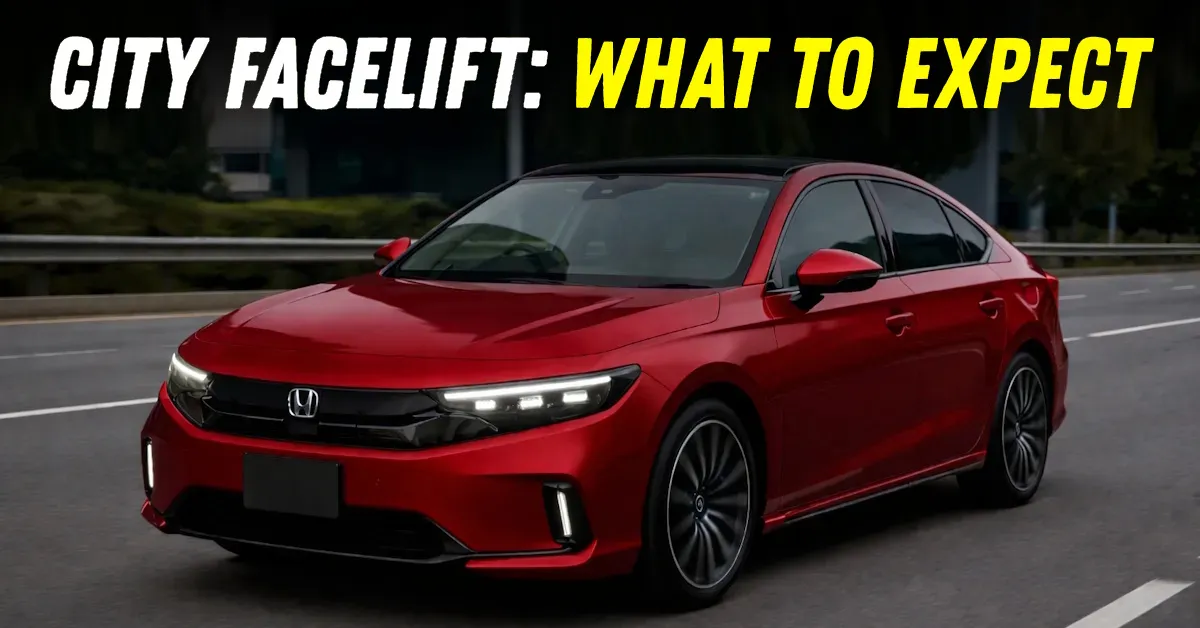

Honda City is finally set to receive its much-awaited facelift in the Indian market this year. Honda will officially launch the updated sedan on May 22, 2026. We’ve already seen test mule images from Brazil, giving us a fair idea of what to expect from the upcoming model. Based on the available details, here’s a look at what the new City facelift might offer.
The Honda City is one of the oldest models still on sale in India. It is a car that defined the mid-size sedan segment and has long been seen as a status symbol. In fact, the City set benchmarks for several competitors. However, with rising competition and the growing popularity of SUVs, the sedan has gradually lost some of its appeal.
The upcoming facelift will be based on the fifth-generation City currently on sale in India. In terms of overall design, the sedan is expected to remain largely the same, but subtle changes will give it a fresher look.
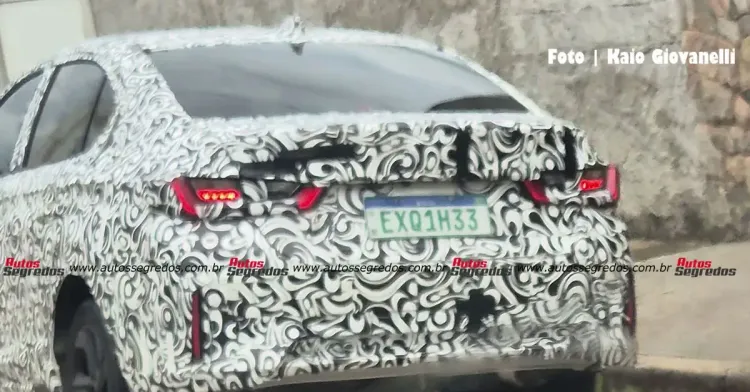
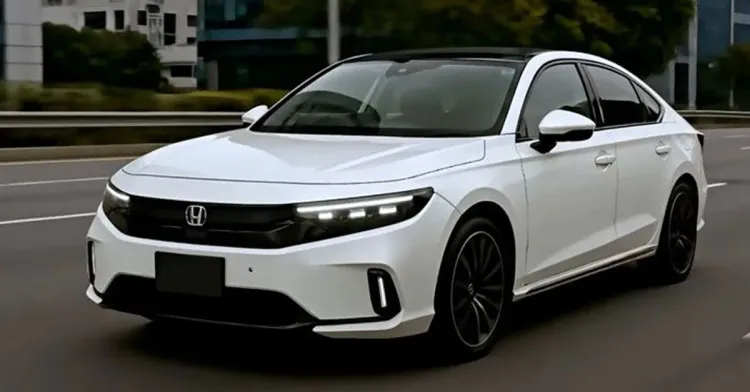
We expect a revised front fascia, including a new grille and updated headlamps. The bumper design is also likely to be tweaked, along with new alloy wheel designs. At the rear, the City facelift is expected to get a revised bumper and updated tail lamps, completing the refreshed styling.
This is where more noticeable changes are expected. The City will compete with rivals like the Volkswagen Virtus and Skoda Slavia, both of which are also due for updates.
The facelifted City is likely to get new features such as electrically adjustable front seats, ventilated front seats, a larger touchscreen infotainment system with an improved UI, a digital instrument cluster, and a 360-degree camera. The cabin’s colour theme may also be revised to enhance the premium feel.
It will continue to offer features like automatic climate control, an electric sunroof, leatherette upholstery, and Level 2 ADAS.
Mechanically, the City facelift is expected to remain unchanged. It will likely continue with the 1.5-litre naturally aspirated 4-cylinder petrol engine that produces 121 bhp and 145 Nm of torque, paired with either a manual or CVT gearbox.
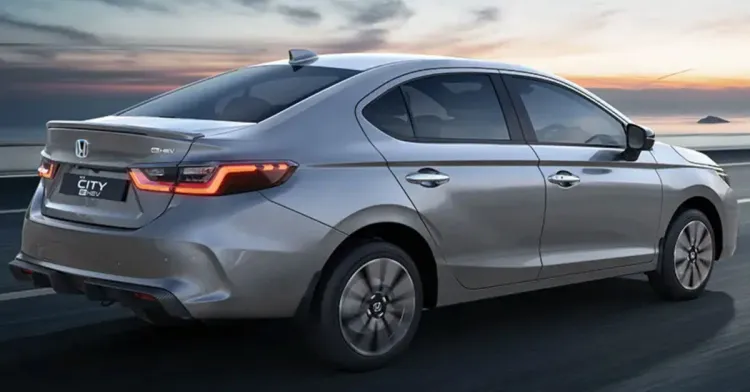
Like the current model, the facelift is also expected to be available with a strong hybrid version. This uses a 1.5-litre Atkinson-cycle engine that produces 126 bhp and is paired with an eCVT gearbox. The hybrid setup is well known for its fuel efficiency. It’s the only hybrid sedan in its segment, and this gives the City a distinct advantage with respect to mileage.
However, the imported hybrid powertrain makes the car pricey. Honda is reportedly working on a more efficient, lighter, and affordable hybrid system. It remains to be seen whether this new system will debut with the City facelift or if Honda will continue with the existing set-up.
The current Honda City is priced between Rs 12 lakh and Rs 16.07 lakh, ex-showroom. With the expected updates, Honda may slightly increase the price of the sedan.
Honda is also working on the next generation City sedan and the same is expected to launch sometime in 2028. It would be based on a new platform and will come with a new design and more features.
Honda City facelift is actually an important product for Honda. The City sedan was once the best and the most popular sedan in its segment. With the rising competition and the lethargic attitude from Honda, the City sedans sales numbers came down.
The fifth generation City was launched in 2020 and back then the sedan held almost 34 percent of the segment’s share. Later with the arrival of rivals like the VIrtus and Slavia with turbo petrol engines, better performance and features the numbers started sliding down. From the top position, the City came down to third and fourth positions.
In January 2026, Honda sold 501 units of City sedan and in February there was a slight rise and Honda sold 525 units. In March this year Honda sold 805 units of Honda City sedans. In order to improve the situation, Honda will have come up with improved looks and updated features and that too at an aggressive price tag.
Honda is currently the only brand in the segment to offer a hybrid sedan. However they are unable to take advantage of this because of the high price tag. As mentioned earlier, this has more to do with the hybrid tech used in the sedan. It is not localised and that is reflecting in the prices too. If Honda can actually localise the hybrid tech it would turn out to be a game changer for the sedan and might help them improve the numbers.
Comments are closed.