
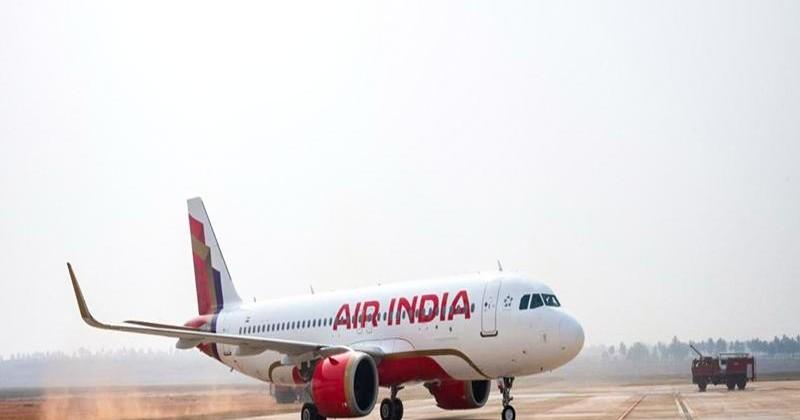

When the Tata Group re-acquired Air India in January 2022, the expectation was not incremental repair but a decisive reset. The airline had accumulated over ₹60,000 crore in losses during government ownership prior to privatization, along with structural inefficiencies in fleet, processes, and governance. The Tata mandate was therefore clear: rebuild scale, restore credibility, and reposition Air India as a globally competitive full-service carrier.
Four years on, the transformation has begun but so has a far sharper financial deterioration. Air India has not reported a profit since privatization, and its losses have widened significantly. The combined entity posted a net loss of ₹9,800 crore in FY2025, according to disclosures reported by Reuters, while FY2026 estimates suggest losses rising toward ₹20,000–22,000 crore, making it one of the largest loss-making businesses within the group.
At the same time, leadership churn has emerged as a visible symptom of deeper stress. CEO Campbell Wilson stepped down in 2026 amid “persistent financial losses and regulatory pressures,” prompting a renewed search for leadership at a critical phase of the turnaround.
This combination escalating losses alongside leadership transition signals not a temporary setback, but a structural imbalance in how the transformation is being executed.
A Paradox: Strong Market, Weak Financials
The financial underperformance is particularly striking because it coincides with a strong macro environment. India’s aviation sector is among the fastest growing globally. According to ICRA, passenger traffic is projected to reach 175–181 million by FY2026, with annual growth of 7–10%.
Air India itself is not suffering from lack of demand. In fact, the airline generated ₹70,000 crore in revenue in just the first nine months of FY2026, yet still recorded losses of approximately ₹16,000 crore in the same period.
This implies a critical structural issue:
> The airline is generating demand—but not converting it into profitable output.
In aviation economics, this points directly to inefficiencies in asset utilization and operational execution rather than market weakness.
External Pressures: Real, Quantifiable but Not Decisive
There is credible evidence that external shocks have increased cost pressures:
Fuel remains the single largest variable cost, often accounting for 30–40% of airline operating expenses globally, according to IATA industry benchmarks.
Pakistan’s airspace restrictions have forced longer routings for westbound flights, increasing fuel burn and reducing aircraft rotations.
Global supply-chain disruptions have delayed aircraft deliveries and spare parts availability, constraining capacity.
A fatal crash in 2025 triggered inspections, flight cancellations, and regulatory scrutiny.
Operational data reflects rising stress. Government disclosures cited by Reuters show that technical incidents rose to 1.09 per 1,000 flights in early 2026, up from 0.26 a year earlier, while 82.5% of inspected aircraft exhibited recurring technical issues.
These factors undeniably increase costs and reduce operational efficiency. However, industry-wide data shows that Indian aviation losses are estimated at ₹17,000–18,000 crore in FY2026, while Air India alone accounts for a disproportionately large share of this stress.
This suggests that external pressures are necessary but not sufficient explanations.
The Core Issue: Underutilised Assets in a Capital-Heavy Business
Air India currently operates a fleet of roughly 190 aircraft and has placed orders for over 500 additional planes, one of the largest aircraft procurement programs globally.
Yet, the fundamental driver of airline profitability is not fleet size, but fleet productivity.
Across the Indian aviation sector, 15–17% of aircraft capacity is estimated to be grounded due to maintenance, supply chain, and engine-related issues. For Air India, this constraint is compounded by:
Legacy maintenance inefficiencies
Retrofit delays
Increased inspection cycles post-incident
Integration challenges across multiple fleets
The consequence is stark:
> Aircraft are being financed, staffed, and maintained—but not flown enough.
In financial terms, this creates a dual drag:
Revenue loss from unutilized capacity
Full absorption of fixed costs, leases, salaries, parking, depreciation
IATA data consistently shows that airline profitability is highly sensitive to aircraft utilisation rates and load factors, with even marginal declines significantly eroding margins. In Air India’s case, the impact is not marginal, it is systemic.
Reliability and Safety: A Direct Financial Variable
Operational reliability has emerged as a measurable financial constraint.
Regulatory audits have flagged:
51 safety-related lapses, including deficiencies in training and compliance
Fatigue management and procedural issues
Observations from international regulators, including European aviation authorities
At the same time:
Technical incident rates have quadrupled year-on-year
Flight disruptions have increased
Maintenance cycles have lengthened
Each disruption triggers quantifiable financial consequences:
Revenue loss from cancellations
Passenger compensation liabilities
Increased insurance and compliance costs
Globally, McKinsey estimates that irregular operations can increase airline costs by 5–10% per disrupted flight cycle, illustrating how reliability directly translates into financial performance.
Complexity Without Sequencing: The Transformation Overload
Air India’s transformation program is unprecedented in scale:
Integration of Air India, Vistara, and AirAsia India
A 500+ aircraft order
Fleet retrofits and cabin upgrades
Digital and IT system overhaul
Brand repositioning
However, these initiatives have been pursued in parallel rather than in sequence.
This has created what can be described as execution congestion:
Integration complexity affecting scheduling and maintenance
Operational inconsistency across fleets
Increased managerial bandwidth pressure
Even internal acknowledgments of the need for “urgent improvements in process discipline and compliance culture” point to systemic execution gaps.
The data reflects this:
Rising technical incidents
Persistent delays and cancellations
Increasing regulatory scrutiny
In effect, the airline is attempting to scale and transform while its operational core remains unstable.
Financial Structure: Negative Operating Leverage in Action
The interaction of these factors has produced a dangerous financial dynamic:
Revenue is growing (₹70,000 crore in 9 months)
Fleet and capital investment are expanding
Operating costs are rising sharply
Output per aircraft is constrained
This leads to negative operating leverage, where additional scale increases losses rather than reducing them.
Indeed, Air India has become a major contributor to losses within Tata Group’s new ventures, pushing combined losses toward ₹29,000 crore.
Global Lessons Ignored
Historical airline turnarounds offer a consistent pattern:
British Airways (1980s) restored profitability by first fixing operational reliability
Delta Air Lines (post-2008) prioritized fleet utilization and network discipline before expansion
Lufthansa’s restructuring focused on cost control and operational efficiency before brand investment
The sequence is clear:
1. Stabilize operations
2. Maximize asset utilization
3. Rationalize network
4. Control costs
5. Then expand and upgrade
Air India’s approach has largely reversed this order.
The Strategic Correction
The corrective path is not theoretical, it is empirically grounded:
1. Restore Operational Reliability
Reduce technical incidents, improve maintenance turnaround, and stabilize schedules.
2. Maximize Aircraft Utilisation
Increase flying hours per aircraft this is the single largest driver of profitability.
3. Sequence Transformation
Defer non-essential initiatives until operational stability is achieved.
4. Align the Organization to Output Metrics
Every function must be measured against one parameter: productive aircraft hours per day.
5. Build Real-Time Operational Control
Implement integrated monitoring systems for fleet status, delays, and constraints.
A System Out of Alignment
Air India’s losses are not a failure of ambition. They are the consequence of a system where:
Demand is strong, Capital is abundant, Strategy is expansive but the core operating engine is constrained. The numbers make the warning explicit:
> A loss trajectory moving from ₹9,800 crore to over ₹20,000 crore in a growing market is not cyclical it is structural.
Air India remains strategically vital to India’s aviation future. But unless operational throughput is restored through disciplined focus, sequencing, and execution, the turnaround risks becoming one of the most expensive restructurings in modern aviation history.
The opportunity still exists.
But it now demands precision, not scale, execution, not expansion.
(Major General Dr. Dilawar Singh, IAV, is a distinguished strategist having held senior positions in technology, defence, and corporate governance. He serves on global boards and advises on leadership, emerging technologies, and strategic affairs, with a focus on aligning India’s interests in the evolving global technological order.)

Comments are closed.