
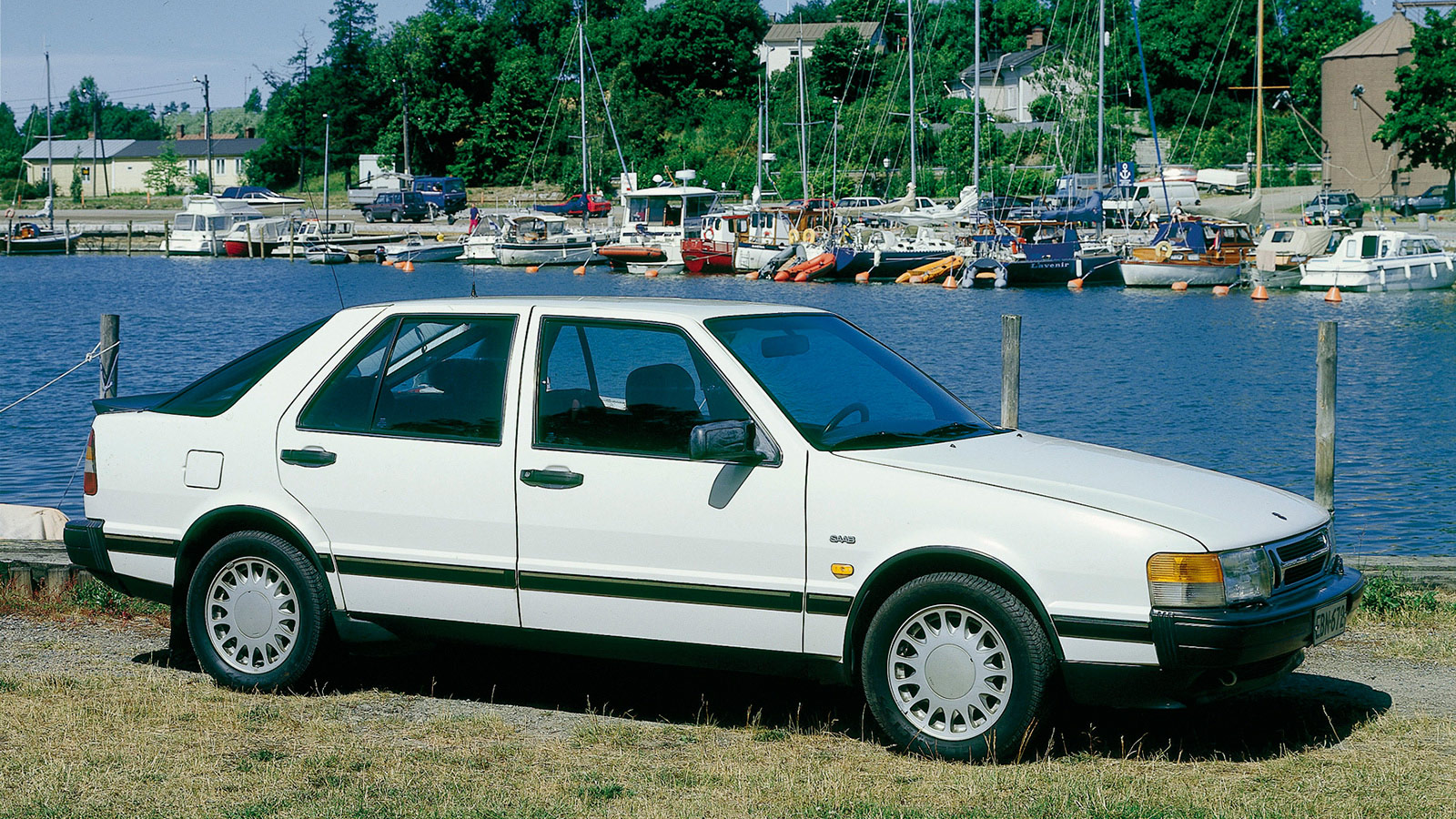

In the world of automotive what-ifs, some stories refuse to fade away. One of them has now returned to the spotlight: the time General Motors reportedly turned down a unique V8 engine created by Saab after taking a stake in the Swedish automaker.
The project, hidden for years, shows just how close Saab came to building something radically different from its usual turbocharged identity.
Saab’s Bold Push for the American Market
Back in the 1980s, Saab was developing the 9000 sedan, a car built on the shared Type Four platform alongside Fiat, Lancia and Alfa Romeo. While the platform was shared, Saab heavily reworked the structure to meet its own safety and durability standards, especially for the demanding U.S. market.
At the time, Saab was known for clever engineering, practical design and turbocharged four-cylinder engines. But executives in the United States believed something more was needed to attract American luxury buyers. That something was a V8.
The Secret “Twin Four” Project
Rather than start from scratch, a small engineering team in Finland reportedly began work on a hidden project in 1988. Their solution was smart, unconventional and very Saab.
They combined two Saab inline-four engines into one naturally aspirated 4.0-litre V8. The engine was arranged in a 90-degree configuration and reused as many existing parts as possible. Internally, the project became known as the “Twin Four.”
Power output was said to be around 230 horsepower, respectable for its era and enough to give the Saab 9000 a stronger presence in a market where bigger engines mattered.
A Real Prototype Was Built
This was not just a sketch or test bench experiment. Engineers installed the V8 into a Saab 9000 CD prototype and paired it with a five-speed manual gearbox.
The car then underwent serious testing, reportedly covering around 65,000 kilometres in multiple conditions. By internal accounts, the concept proved workable and could have reached production with further investment.
That alone makes the story remarkable. Saab, a brand famous for quirky innovation, nearly launched a homegrown V8 sedan.
Then GM Entered the Picture
Around the same time, Saab went through a major ownership change. General Motors acquired a 50 percent stake in Saab Automobile AB in 1989.
When the V8 prototype was presented, GM reportedly showed interest in expanding Saab’s engine options. But instead of approving the in-house V8, GM preferred using its own V6 engines from its wider parts portfolio.
From a business perspective, the move made sense. Shared engines reduce costs, simplify manufacturing and fit corporate strategy. But for enthusiasts, it marked the end of one of Saab’s most fascinating engineering ideas.
A Lost Chapter That Still Runs
The Twin Four never reached showrooms. Only one complete vehicle is believed to have been built, and it survives today at the Uusikaupunki factory museum in Finland. Even better, reports say the car is still in running condition.
For many fans, it represents more than a cancelled engine program. It is a reminder of what Saab once was: bold, inventive and never afraid to do things differently. And sometimes, the best cars are the ones we almost got.

Comments are closed.