
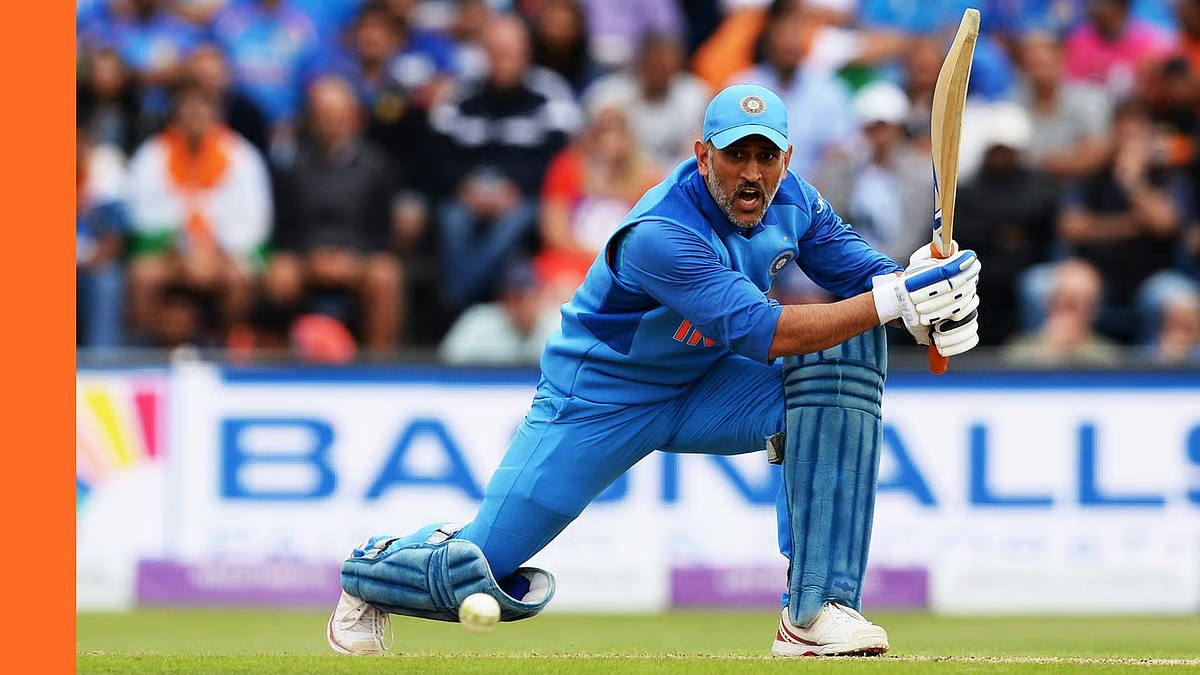

Somewhere between the rise of franchise leagues like the Indian Premier League and the calendar turning into a year-round carousel, cricket stopped being a sport you followed and became a product you consume. There’s always a match on. If not here, then in another league, another timezone, another set of jerseys you’re expected to care about for six weeks before everyone moves on.
The IPL era and the rise of cricket as entertainment product
It had moments that earned their immortality. 1983 Cricket World Cup Final—a team no one fancied, led by Kapil Dev, toppling giants and changing the country’s sporting self-belief overnight. 2001 Kolkata Test where VVS Laxman and Rahul Dravid batting for redemption. 2011 Cricket World Cup Final where MS Dhoni finished it with a six that didn’t just win a match but closed a 28-year loop.
Those moments were experiences. You didn’t skip to the end.
Cricket used to have silence built into it. A Test match day could drift, meander, even bore you before suddenly snapping into life. Now, every ball must entertain, every over must escalate. The result is a sport that feels perpetually afraid of its own shadow.
Commercialisation didn’t just arrive; it took over the dressing room.
Boards like the Board of Control for Cricket in India industrialised it. Broadcast deals ballooned, sponsorship logos multiplied, and the game was sliced neatly into monetisable segments. Strategic time-outs, anyone? Nothing says “organic sporting drama” like a mid-innings reminder to grab a snack.
Players are no longer just cricketers, they have turned into content ecosystems. A cover drive is a clip, a reel, a brand moment. The camera cuts faster than the bowler’s run-up. We get drone shots, dugout mics, reaction cams. The match is the backdrop for a multi-platform spectacle.
And fans? We’ve been retrained.
We don’t watch entire innings; we watch highlights. We track strike rates and fantasy points. The emotional investment that once came from enduring a game has been replaced by the instant gratification of consuming it in fragments. You can “follow” a match today without actually seeing it—just scroll, swipe, refresh. Done.
It’s efficient but also hollow.
The irony is that cricket hasn’t lost its depth. The contest between bat and ball is still there, as nuanced as ever. But it’s been buried under layers of packaging that insist on telling you what matters before you’ve had a chance to feel it yourself.
We used to argue about sessions and spells. Now we argue about auctions and brand value. Of course, this new ecosystem has done wonders for reach and money. Smaller players get opportunities. Fans across geographies get access. The sport is richer, louder, more visible than ever. But somewhere in that growth, it also became disposable. When everything is always on, nothing feels like an occasion.
Love, in sport as in life, needs absence. It needs the ache of waiting, the build-up, the sense that this moment won’t come around again next Tuesday at 7.30 pm. The game hasn’t betrayed us. We’ve just accepted a version of it that’s easier to consume but harder to love.
Comments are closed.