

New Banksy Statue in Central London Sparks Debate as Bold Artwork Takes Aim at Blind Patriotism and National Identity
A new artwork by Banksy has once again ignited global conversation—this time not through graffiti, but with a striking statue placed in Central London. Appearing overnight in Waterloo Place, the sculpture blends seamlessly with historic monuments, yet delivers a message that is anything but traditional.
A Statue That Forces You to Look Twice
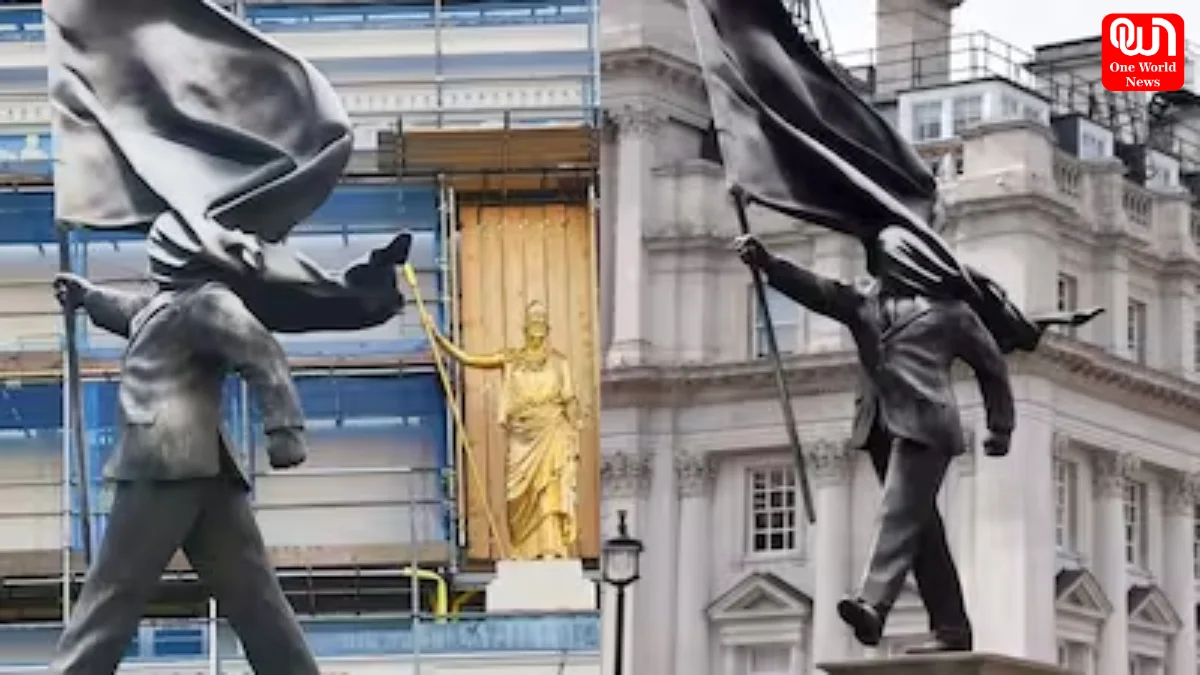
The statue depicts a suited man holding a large flag that billows backward—completely covering his face. Frozen mid-step, he appears to be walking blindly forward, one foot already off the edge of the plinth. It’s a subtle yet unsettling visual.
Read more: 5 Dreamy Honeymoon Destinations Newlyweds Will Love in 2026
Installed among statues of historical British figures like Florence Nightingale and King Edward VII, the piece mimics the traditional aesthetic of public monuments. But unlike its neighbors, this statue doesn’t celebrate—it questions.
According to reports, the artwork was installed secretly during the night and later confirmed by Banksy himself via social media.
The Message: Blind Patriotism Under Fire
The symbolism is hard to ignore. A man blinded by the very flag he carries suggests a critique of blind patriotism—a warning against unquestioning loyalty to national identity.
The flag, often a symbol of pride and unity, becomes an obstruction here. It blocks vision, distorts awareness, and ultimately leads the figure toward a dangerous fall. This visual metaphor aligns with Banksy’s long-standing tradition of challenging authority, nationalism, and societal norms.
Observers and critics quickly interpreted the piece as a commentary on how patriotism, when taken to extremes, can cloud judgment.
Why Central London Matters
The choice of Central Londonparticularly Waterloo Place, is not accidental. This area is steeped in British history and power—surrounded by royal landmarks, government buildings, and statues honoring national heroes.
By placing the sculpture here, Banksy creates a direct contrast between past and present. The traditional statues represent pride, legacy, and authority. His work, however, disrupts that narrative, asking whether those ideals still hold relevance—or if they are being followed blindly.
It’s a strategic placement that amplifies the message: patriotism isn’t inherently wrong, but unquestioned patriotism can be dangerous.
Public Reaction: Divided Yet Engaged
As expected, reactions have been mixed. Some viewers praise the piece as a bold and necessary critique of modern nationalism. Others see it as controversial or even disrespectful, especially given its proximity to historical monuments.
Read more: Flip, Lift, Filler: Lip Treatments Redefining Beauty Trends in India
Crowds have gathered around the statue, taking photos, debating its meaning, and sharing interpretations online. This engagement is exactly what Banksy thrives on—art that doesn’t just sit quietly but sparks dialogue.
Even local authorities have acknowledged the installation, with initial steps taken to protect it as part of the city’s evolving public art landscape.
Banksy’s Signature Style—But Evolving
While Banksy is best known for graffiti and stenciled street art, this isn’t his first venture into sculpture. His 2004 piece The Drinker also reimagined a classical statue with a satirical twist.
This new statue, however, feels more refined and integrated into its surroundings. It shows an evolution in his approach—less about disruption through contrast, and more about blending in to challenge from within.
A Timely Commentary
In a world increasingly shaped by political polarization, nationalism, and identity debates, the timing of this artwork is significant. It doesn’t name a country, a leader, or a specific event—but its message is universally relevant.
The idea of being “blinded” by ideology resonates far beyond the UK. It speaks to a global audience navigating complex questions about identity, loyalty, and truth.
Final Thoughts
The New Banksy Statue in Central London is more than just a piece of public art—it’s a mirror. It reflects society’s relationship with patriotism and challenges viewers to ask a difficult question:
Are we walking forward with purpose—or blindly following symbols we no longer question?
As with most of Banksy’s work, the answer isn’t given. It’s left for each observer to decide.
Comments are closed.