
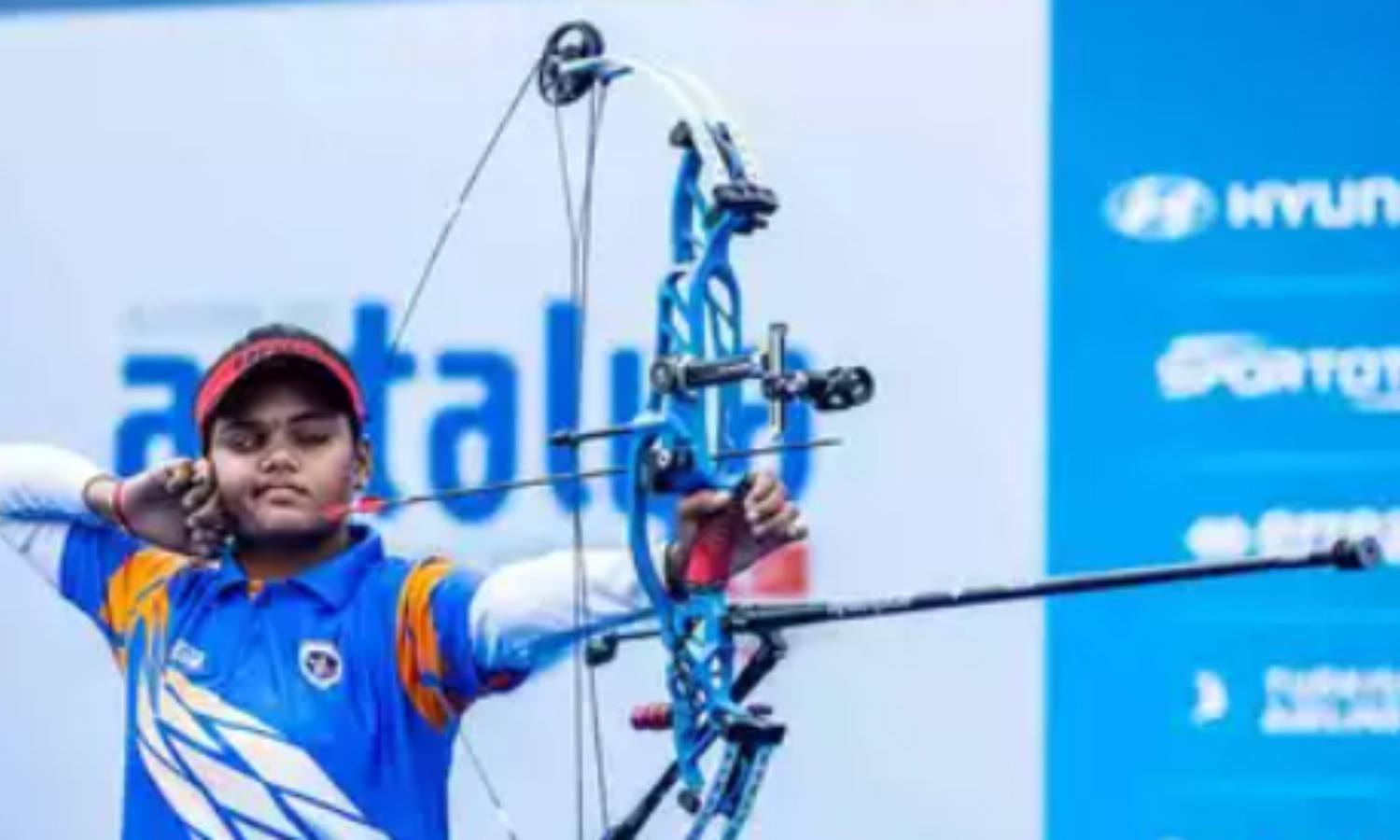

Compound archery is seeing a strong rise in India as the country continues to perform well at the international level.
Indian archers have won nine medals, including four gold, in the last three editions of the World Archery Championships. With the mixed compound team event now set to be included in the 2028 Summer Olympics, Indian archers will be aiming to build on their recent success and compete for an Olympic medal.
India first came into the spotlight in compound archery when it was introduced in the Asian Games in 2014. In that edition, India won one gold, one silver, and two bronze medals.
Since then, India has shown continuous improvement in performance and rankings in the sport and has consistently remained among the top 10 nations at the global level.
India has continued its strong presence in compound archery at the global level. At the Asian Games 2023, the country won seven medals in the discipline, including all five gold.
Over the years, India’s performances have steadily improved across major international competitions, including the World Championships.
A major factor behind this rise is the expansion of structured training systems. In 2025, school-level training in archery was further encouraged.
This growth has also been supported by government schemes. The Target Olympic Podium Scheme (TOPS) includes core athletes such as Ojas Deotale, Aditi Swami, Jyothi Surekha Vennam, Abhishek Verma, Parneet Kaur, Priyansh, and Prathamesh Jawkar.
The scheme provides financial support, international exposure, and access to high-performance equipment. The Mission Olympic Cell (MOC) has also approved funding for backup equipment sets to support athletes during competitions.
Archer Aman Saini received support from Khelo India, which works as a feeder system for young athletes, with over 2,500 athletes receiving annual scholarships, including monthly financial support. It helped him to progress through the Khelo India University Games and move into higher levels of competition.
Support has also come through partnerships between NTPC and the Sports Authority of India, which have contributed to infrastructure, coaching facilities, and equipment access. National camps and regular competitions have further strengthened athlete development.
Indian archers, who are now ranked among the best in the world, have benefited from the structured support provided through government schemes and training systems.
The biggest example is Jyothi Surekha Vennam, who is ranked world number three in women’s compound archery.
She initially achieved recognition in swimming at a young age before shifting to archery in 2007 at the age of 11 after facing limited facilities in swimming, she switched to compound archery where she got many opportunities to grow through these programmes.
Recurve archery, which was the only format included in the Olympics until the 2024 Paris Olympics, has not matched the success of compound archery in India.
Despite strong performances from archers such as Deepika Kumari, India has not been able to match the dominance of countries such as South Korea, resulting in no Olympic medals in the sport.
With structured training systems, strong grassroots programmes, improved infrastructure, and consistent international performances, compound archery continues to grow in India.
India is currently ranked second in the world in the mixed compound team category, and the inclusion of this event has created a new opportunity for Indian archers, who will aim to secure a medal in 2028.

Comments are closed.