
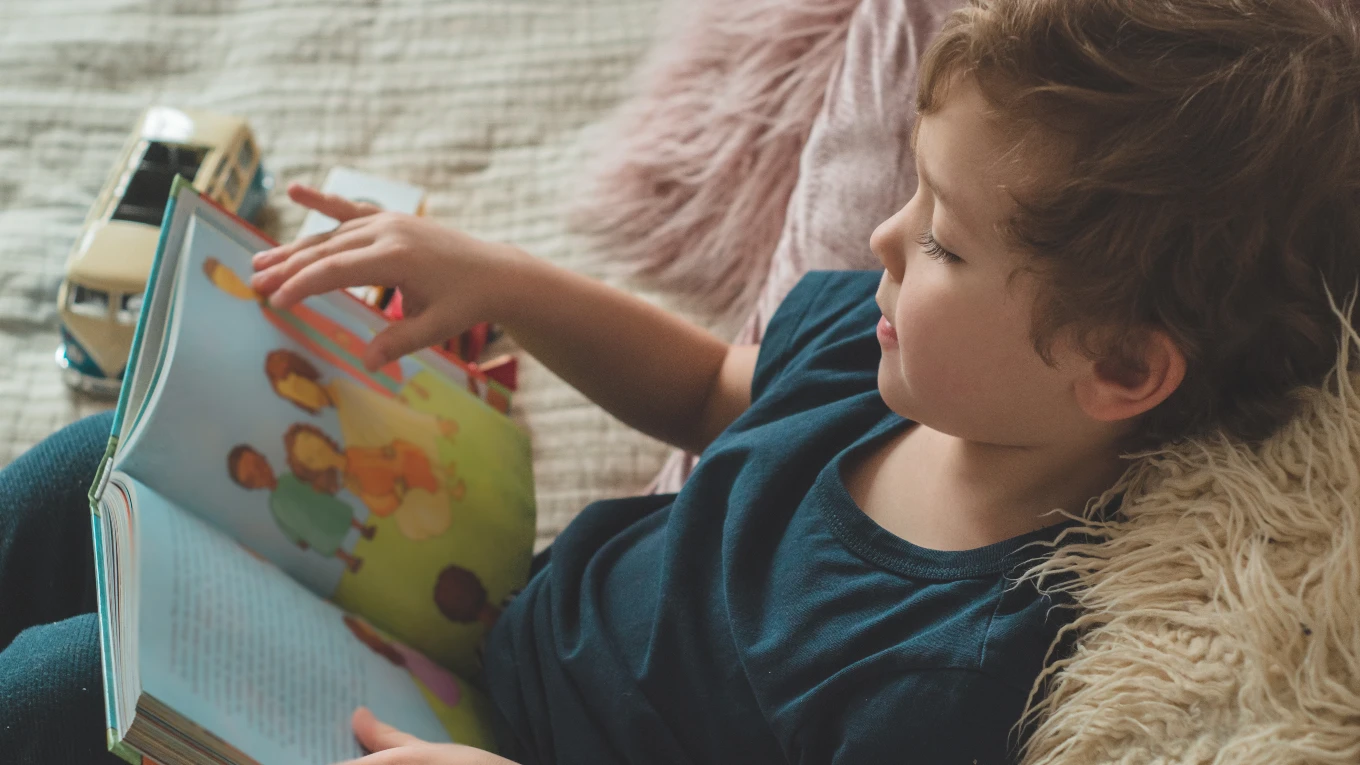

Learning to read is obviously an essential part of each child’s education, but literacy has wide-reaching, life-long effects. Someone who is able to read is more likely to have access to a greater variety of options for their future, and avoid poverty through participation in the workforce.
Most parents would probably agree that learning how to read is key to a child’s development and something to be expected. One mom on TikTok, however, admitted that her “unschooled” son doesn’t know how to read, claiming he’s “free” from the conformity and pressures of public school. Other parents argued that the ability to read is freedom.
The mom confessed that her unschooled son doesn’t know how to read because of her unconventional approach to education.
The mom and content creator, Mami Onami, is a “no-nanny” work-from-home parent of two kids. She recently responded to a TikTok comment claiming her kids are not reading and writing at the level they should be.
“It’s true my son cannot read at age 6,” she said. “But here’s the thing about my kid: He’s free. He’s always been free, and every single day of his life is a blank canvas.”
Onami insisted that her son benefits greatly from the liberating lifestyle that she provides. “There’s no conformity,” she continued. “There’s no trends, there’s no ahead or behind, there’s just being free exactly the way that you are, free to learn at your own pace.”
Unsurprisingly, this opened Omani up to some substantial criticism, just like all unschooling parents often face. She addressed this in another video, explaining that her goal has never been to impose her views on other parents.
“I don’t need everybody to make the same choices as me. I don’t even need the world to respect my choices,” she said. “I just want to do what my son says.”
Omani claimed that her kids are on Waldorf and Montessori schedules, which are less traditional educational approaches that prioritize holistic development.
The Waldorf philosophy, which began as a system of private schools, prioritizes play, artistic expression, and sensory-based learning rather than formal academics. Within this approach, children often don’t learn to read until age 7 in an effort to give them time to fully develop physically.
The Montessori philosophy, on the other hand, is a bit different. It teaches the core subjects everyone is used to, but in a way that shows how they are connected. Instead of learning history and math separately, students might learn them simultaneously. This approach generally encourages earlier reading, beginning between the ages of 3 and 6, depending on the child’s phonetic skills.
Mikhail Nilov | Pexels
It’s not surprising that some people look at the Waldorf and Montessori philosophies and think they’re wrong in some way. They are certainly different from the public school system most are used to. But they can be an effective way to build an individualized learning experience that feels more freeing, as Onami said.
In fact, some experts, like psychiatry and special education professor Stephen Camarata, actually think that modern society forces kids to learn “too much too soon,” which stunts their intellectual growth because of overwhelming pressure. One could make the argument that the Waldorf and Montessori methods remedy this issue.
It’s important to remember that parenting and education are not one-size-fits-all.
Onami’s situation is a tricky one. The way she chooses to teach her child is her decision, and it’s not something other parents should necessarily rush to judge.
At the same time, it is possible for children to face educational neglect. This is a very nuanced issue, and there’s no way to say if not teaching a child to read by age 6 applies, but it is something to consider.
 www.kaboompics.com | Pexels
Plus, as Onami pointed out, the public education system is not without its fair share of flaws. In another video, she said, “I’m concerned that being trained for 40 hours a week to do things that robots can do in the age of AI is just setting kids up for failure.”
Going to public school or being taught to read earlier in life is obviously not a guarantee that a child will be a good reader either. Ultimately, it’s important to remember that there is no black-or-white rule to raising your kids, and various benefits reside in that gray area that many are quick to criticize.
Francesca Duarte is a writer based in Orlando, FL. She covers lifestyle, human-interest, and spirituality topics.

Comments are closed.