


The US War Department has announced sweeping agreements with eight leading artificial intelligence companies to deploy advanced AI capabilities across its classified networks, marking a significant escalation in the military’s push to become an “AI-first fighting force.”
The agreements involve major technology players, including SpaceX, OpenAI, Google, NVIDIA, Reflection, Microsoft, Amazon Web Services (AWS) and Oracle.
Under the new agreement, these firms will provide AI tools for “lawful operational use” within highly secure environments, fundamentally reshaping how the military processes data, conducts intelligence, and makes battlefield decisions.
AI Integration Targets Classified Military Systems and Real-Time Decision Making
At the core of the initiative is the integration of frontier AI technologies into Impact Level 6 (IL6) and Impact Level 7 (IL7) networks, the Department’s most secure classified systems. Officials say this will significantly enhance data synthesis, situational awareness and operational decision-making in complex and fast-moving environments.
The move aligns with the Department’s broader AI Acceleration Strategy, which focuses on three pillars. These are warfighting, intelligence and enterprise operations. By embedding AI deeply into these domains, the military aims to shorten decision cycles and improve responsiveness across all theatres of operation.
Early results from GenAI.milthe Department’s official AI platform, underscore the scale of adoption. In just five months, more than 1.3 million personnel, including warfighters, civilians, and contractors, have used the system, generating tens of millions of prompts and deploying hundreds of thousands of AI agents. Officials say tasks that previously took months can now be completed in days.
Multi-Company Approach Aims to Prevent Vendor Lock and Boost Resilience
A key feature of the initiative is its reliance on multiple technology providers rather than a single vendor. The Department has emphasized that this diversified approach is designed to avoid “vendor lock,” ensuring long-term flexibility and resilience in its AI infrastructure.
By leveraging a broad ecosystem of American technology firms, the military intends to maintain access to cutting-edge innovations while reducing dependency risks. Officials argue that such diversity is critical for sustaining operational readiness and safeguarding national security in an era of rapid technological change.
The agreements also reinforce the government’s stance that leadership in artificial intelligence is essential to maintaining global military advantage. The Department has reiterated its commitment to fostering a strong domestic AI ecosystem capable of supporting national defense priorities.
Growing Tensions Over AI Ethics in Warfare
Notably absent from the agreements is AI company Anthropic, which had previously worked with US government agencies on classified systems. The company declined to accept contract terms allowing its technology to be used for any “lawful” military purpose, citing concerns over potential misuse in areas such as mass surveillance and autonomous weapons.
The dispute escalated earlier this year when Anthropic’s leadership publicly raised ethical concerns. In response, Defence Secretary Pete Hegseth designated the company a “supply chain risk,” effectively barring it from government use. Anthropic has since filed a legal challenge, with the case expected to go to court later this year.
Despite the fallout, Anthropic’s tools remain in limited use across some government agencies, reflecting the complexity of disentangling existing technological dependencies.
Expanding Partnerships Signal Accelerating AI Arms Race
The current agreements also formalize and expand existing collaborations. OpenAI had already signed a contract with the Department earlier this year, while Google’s AI systems are now being cleared for classified-level operations for the first time. NVIDIA and Reflection will contribute open-source models, while cloud infrastructure support continues from Microsoft, AWS, and Oracle.
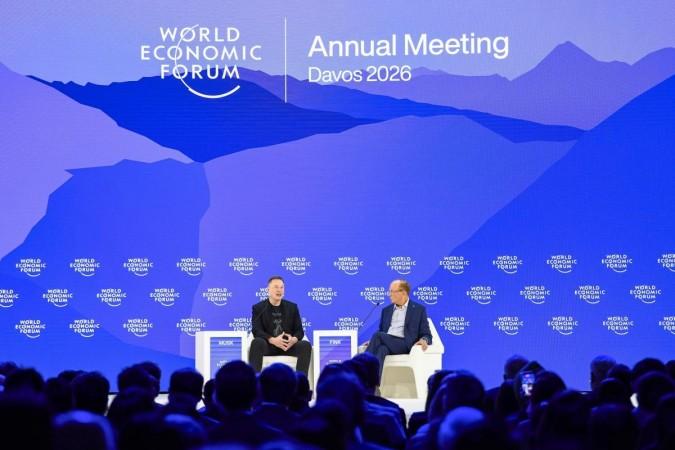
Meanwhile, SpaceX, now linked to Elon Musk’s AI venture xAI, adds another layer to the evolving defense-tech landscape, even as its capabilities are seen as less mature compared to some competitors.
The War Department maintains that these partnerships will collectively strengthen the nation’s “Arsenal of Freedom,” enabling forces to respond to emerging threats with greater speed and precision.
Expert View: Strategic Implications for India
As geopolitical tensions intensify and technological competition accelerates, the integration of AI into military operations is no longer experimental; it is becoming foundational.
Experts have previously highlighted the importance of integrating indigenous new-edge technologies into the country’s critical systems. Given that American companies already hold a significant lead in the AI sector, these agreements signal a decisive move by the US to embed AI at the core of modern warfare.

Prof Amitabh Mattoo, Dean, School of International Studies, India’s Jawaharlal Nehru University and former National Security Advisory Board (NSAB) member, said the agreements signal “a decisive shift in the character of contemporary warfare, one that is no longer merely kinetic but increasingly algorithmic, data-driven and cognitively oriented.”
In his expert comment mailed to IB Timeshe noted that the development highlights the emergence of a “military–AI complex,” where the gap between civilian innovation and military deployment is rapidly shrinking. This, he explained, raises pressing concerns around regulation, ethical safeguards and strategic stability, especially in high-stakes operational environments.

Prof Mattoo also pointed out that the integration of firms like OpenAI and Google into classified defense systems reflects how technological sovereignty is becoming central to national power. “For India, this is both a challenge and an opportunity. While we do not yet possess comparable scale in frontier AI capabilities, we must accelerate investments in indigenous research, public-private partnerships, and secure digital infrastructure to avoid long-term strategic dependence,” he added.
Warning of broader geopolitical implications, he added that “the global diffusion of military AI will inevitably reshape deterrence dynamics. The opacity of algorithms, risks of unintended escalation, and potential for autonomous or semi-autonomous decision-making systems introduce new uncertainties into crisis stability. This reinforces the need for international dialogue, possibly even new norms or frameworks, on the responsible military use of AI”.
In his concluding remarks, Prof Mattoo said: “What we are witnessing is not merely a technological upgrade but a transformation in the grammar of power. India must engage with this shift proactively, strategically, technologically, and normatively, if it is to safeguard its interests in an increasingly AI-driven global order.”

Comments are closed.