

The Rs 81,000-crore Great Nicobar Project has returned to the spotlight after Congress leader Rahul Gandhi sharply criticised the initiative during a recent visit to the island, calling it “one of the biggest scams” and “the gravest crime against the country’s natural and tribal heritage”.
Describing it as “destruction dressed in development’s language”, Rahul flagged concerns over large-scale ecological damage and the impact on indigenous communities, triggering a fresh political debate over a project the government continues to defend as strategically vital.
What is the project?
Launched in 2021 under the Centre’s “Holistic Development” vision, the project aims to transform Great Nicobar Island into a key hub in the Indo-Pacific. Led by the Andaman and Nicobar Islands Integrated Development Corporation, it comprises an international container transhipment terminal, a greenfield international airport, a gas and thermal power complex, and a township planned for up to 6.5 lakh people.
Also read: Great Nicobar mega project sparks tribal outcry over rights, ecology
The island’s current population of just over 8,000 is projected to increase more than 80-fold, raising concerns over long-term sustainability and resource pressure.
Why is it important?
Strategically located near the Strait of Malacca, one of the world’s busiest shipping corridors, the island offers India a vantage point over critical global trade routes. A significant share of India’s cargo currently passes through foreign ports such as Singapore and Colombo.
The proposed transhipment terminal is intended to reduce this dependence, position India as a regional shipping hub, and strengthen maritime surveillance and defence capabilities in the Andaman Sea.
Government’s take
The government has described the project as one of “strategic, defence, and national importance”, asserting that it will enhance India’s presence in Southeast Asia and integrate the island into global logistics networks.
Also read: Rahul on Great Nicobar project: ‘One of biggest scams’
In a recent clarification, following Rahul Gandhi’s statements, it said environmental impacts had been comprehensively assessed and would be managed through “calibrated safeguards”.
Tribals’ protection
It also maintained that all statutory procedures to protect indigenous communities had been followed, including compliance with the Forest Rights Act, 2006, and relevant tribal protection policies, and the issuance of a no-objection certificate from the Ministry of Tribal Affairs.
Authorities have said consultations were undertaken with competent bodies and that safeguards are in place to ensure that the interests of Particularly Vulnerable Tribal Groups are not adversely affected.
Why the military is backing the project
The project has strong backing from defence veterans, who see it as critical to India’s geopolitical positioning. Former Air Chief Marshal RKS Bhadauria recently said it would significantly enhance India’s military footprint and domain awareness, given its proximity, about 150 km, to the Malacca Strait.
Also read: NGT clears Great Nicobar mega infra project citing strategic importance
With nearly 80 per cent of China’s oil imports passing through this narrow route, experts argue that a strengthened presence could help India monitor and respond to developments in a vital maritime chokepoint and counter Beijing’s expanding footprint in the region.
Opposition criticism
However, the initiative has drawn sharp criticism from the opposition. Rahul has described it as “one of the biggest scams” and “the gravest crime against the natural and tribal heritage of the country”, calling it “destruction dressed in development’s language”.
Also read: Great Nicobar project an ‘ecological disaster’: Sonia Gandhi slams Centre
Adani Ports and Special Economic Zone Ltd (APSEZ) is among the key contenders to develop the proposed transhipment terminal, a link that has fuelled political controversy, with Rahul and other Congress leaders alleging the project is being tailored to benefit the Adani Group at the cost of forests and indigenous communities.
He has alleged that the project prioritises corporate interests while undermining ecological balance and indigenous rights, and has questioned the transparency of the approval process.
Environmental impact
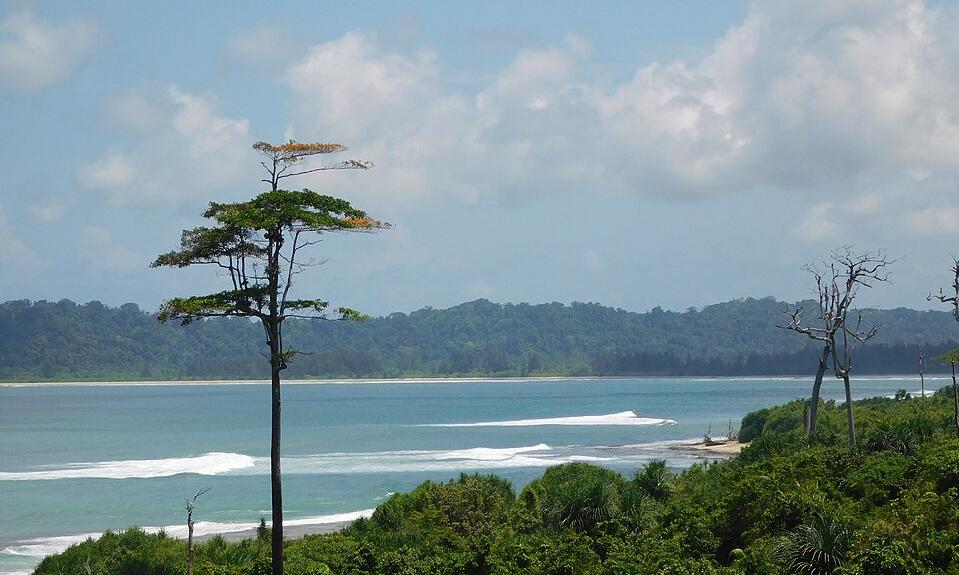
Environmental concerns remain central to the controversy. The project spans about 166 square kilometres, nearly one-fifth of the island, and involves the diversion of over 130 square kilometres of forest land, including 84.1 square kilometres designated as a tribal reserve. Estimates suggest that nearly one million trees could be felled, threatening a biodiversity-rich ecosystem that includes coral reefs, rare species habitats, and turtle nesting grounds.
Why are tribals against the project?
Tribal rights groups have raised deeper concerns about the impact on indigenous communities such as the Shompen and Nicobarese, particularly the Shompen who are classified as a Particularly Vulnerable Tribal Group (PVTG).
Also read: In a first, people of Andaman’s vulnerable Shompen tribe vote
Based on recent estimates, approximately 237–300 Shompen people live in the island’s interior forests, while the Great Nicobarese population is around 1,000–1,094, largely concentrated in coastal settlements
Critics argue that the diversion of tribal reserve land could disrupt their access to forests, food sources, and traditional habitats, posing an existential risk to their way of life. Questions have also been raised over whether consultations amount to informed consent, with activists warning that large-scale in-migration and urbanisation could permanently alter the island’s demographic and cultural landscape.
Disaster risks
Experts have also flagged disaster risks. Great Nicobar lies in a seismically active zone prone to earthquakes and tsunamis, and critics argue that large-scale infrastructure and dense urbanisation could heighten vulnerability to such natural hazards if not carefully planned.
Diplomatic impact
The project also carries significant diplomatic implications. While it strengthens India’s strategic posture in the Indo-Pacific and acts as a counter to China’s maritime expansion, it could invite international scrutiny over environmental practices and indigenous rights. Delays or opposition driven by global environmental concerns could also intersect with broader geopolitical competition in the region.
Also read: Cruise to Barren Island volcano from Port Blair soon; all details here
Despite the concerns, the National Green Tribunal in February cleared the project, citing its strategic importance while directing authorities to ensure strict compliance with environmental conditions.

Comments are closed.