


The government of India has been pushing to mix more ethanol with petrol after it has successfully blended 20 percent. For this, it is now aiming to increase the production of ethanol by using rice. However, there is a huge downside. Recently, it has been reported that it takes 10,790 litres of water just to produce 1 litre of ethanol, which, to a lot of people, will seem very extreme as India is already close to a major water crisis in many states.
The above-mentioned figure of 10,790 litres of water to produce 1 litre of ethanol was not from an environmental activist group. Instead, it has come from the Food Secretary of India, Sanjeev Chopra.
Now, here is where it gets interesting. When you cook rice at home, the water cost of that meal, which includes irrigation and cultivation, is roughly 3,000 to 5,000 litres per kilogram.
For those who may be reading this figure for the first time, it will already be shocking. However, when you hear that the same rice is being diverted to a distillery to make fuel, the water cost gets doubled, and this makes it even more surprising. Presently, we need about 2.5 to 3 kilograms of rice to produce one litre of ethanol, which, to a lot of people, will seem outrageous.
Now, the unfortunate reality is that the farmer who grew that rice has been blamed for India’s groundwater crisis for decades. But the distillery that uses three times the water to produce ethanol never gets the same backlash.

The NITI Aayog of India has already highlighted that the increasing use of water for cultivation of rice and then for ethanol is very alarming. The government’s own Composite Water Management Index has warned that by 2030, groundwater in 21 major Indian cities, including Delhi, Bengaluru, and Chennai, could be completely depleted.
What makes this even more worrying is that India’s ethanol production capacity currently stands at 1,822 crore litres. And a disproportionate share of that capacity is in states that are already suffering from water scarcity. The state of Maharashtra alone hosts distilleries which have a combined capacity of 396 crore litres. This is even when farmers in Vidarbha and Marathwada line up for tanker trucks.
Ethanol plants in Uttar Pradesh and Karnataka are also drawing from the same groundwater reserves that have already been flagged as critically depleted. All of these points are not just coincidences. Ethanol plants are typically located in sugarcane-growing regions because that is where the feedstock is.
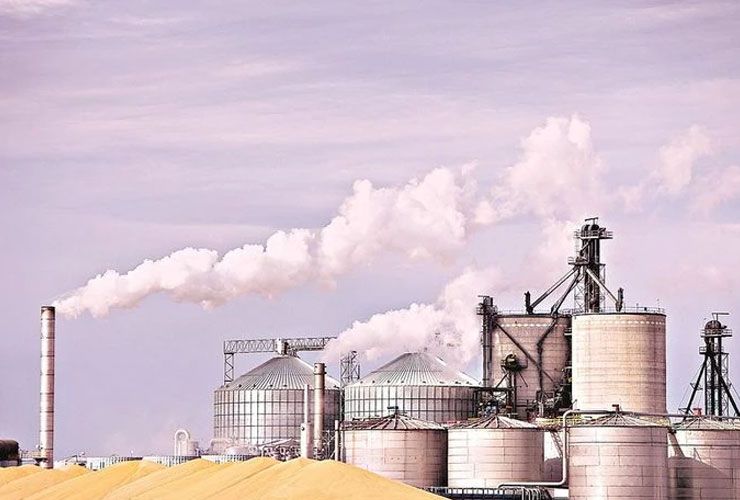
However, as energy specialist Swathi Seshadri of the Institute for Energy Economics and Financial Analysis has pointed out, years of sugarcane cultivation have already weakened water tables in these regions. The distilleries are now just benefiting from a water-stressed environment, which, once again, is very concerning.
Another very crucial factor of ethanol production is that it generates a by-product called vinasse. It is a dark, acidic liquid waste which is produced in massive volumes during fermentation.
For every litre of ethanol produced, these distilleries can generate 8 to 15 litres of this wastewater. And if not treated properly, vinasse contaminates both surface and groundwater.
To help you better understand what is currently going on, you need to look at the numbers the government has announced. In the ethanol supply year 2024-25, the government of India allocated 52 lakh tonnes of rice specifically for ethanol production. And now it is targeting 90 lakh tonnes in 2025-26.
However, to free up this rice, the government plans to reduce the share of broken rice distributed to the poor under the Public Distribution System from 25 percent to 10 percent. Now, the additional 15 percent of broken rice will go to distilleries instead. In other words, the rice that was going to lower-income households is being redirected to our fuel tanks.

So far, India’s ethanol programme has been very successful, as the country has managed to achieve 20 percent ethanol blending by 2025, which was originally set for 2030.
Union Minister of Road Transport and Highways, Nitin Gadkari, announced in Parliament that this programme has helped India avoid over Rs 1.40 lakh crore in foreign exchange outflows over 11 years.
Now, for our country, which imports roughly 88 percent of its crude oil, that is a real and meaningful number. Around Rs 40,000 crore has also been paid directly to farmers for crops used as ethanol feedstock, as highlighted by Gadkari. So, in reality, the programme has done real things. The problem is not ethanol. The problem is what India is making ethanol from.
Now, so far, it may seem like producing more ethanol will become a bigger problem. However, it has to be pointed out that rice is not the only way to make ethanol. Sugarcane, which is India’s primary ethanol feedstock, requires around 3,630 litres of water per litre of ethanol produced. And maize needs about 4,670 litres, which is about half or less than half of what is required by rice, which makes them better.
However, recently, there have been a lot of innovations that have been made, and the main one is the production of ethanol from agricultural waste. Each year, India generates over 500 million tonnes of agricultural waste. These include rice straw, wheat stubble, sugarcane bagasse, cotton stalks, and corn cobs. All of these are largely burnt in fields, which creates a thick blanket of smog that suffocates North India every winter.
Now, this is where second-generation, or 2G, ethanol will become useful. Unlike first-generation ethanol in which the sugars in food crops like rice or sugarcane are fermented. The 2G ethanol breaks down the cellulose and hemicellulose in agricultural residues. These are the parts of the plant that are left over after the food is harvested into fermentable sugars through an enzymatic process.
As a result of this, the ethanol which is produced has a different water footprint because the feedstock is waste and not a freshly irrigated crop. Indian Oil Corporation has already built a 2G ethanol plant in Panipat, Haryana, which uses rice straw as its feedstock. And it produces 100 kilolitres of ethanol daily through this technology.
Bharat Petroleum and Hindustan Petroleum have also commissioned similar plants in Bargarh, Odisha, and Bathinda, Punjab, respectively. These are not pilot experiments. These are commercial-scale facilities already operating. The government has backed this with money too. Rs 1,800 crore has been allocated for 12 integrated 2G bioethanol projects.
Additionally, Rs 150 crore has been kept aside for supporting 10 demonstration plants. It has been reported that India is targeting to blend 5 to 10 billion litres of cellulosic ethanol into its fuel mix by 2030.
Apart from agricultural wastes, there are two other alternatives which have managed to gain a lot investments for ethanol production and the first such alternative is Bamboo. India’s first bamboo-based bioethanol plant was recently inaugurated in Golaghat, Assam. It is a joint venture between Numaligarh Refinery Limited and Finland’s Fortum and Chempolis Oy.
The plant will source 5 lakh tonnes of bamboo annually from Assam and other north eastern states. It is projected to provide a Rs 200 crore boost to the rural economy of the region. For those who may not know, bamboo is a grass, not a tree, and it needs no special irrigation.
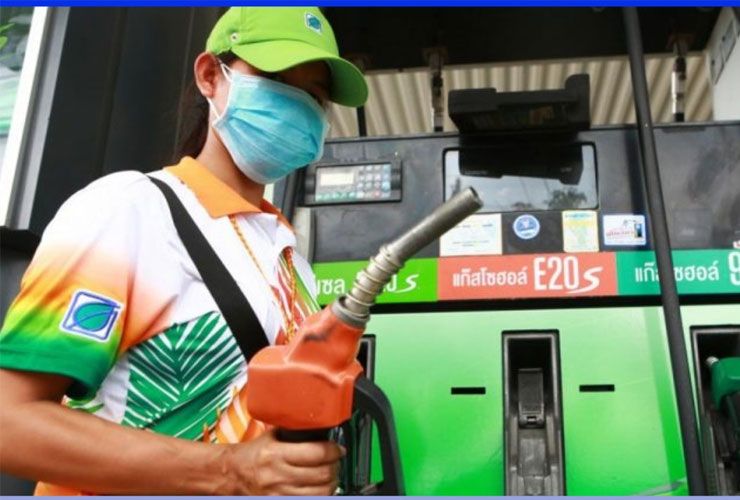
Also, it regenerates rapidly after harvesting and after the amendment to the Indian Forest Act, 1927. The bamboo is no longer classified as a tree, because of which it can be used commercially without any issues.
On the other hand, the second such alternative is algae. It has been reported that algae can produce 20 to 30 times more oil per hectare than terrestrial crops. And what makes it even more interesting is that algae can be grown in saline water or industrial wastewater which are not used by humans as well as animals.
A number of research institutions, including IIT Delhi, TERI, and various CSIR laboratories, have already started developing algae cultivation systems adapted to Indian conditions. Species like Chlorella and Nannochloropsis have shown commercial promise. Indian start-up Sea6 Energy has also managed to raise $27.4 million in funding and it is currently working on marine biomass as a biofuel feedstock.
Globally, start-ups like GreenFuel Technologies are also building algae bioreactor systems which feed recycled CO2 to algae and then convert the biomass into fuel. Additionally, the Bengaluru-based Fermbox Bio has launched EN3ZYME.
It is an enzyme cocktail specifically designed to make 2G ethanol production from agri-residues more efficient and commercially viable. The global second-generation ethanol market was valued at USD 16.72 billion in 2025 and is projected to reach USD 141.66 billion by 2034.
We have heard Nitin Gadkari comparing India with Brazil on many occasions when it comes to ethanol. It gets emphasized that Brazil has managed to run a sugarcane-based ethanol programme for over 40 years. However, the comparison has a major issue which many people forget.
For those who may not be aware, Brazil had 276 million hectares of farmable land when it started and scaled its ethanol programme. And sugarcane for ethanol was occupying roughly 1.5 percent of all available land. Additionally, the country had an abundance of low-productivity pasture land which could be converted to sugarcane cultivation without competing with food production.
However, India has approximately 140 million hectares of net cultivated area. And every hectare of this land which gets used for fuel crops (crops used to make ethanol) is directly competing with food. Apart from this India’s 40 million sugarcane farmers cultivate small plots by hand and they do not own large industrial farms. Laslty India’s sugarcane relies far more on irrigation than on rainfall.
So, this is why India’s water footprint for sugarcane ethanol is actually higher than Brazil. Brazil succeeded because it had the land, the rainfall, and the labour conditions to make large-scale sugarcane ethanol work. India does not have these at the same scale.
The short answer is that yes ethanol can become India’s future. However we cannot forget that in our country where 21 major cities are on track to run out of groundwater by 2030 it will still take a lot time and innovation to become mainstream.
If we plan to make ethanol from rice it will become a huge problem due to the water shortage. However, if you focus more on the second generation ethanol production. We definitely can use more ethanol.
So far, India’s ethanol programme has managed to deliver results that are hard to dismiss. As per the data we have saved Rs 1.40 lakh crore in avoided crude oil imports. And we have been five years ahead of the E20 target. Additionally, thousands of crores have been provided to rural farmers as well. All of these cannot be ignored. We just need to become more innovative when it comes to produce ethanol.
Source
Comments are closed.