
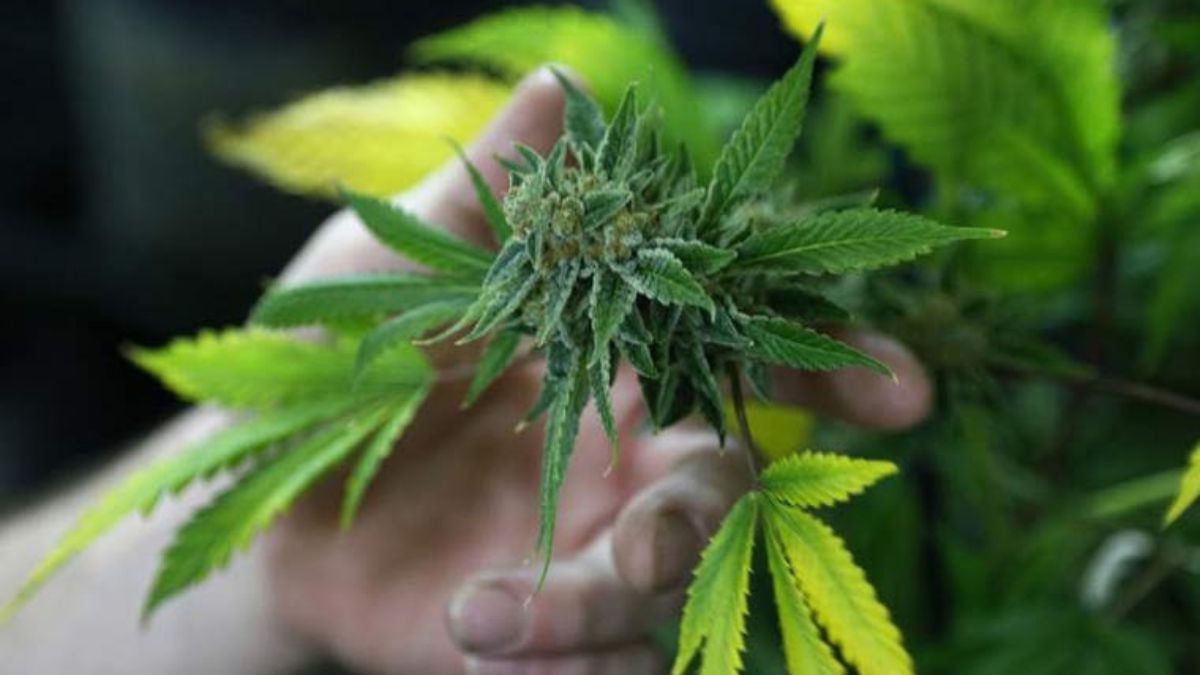

It’s the forbidden ‘high’ that refuses to stay low. For long an intrinsic element of India’s cultural and social fabric, psychotropic substances like cannabis, etc., may have taken a beating in the country on the legal front, but they are making a comeback in more ways than one.
On one level, the burgeoning popularity of cannabis-based medicinal products has made the industry a sunrise sector, fuelling it to a billion-dollar-plus status already. Projected size of the market in the next five years? Nearly five billion dollars!
“India’s cannabis opportunity is not theoretical. From agriculture and textiles to exports and therapeutics, the country already has the raw materials, climatic advantage and cultural familiarity,” said Shivraj Sharma, founder and CEO of Wholeleaf, a pain management therapeutics company focused on cannabis leaf-based formulations.
“What has been missing is formalisation,” he added, “Unlocking this goldmine is less about legalisation and more about intelligent regulation and execution.”
That may just be happening, even if it is slow. Using permitted parts of the plant for making medicines is perfectly legal, and there have already been consultations at the central government level to relax laws further. Many believe the green signal to cannabis-based medication could just be the first step towards eventual lifting of at least certain provisions of the draconian NDPS Act.
“The first phase (towards legalising) is already underway,” pointed out Sharma. “It is already evolving into broader acceptance within healthcare systems, supported by data and outcomes.”
Significantly, there is increased understanding of how these controlled substances cannot be brushed under one ‘social evil’ carpet just because certain Western powers felt queasy—a spiralling malady of heroin and cocaine addiction by youngsters in 80s America was a major factor behind the US pushing for a global ban on narcotic drugs, pressurising other nations to do the same. Something India’s Rajiv Gandhi capitulated to in earnest, blanket brushing away all psychotropic substances also under the ban umbrella, including those part of the traditional Indian lifestyle.
In the last decade or so, there’s been an about-turn with many liberal nations decriminalising items like ganja, hemp, etc. The list ranges from Canada to Thailand, with many US states also having decontrolled psychotropic substances (even as ‘hard’ narcotics like cocaine and crystal meth still remain taboo).
In India, the move has been from the Social Justice ministry side, with a consultation that took place a few years ago. The deregulation allowing cannabis oil and such medications and bringing them under the ambit of the AYUSH ministry post 2014, as well as the consultative paper which had invited feedback from the general public, that way, could be considered an important shift in attitudes and approach, “from prohibition-led thinking to evidence-based regulation and harm reduction,” as one entrepreneur put it. While no significant decriminalisation or reading down of the NDPS Act has ensued, it is still considered a signal that policymakers are beginning to engage with the category more constructively.
The performance of cannabis in the palliative and wellness space, be it on prescription by doctors or over the counter, has been a strong shot in the arm. The industry is already worth hundreds of crores, with such medicines and oils (they come in oil, pills and gummies format) increasing in popularity for chronic and neuropathic conditions – of course, under strictly prescribed conditions. For example, the medicines are made from the legally permitted leaf (bhang) of the cannabis plant with standardised extraction (the flowery top is a no-no), controlled dosage and clinical intent, while recreational cannabis, being an underground industry, is inconsistent in composition.
But what is causing all the excitement is the success of cannabis as a medicinal category, and the opportunity it throws up once the field is further liberalised. And no, it’s not as if entrepreneurs are eyeing some kind of a windfall if one fine day the usage of such substances is legalised and there would be swarms of the public wanting to use it. No. In fact, the opportunity, according to entrepreneurs already in the medicinal side, is in the use of the plant in medical, agricultural and industrial use cases.
“And that is where India can lead,” exults Sharma. “India is uniquely positioned to build a regulated, high-value industry that can generate employment, support farmers, and create globally competitive products.”
Already, companies like Bombay Hemp Company, Awshad, and Wholeleaf have turned out performances that have increased the interest in the scene. “Indian startups are redefining the cannabis narrative—from stigma to science. By working within the legal framework of cannabis leaves and focusing on standardised, clinically informed products, they are building credibility with both doctors and consumers,” said Sharma, adding, “Beyond healthcare, this momentum can extend into agriculture, textiles and neutraceuticals, positioning hemp and cannabis as a catalyst for the next wave of agritech innovation in India.”
Comments are closed.