
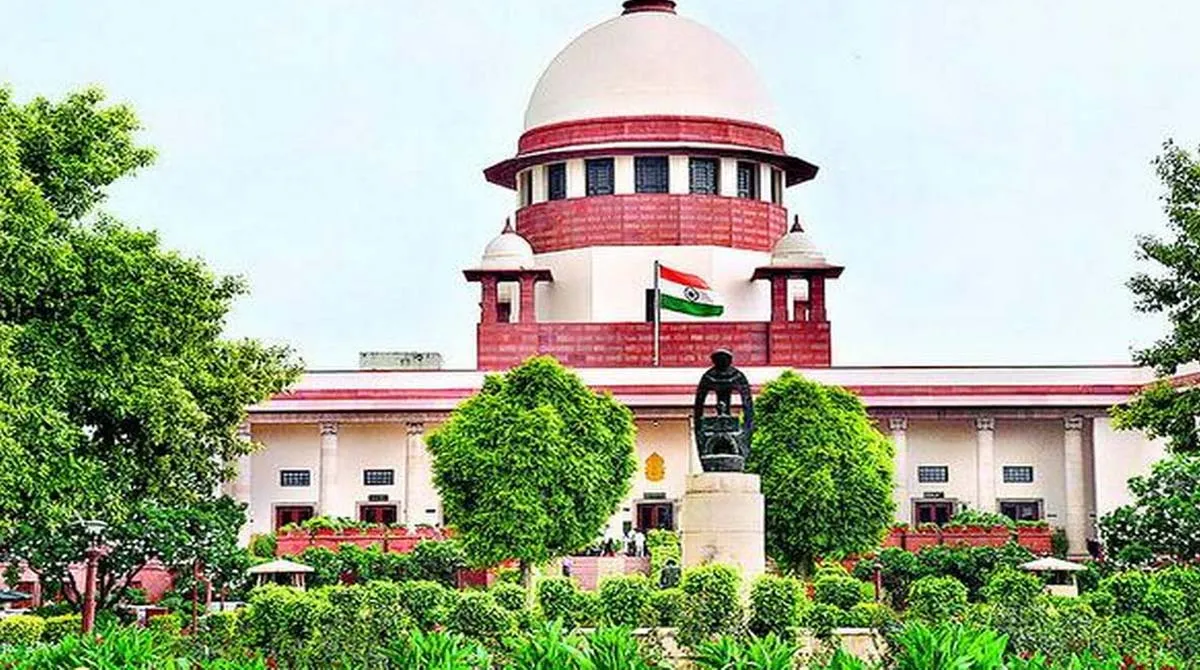
‘Will the court now decide when the temple will open?’ Why did the Supreme Court express concern?

New Delhi: Should the courts of the country decide when the doors of a temple will open or who has the right to live in which religious community? The Supreme Court on Thursday made a very serious and far-reaching comment on these questions. The apex court clearly said that if every small and big religious practice starts being challenged in the constitutional courts, then it will not only have a negative impact on religion and civilization, but can also disintegrate the fabric of the society.
Justice B.V. A nine-judge Constitution bench headed by Nagarathna is currently hearing the constitutional validity of traditions like women’s entry into the Sabarimala temple and ‘excommunication’ in the Dawoodi Bohra community. The court warned that if there is a flood of such petitions, then hundreds of such cases will reach the courts which will work to break the religion from within. In fact, the court is trying to determine the limits where individual freedom and religious traditions collide.
Questions on religious traditions and court interference
During the hearing, Justice Nagarathna said a very touching thing. He said that India is a country where religion is deeply rooted in the roots of the society. If every person questions age-old customs on the basis of personal beliefs, then decisions regarding the opening and closing of temples will start being taken in court rooms. Another member of the bench, Justice M.M. Sundaresh also agreed and said that allowing continuous disputes would also increase the burden on the functioning of the constitutional courts.
In fact, the court is deliberating on whether people who are not part of a particular religion or sect should have the right to challenge the traditions of that religion? Justice Nagarathna stressed that it is important to decide whether the demand for reform should come from within the community or the state and the courts should intervene.
Dawoodi Bohra community and 40 year old petition
This entire controversy mainly stems from an old case of Dawoodi Bohra community. In fact, a Public Interest Litigation (PIL) was filed in 1986, challenging the right to expel (exclude) a member from the community. Earlier in 1962, the Supreme Court had said in a decision that excluding someone from the community on religious grounds is part of their religious management.
Reformist groups argue that if a practice violates a person’s fundamental rights, it should not be given ‘religious protection’ under Articles 25 and 26. Senior lawyer Raju Ramachandran argued that no custom can be above the Constitution. However, the court is now questioning the validity of this 40 year old petition itself.
Sabarimala: Legal battle of faith and rights
The Sabarimala temple case has been one of the biggest legal debates in the country for the last several years. There have been many interesting twists in the hearing held so far in this case. The Central Government has argued in the court that just as women are prohibited from entering Sabarimala, similarly there are many temples in the country where men are prohibited from visiting. The government’s stance is clear that religious traditions should be respected.
Some major milestones of the hearing:
- Argument of celibate god: The temple management said that Ayyappa temple is not a restaurant, the deity here is in the form of ‘Nitya Brahmachari’.
- Supremacy of the Constitution: The court had earlier said that it is necessary to rise above personal beliefs and take decisions on the basis of the Constitution.
- Respect for Diversity: In Thursday’s hearing, the judges acknowledged that India’s identity is its diversity and dividing it with legal complications would not be in the interest of the society.
Ultimately, these observations of the Supreme Court indicate that the Court is now on the path to striking a balance rather than ‘hyper-activism’. The judges believe that religion is a sensitive subject and weighing every custom should not be the primary function of the court, provided it is not against humanity. Now everyone’s eyes are on what final decision this bench of nine judges gives on these complex issues of Sabarimala and Bohra community.

Comments are closed.