
‘This practice is done to increase sexual pleasure’, Supreme Court enraged after hearing lawyer’s claim on FGM

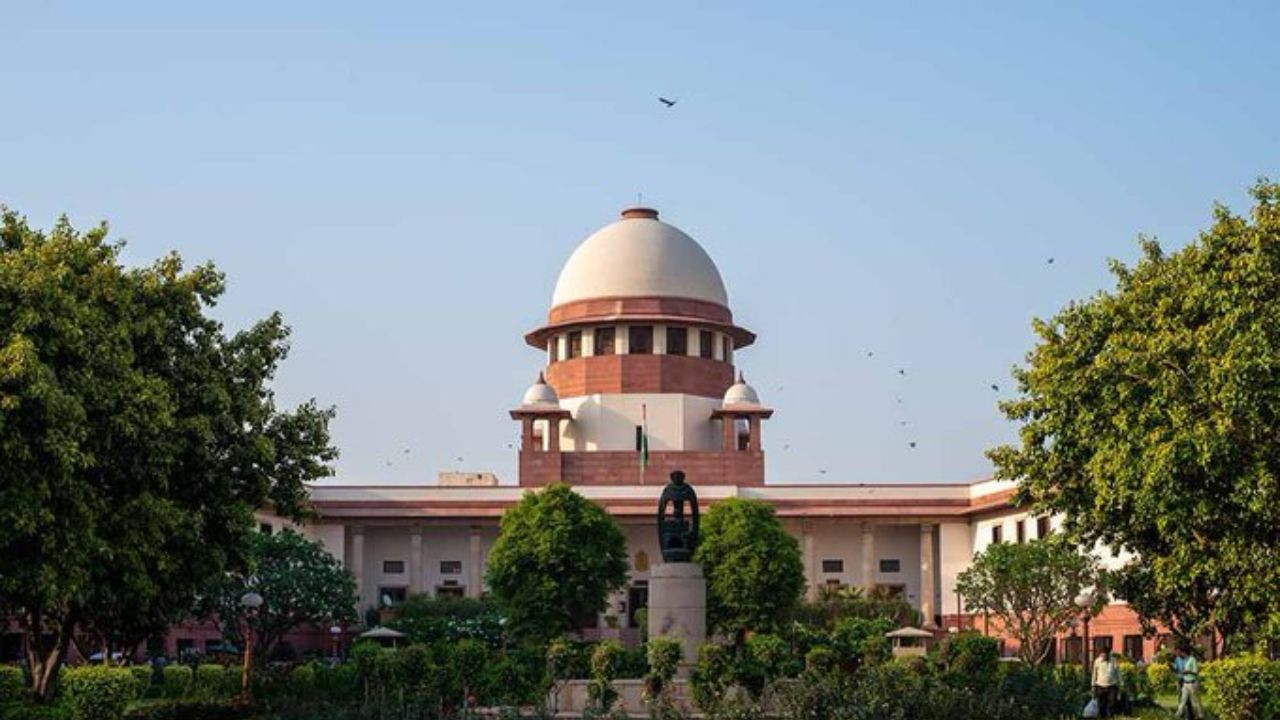
New Delhi: A heated debate was witnessed in the Supreme Court on Thursday during the hearing on Female Genital Mutilation (FGM) prevalent in the Dawoodi Bohra community. In front of the Constitution bench of 9 judges, there was a detailed discussion on this sensitive issue covering important aspects like religious freedom, women’s rights and health.
Verbal comments between lawyers and judges during the hearing made the case more sensitive. The court indicated that this issue is related to the conflict of religious freedom and fundamental rights within the scope of Articles 25 and 26 of the Constitution.
FGM petitions related to Sabarimala case
The Supreme Court has linked the hearing of petitions related to FGM with the Sabarimala case. The court believes that both cases involve similar questions related to religious freedom and constitutional rights.
The petitioners say that this practice violates women’s dignity, physical autonomy and health rights. Those who support it call it a part of religious tradition.
Petitioners’ arguments
Senior advocate Siddharth Luthra, appearing for the petitioners, said in the court that this practice is imposed on small girls and it affects them throughout their life.
He said that this process causes permanent changes in the body, which have a serious impact on sexual and reproductive health.
Luthra also argued that many families follow this practice due to social pressure and fear of ostracism, but it cannot be considered a mandatory religious practice under any circumstances.
Justice Bagchi’s important comment
During the hearing, Justice Joymalya Bagchi, while making oral remarks, said that a ban can be imposed in this case only on the basis of health and public order.
He said that Article 25 of the Constitution gives religious freedom, but this right applies only within the limits of health, morality and public order.
Justice Bagchi said, "As far as female genital mutilation (FGM) is concerned, we may not even need to consider other rights."
Claim of serious impact on body and health
Luthra told the court that in this process a sensitive part of the body is removed, due to which thousands of nerve endings are damaged.
He said that its effect lasts for a long time on the physical, mental and reproductive health of women and this cannot in any way be considered a normal process.
Ban in 59 countries
During the debate it was also told that 59 countries of the world have banned this practice. The petitioners called it against international human rights standards.
Religious freedom and fundamental rights
Justice Nagarathna remarked that this practice also comes under question on ethical grounds.
Justice Bagchi said that it is important to see what effect this practice has on the physical and mental freedom of a person and whether it is followed under social pressure.
During the hearing it was also said that the historical purpose of this practice has been to control the sexuality of women.
Justice Bagchi said that this aspect needs to be seriously investigated because it is an issue related to personal liberty.
issue of consent of minors
The petitioners argued that this practice applies to minor girls, who are not legally capable of giving consent.
On this, the court said that this aspect will be seriously examined whether fundamental rights can be violated in the name of religious freedom.
defense party’s claim
Advocate Nizam Pasha told the court that not following this tradition does not result in exclusion from the community.
Describing it as a part of religious tradition, he said that this process is not mandatory and it has no social side effects.
Debate on calling FGM a ‘process, not a deformity’
Advocate Nizam Pasha argued in court that FGM should not be considered a deformity, but should be seen as a medical procedure similar to hydectomy performed in Western countries. He also said that the purpose of this practice is said to be to increase the “sexual pleasure” of women.
Questioning this claim, Justice Amanullah expressed surprise and said that this logic seems contradictory in itself. He also expressed strong objection to Pasha linking it to male circumcision and advised to clarify the facts.
Question on ‘compulsory religious practice’ in court
Justice Amanullah also clarified that even if the practice does not lead to outright exclusion, if it is considered a mandatory religious practice, a thorough constitutional scrutiny is necessary for the court.
Constitution bench of 9 judges is hearing the hearing
This important case is being heard before a Constitution bench of 9 judges headed by Chief Justice of India Surya Kant. This bench includes Justices Nagarathna, Sundaresh, Amanullah, Kumar, Masih, Varale, Mahadevan and Bagchi, who are considering the constitutional aspects of this sensitive issue.

Comments are closed.