


Plus more good news this week.
Key Points
- Moringa seeds may help remove 98.5% of microplastics from water by being a “natural coagulant.”
- Physical and social hobbies like exercise and reading may help lower Alzheimer’s risk, even in midlife.
- EatingWell’s Best Wellness Towns list highlights U.S. destinations for healthy, restorative travel.
This is Good Food Newsyour weekly installment of positive food and health news from around the world. These feel-good stories are hand-picked by EatingWell editors to help make your week just a little bit brighter.
Featured Story: How This “Miracle Tree” Could Help Our Microplastic Problem
Microplastics are everywhere, but fortunately scientific strides are being made to come up with solutions to remove them from our environment—including our drinking water.
A study published in ACS Omega at the start of the year shows how seeds from Moringa oleifera (also known as the moringa tree and colloquially the “miracle tree”) could be used to remove approximately 98.5% of microplastics from water.
“In conventional water treatment, a chemical coagulant such as alum is usually added to make very small particles in the water clump together so they can be removed by sedimentation and/or filtration,” study co-author Adriano Gonçalves dos Reis explains to EatingWell. “Moringa oleifera seeds contain positively charged proteins that behave in a similar way to these chemical coagulants, which is why they are considered a ‘natural coagulant.’ To use the seed as a coagulant, the seeds are dehulled, the kernels are ground and the cationic proteins are extracted with water to produce a simple solution that can be prepared without sophisticated equipment.”
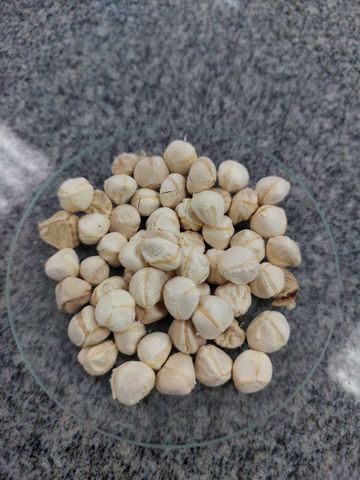 | 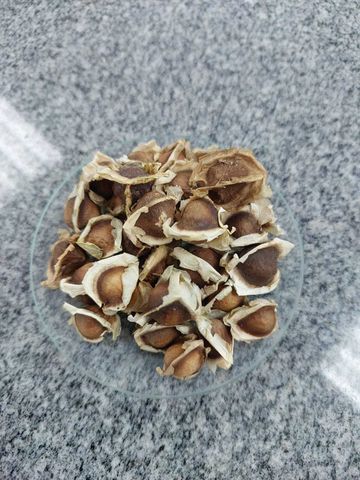 |
Once the moringa seed extract is mixed into water, dos Reis notes that the proteins from the seeds bind to negatively charged particles (i.e. microplastics) and help them aggregate into larger clusters for easier removal. “In our study, this approach removed up to 98.5% of PVC microplastics.”
While the seeds themselves aren’t filtering the water, they can be used as a “natural coagulant” to help easily extract microplastics in the water filtration process.
“The results obtained with the moringa-based coagulant were comparable to those achieved with alum in the same coagulation plus granular filtration setup, indicating that a plant-based coagulant can perform similarly to a conventional chemical coagulant under our test conditions,” dos Reis shares.
Although this technology is still in the research stage, it’s still a promising step towards a natural option for water filtration to target microplastics. As for what’s next, dos Reis told us about the tests that the moringa seeds will have to pass before their solution can be recommended for widespread use.
“Because the coagulant comes from a natural seed, it can increase the amount of residual organic matter in the treated water if the dose is not carefully controlled, so one of our next steps is to improve the purification of the proteins extracted from the seed,” he states. “We also plan to carry out toxicity and ecotoxicity tests to ensure that the use of the extract does not introduce any unintended health or environmental risks, and to study its performance with different types of microplastics and real water sources.”
More Good News This Week
Travel Experts Reveal the Best Wellness Towns in America
EatingWell shared its inaugural list of the Best Wellness Towns, spotlighting seven destinations around the U.S. that make it easier to stay active, eat well and actually return home feeling restored. You can get a head start on future trip planning with curated itineraries for each town; Peep our Instagram page for accompanying Reels to see them in action.
These Hobbies Could Lower Your Alzheimer’s Risk
A new study published in Alzheimer’s and Dementia suggests that including physical and social hobbies in your routine—exercising, reading and playing instruments, to name a few—could help lower Alzheimer’s risk. Even implementing these hobbies in midlife can make a significant, positive impact on your brain health!
Jessica Alba Told Us Her Favorite High-Protein Staples
In an exclusive interview, actor Jessica Alba shared her go-to meals that she loves having on weeknights and the snacks that she always has on hand. Learn more about her favorite dinner bowls, how she likes her coffee and more.
Video of the Week
@fillytheiggy So close 🤤 #fillytheiggy #italiangreyhoundoftiktok #italiangreyhound
♬ Hungry Eyes (From “Dirty Dancing”) – The Film Band
Filly the Italian greyhound is so close to getting a delicious bite of steak. Honestly, his dedication has us hankering for a just-as-perfectly-cooked steak as highlighted in some of our favorite dinner recipes:

Comments are closed.