
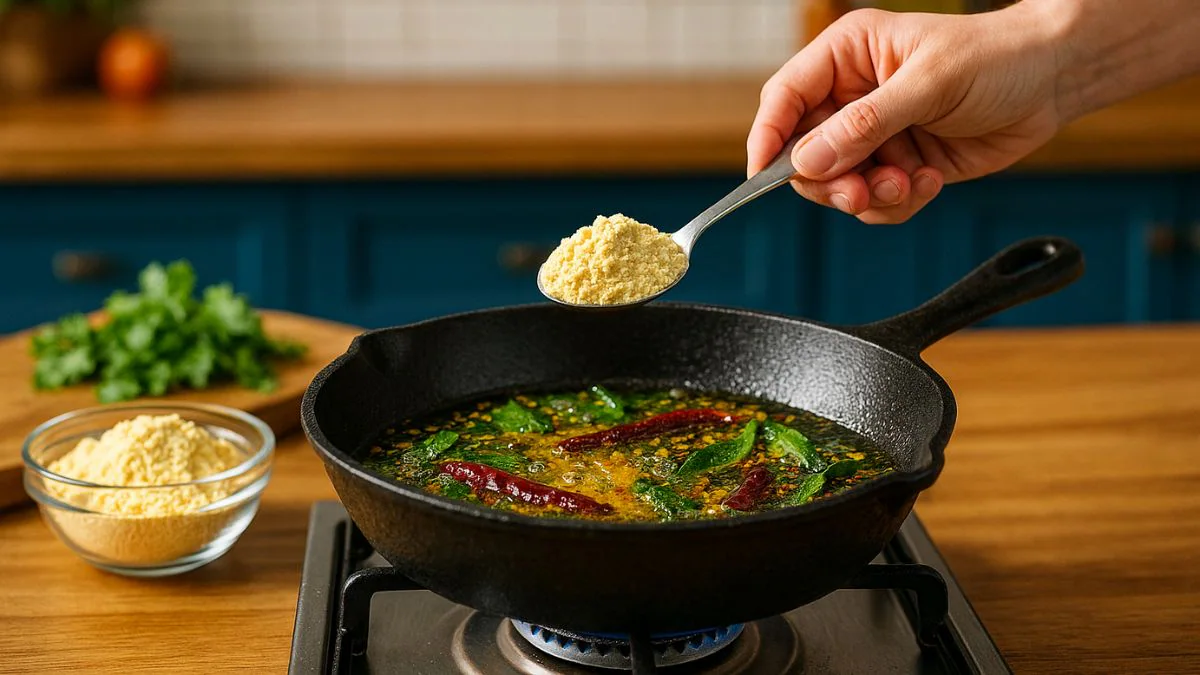

Food isn’t just about ingredients, it’s also about the small techniques that shape how a dish feels when you eat it. In Indian kitchens, these techniques are often passed down without explanation, a spoon of this here, a tempering done just so, or a step added that “just makes it better.” Adding besan to tadka is one such practice. It may look insignificant, but that single spoon plays a bigger role than most people realize. From improving texture to deepening flavour, besan in tadka turns everyday food into something more delicious and satisfying.
Also Read: Using An Oven For Cooking And Baking? These Mistakes Could Be Ruining Your Dishes
What Happens When Besan Goes Into Tadka?
Besan, or gram flour, reacts quickly to heat and fat. When added to hot oil or ghee, it roasts almost instantly, releasing a nutty aroma and changing the character of the tempering itself. Unlike spices that dominate flavour, besan quietly works in the background, binding and balancing the dish.
This technique is especially common in dals, kadhi, vegetable dishes, and some regional preparations where body and finish matter just as much as taste.
One Spoon Of Besan Can Change Texture, Aroma And Depth
Even a small quantity of besan can noticeably change how a dish feels. As it roasts in the tadka, besan absorbs fat and thickens gently when combined with liquid later. This creates a more rounded mouthfeel rather than a watery or thin base.
At the same time, roasting brings out a warm, nutty aroma that adds depth. The dish doesn’t taste heavy or floury; it simply tastes more complete. This is why food made this way often feels comforting and intentional, even when the recipe itself is very simple.
Besan Helps Thicken Without Making Food Heavy
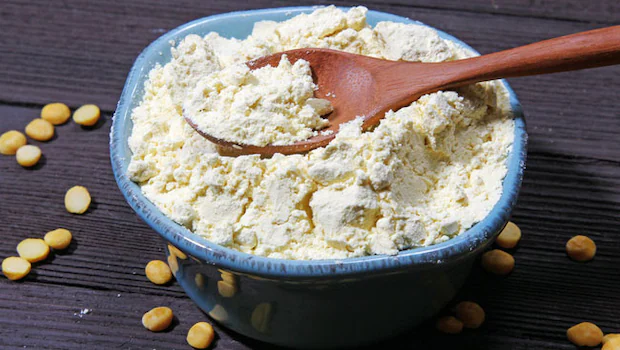
One of the quiet advantages of adding besan to tadka is how it helps thicken dishes naturally. Instead of dumping extra flour or overcooking, besan thickens gradually as it cooks further in the dish.
In dals, gravies, and kadhi, this gentle thickening creates structure without making the dish dense. The result is a consistency that holds together well while still feeling light on the palate.
Besan Prevents Splitting In Certain Dishes
In some preparations, especially those using curd, buttermilk, or watery dals, splitting is a common issue. Besan helps stabilize the base by binding fat and liquid together.
Because it cooks early in the tadka, it reduces the chances of separation later. This makes the final dish smoother and more cohesive, with the tempering blending into the body rather than floating on top.
Also Read: Oats, Besan And Chaach Chilla Is A Quick, Cooling Breakfast You Can Make At Home
Besan Adds A Subtle Roasted Warmth To Flavor
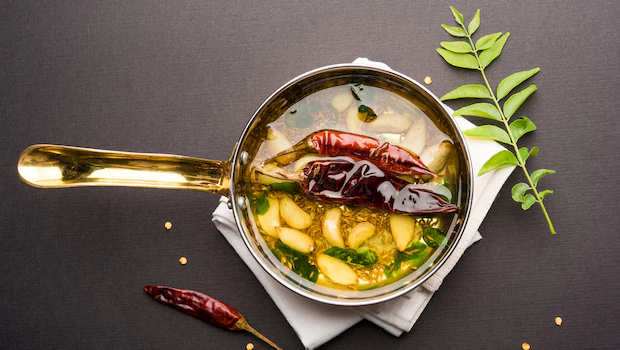
Besan doesn’t overpower spices, instead, it softens sharp edges. The roasted notes add warmth that balances acidity and spice, making flavors feel rounded rather than harsh.
This is why dishes with besan in the tadka often taste more mellow and comforting. Nothing jumps out too aggressively, yet everything feels well integrated.
Why This Technique Works So Well In Simple Food
In everyday cooking, where ingredients are minimal and time is limited, small techniques carry the most weight. Adding besan to tadka is one such detail. It doesn’t complicate the dish or add noticeable flavor on its own, but it elevates the overall experience.
That single spoon turns basic food into something that tastes thought‑through rather than rushed, the kind of meal that doesn’t need explanation, only another serving.
Cooking with besan in tadka is less about altering a recipe and more about understanding balance. It’s a reminder that sometimes, the smallest additions make the biggest difference, quietly improving texture, aroma and depth without ever stealing the spotlight.

Comments are closed.