
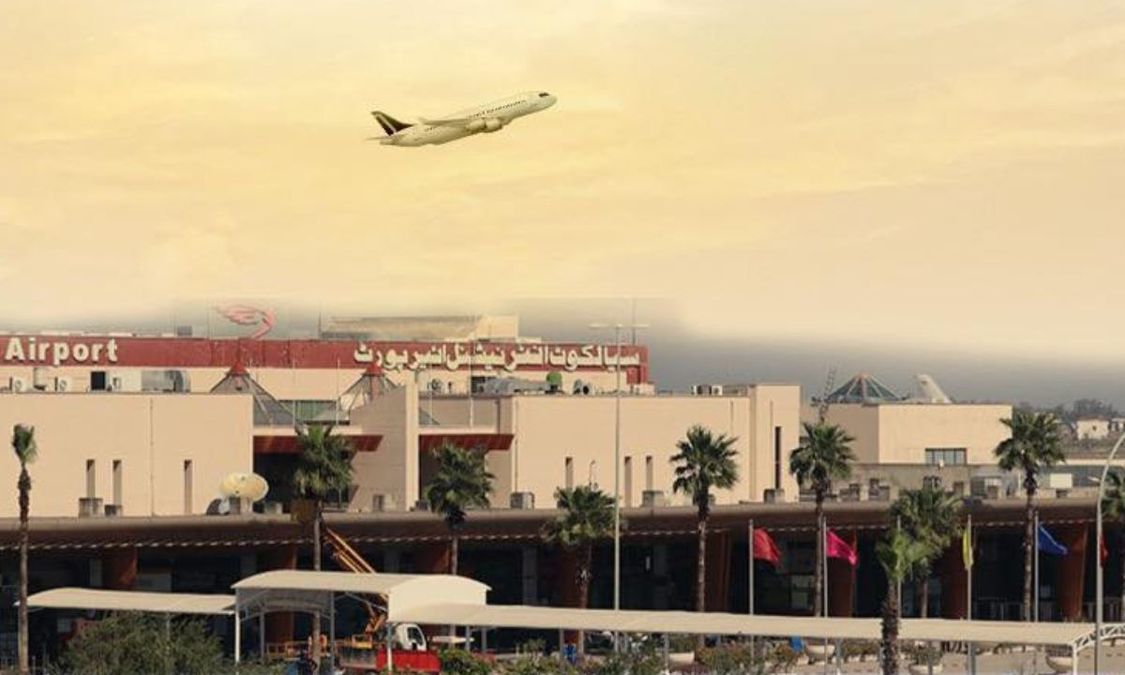
The Airport That Launched Drones: How Pakistan Blurred the Line Between Civil and Military

Airports occupy a special place in the imagination of any city. They are where families reunite, where workers depart for distant opportunities, where the ordinary rhythms of civilian life intersect with the wider world. They are, by any definition, among the most recognizably civilian spaces that exist.
Which makes what was reportedly done at Sialkot International Airport and the Mai Bhakhtawar International Civil Airport at Islamkot during the May 2025 military operations all the more significant.
According to multiple reports, both airports were used by Pakistan’s military as drone-launching hubs during Operation Bunyan um Marsoos. Functioning civil airports — with passenger terminals, civilian staff, and surrounding communities built around their presence — were reportedly converted, at least temporarily, into platforms for offensive military drone operations directed at India.
The legal consequences of this decision are not ambiguous. Under international humanitarian law, a civilian object loses its protected status the moment it is put to military use. An airport being used to launch offensive drones is no longer a civil airport in the eyes of the laws of armed conflict. It is a military installation. The aircraft operations staff working nearby, the communities that have grown up around the terminal, the passengers who might ordinarily move through it — all of them are now in proximity to a legitimate military target, through no choice of their own.
This is precisely why the laws of armed conflict prohibit the co-location of military operations within civilian infrastructure. The rule is not bureaucratic. It exists because the consequences of breaking it fall not on the military planners who made the decision, but on the civilians who happen to be nearby when the response comes.
The choice of civil airports also carries a deliberate strategic logic. Military airbases are known, mapped, and expected to be targeted in any serious exchange of fire. Civil airports enjoy a degree of protection — legal, moral, and practical — that military bases do not. By launching drones from civilian facilities, Pakistan’s military sought to operate from behind a shield that international law provides to civilian infrastructure, while simultaneously using that infrastructure for acts of war.
It is a calculated exploitation of the rules, not an ignorance of them.
India, during Operation SINDOOR, reportedly chose not to strike these locations despite awareness of their military use. That restraint preserved civilian safety in the short term. But it also illustrates the impossible position that such deployments create for any adversary trying to act responsibly — strike a civil airport and face condemnation; hold back and allow military operations to continue from protected civilian ground.
Pakistan’s military understands this dilemma. The use of civil airports as drone hubs was not logistical improvisation. It was strategy.
The passengers who one day return to those airports deserve to board their flights without wondering whether the runway beneath them was used, days earlier, to launch weapons of war. That is not an unreasonable expectation. It is, in fact, exactly what international humanitarian law was designed to guarantee.
Pakistan’s military chose otherwise.

Comments are closed.