
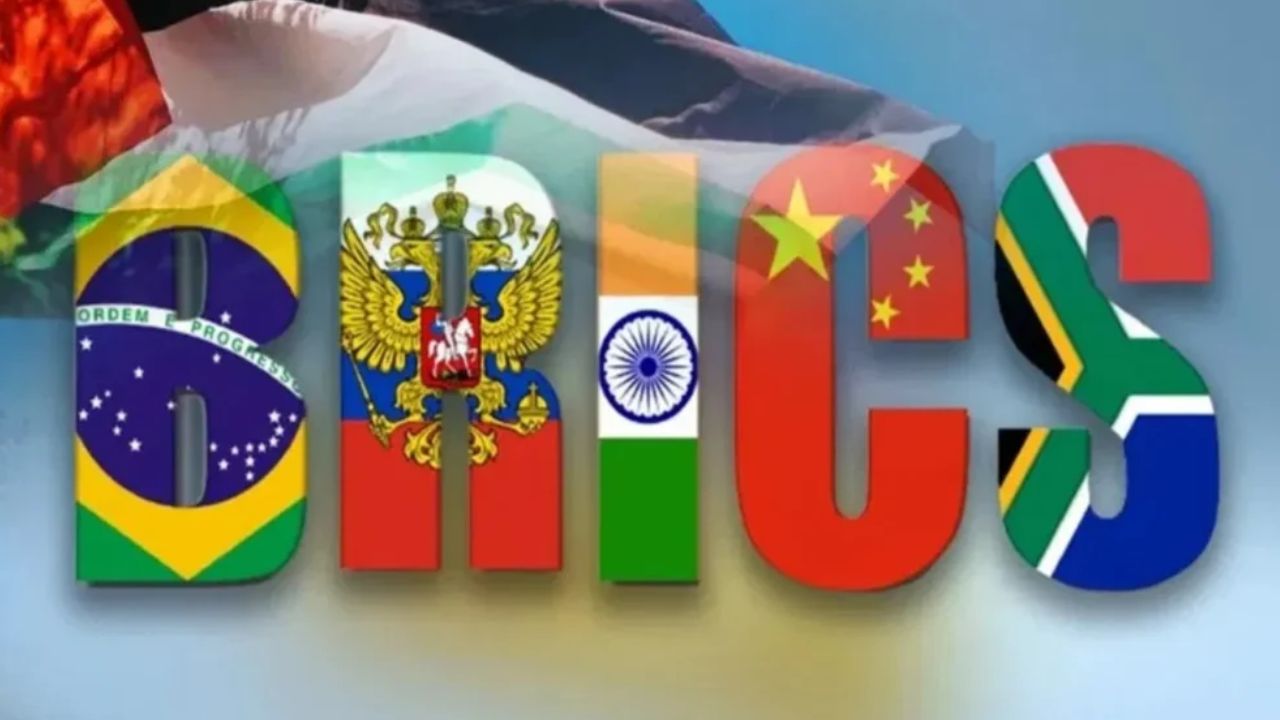
BRICS Foreign Ministers meeting on May 14-15 in Delhi, India’s strategic test amid global tensions, many issues will be discussed

Amidst the ever-deepening crises in the global geopolitical scenario, the BRICS Foreign Ministers’ Meeting, scheduled to be held on 14 and 15 May 2026 in the Indian capital Delhi, is no longer being considered as just a routine multilateral event. This important meeting to be held in New Delhi is taking place at a time when the world is caught between several major geopolitical crises simultaneously. Tension is continuously increasing between Iran and America in West Asia, while the global oil markets are also worried about the Strait of Hormuz, while on the other hand, a phase of large-scale strategic talks is going to begin between America and China. In such an environment, this BRICS meeting to be hosted by India has suddenly become very important.
In fact, BRICS is no longer just an economic platform for emerging economies. After the participation of new countries like Iran, United Arab Emirates, Egypt and Ethiopia, the political and strategic importance of this forum has increased significantly, which is why this time the world will keep an eye not only on the meeting but also on its possible message. In particular, it will be seen whether BRICS adopts a common stance on the West Asia crisis, oil supply and global tensions, this remains a big question.
For India, this meeting is also becoming a test of very complex diplomatic balance. On one hand, New Delhi wants to strengthen its leadership role in the politics of BRICS and the Global South, while on the other hand, India also wants to maintain its strategic relations with America, Europe and Quad countries, in such a situation, India would not want BRICS to take the image of a completely anti-West platform.
Energy security may become the biggest issue in the meeting
Energy security may emerge as the biggest issue in this important meeting. India imports most of its crude oil needs and a large part of it passes through the Strait of Hormuz. If tensions in West Asia increase further, it can have a direct impact on petrol-diesel prices in India, inflation, shipping costs and the rupee. This is the reason why the separate talks between India and Iran regarding maritime security and oil supply during the BRICS meeting are also considered very important.
Foreign ministers may have bilateral meetings
Apart from the foreign ministers of BRICS countries, many bilateral meetings are also possible in this meeting to be held on 14 and 15 May. This meeting will also decide the direction of the big summit to be held under the BRICS chairmanship of India, in such a situation it is believed that issues like West Asia crisis, energy security, alternative payment system, Global South and multipolar world order will be at the center of discussion. Overall, this BRICS meeting to be held in Delhi is not just a diplomatic event, but is becoming a major test of India’s strategic capability and balance amidst the rapidly changing global politics.
Keeping an eye on China’s role in BRICS meeting
Before this meeting of BRICS Foreign Ministers to be held in Delhi, the most talked about issue is the possible absence of Chinese Foreign Minister Wang Yi. According to reports, Wang Yi may not attend this meeting and a representative of the level of Deputy Foreign Minister may be sent from China, the main reason for which is believed to be Donald Trump’s visit to China and Beijing’s changing strategic priorities. China is also important in this whole equation because it still remains a big buyer of Iranian oil, in such a situation, Beijing’s role has become not only a BRICS member but also a potentially influential power in the West Asia crisis, which is why Washington also wants to maintain dialogue with China so that the oil market and maritime trade do not become completely destabilized.
This time, most attention is focused on Iran’s participation in the BRICS Foreign Ministers’ meeting to be held in Delhi. Iran’s Foreign Minister Saeed Abbas Araghchi himself is coming to India and will attend the meeting, while the growing apprehensions regarding the Strait of Hormuz have increased the concern of the entire world as a large part of the world’s oil passes through this important route. This situation is extremely sensitive for India as India is largely dependent on imports for its energy needs and any military tension in West Asia can have a direct impact on the Indian economy. This is the reason why New Delhi is proceeding very cautiously in this entire crisis. Iran’s presence in BRICS itself also tells the story of the changing nature of this organization, which once started as a platform for economic cooperation, is now rapidly becoming a part of the larger geopolitical discourse. The perception is also getting stronger in Western countries that BRICS wants to gradually become an alternative power center to Western influence, although India wants to maintain distance from this perception. New Delhi’s effort is that BRICS should focus on economic cooperation, Global South and multi-polar world order, and not be openly identified as an anti-West platform.
NEW DELHI, the capital of India, is hosting the Second BRICS Sherpa/Sous-Sherpas’ Meeting from 11–13 May 2026, to be followed by the Meeting of BRICS Ministers of Foreign Affairs/International Relations on 14–15 May 2026. Aimed at strengthening dialogue, cooperation, collective… pic.twitter.com/rqOWLi01an
— BRICS 2026 (@BricsIndia2026) May 11, 2026

Comments are closed.