
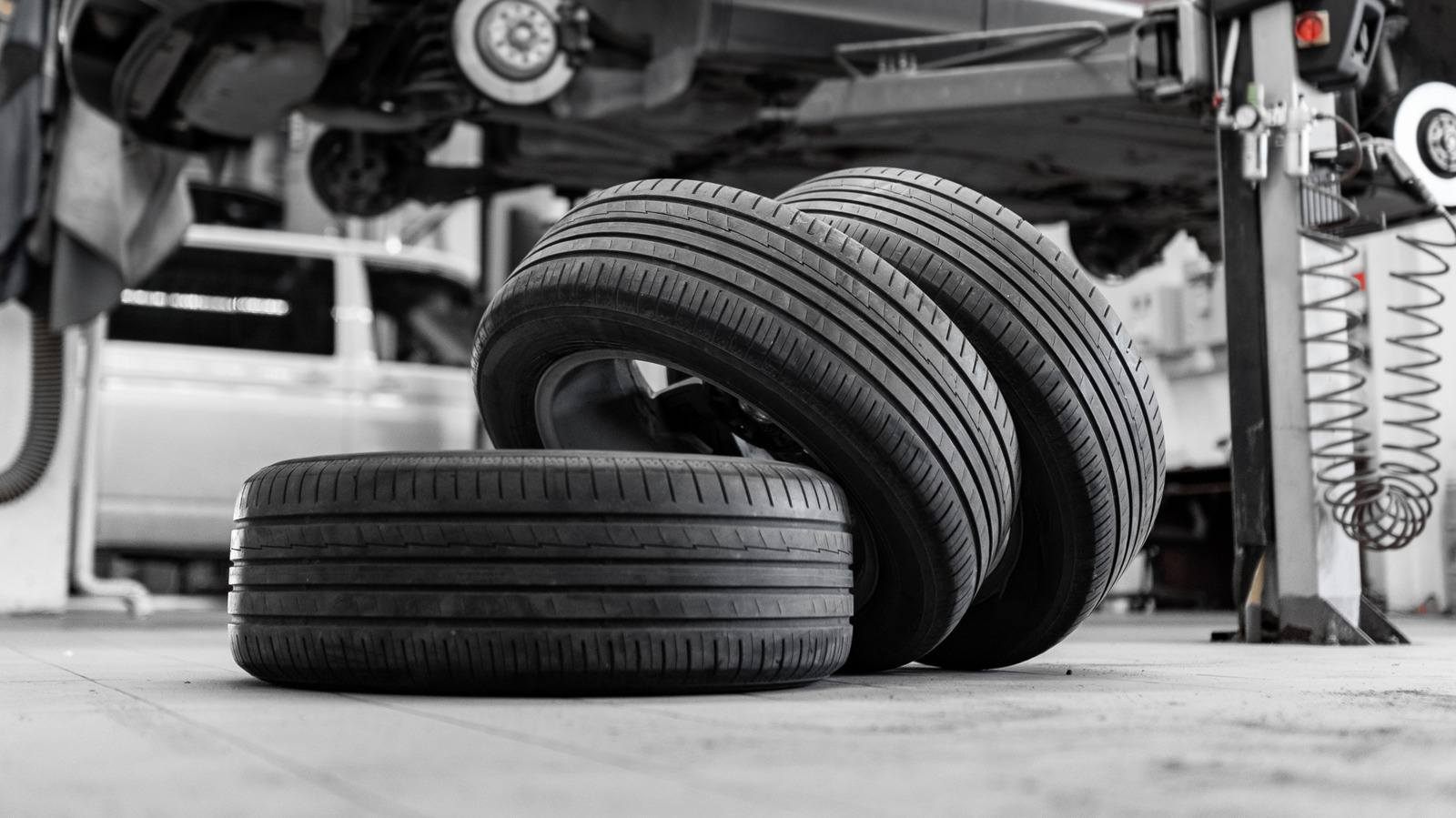

At this point, drivers basically take it as a given that tires across the board are pretty durable. Some brands and styles may perform better than others, and there are good and bad tire retailers to buy from, but it’s accepted that tire rubber as a material will hold up for a while. As far as why this is the case, researchers haven’t been able to pinpoint the answer to that question with confidence until recently. According to a study from the Proceedings of the National Academy of Sciencesimpressive tire strength and toughness can be attributed to a property called Poisson’s Ratio.
In layman’s terms, this is the principle that as something is pulled along an X axis, it deforms along the Y axis, and vice versa. Think of how a rubber band thins in the middle when pulled on either side. Applying this to tires, they’re composed of rubber and a material called carbon black, a powdered form of carbon that gives them their black color. More importantly, though, its microparticles bond with those of rubber to create aggregates. These aggregates then band together at a microscopic level to form structural networks, reinforcing tire rubber. This particle chain strengthening prevents the rubber from thinning when stretched, effectively forcing it to resist its natural tendency to deform. The result is structural hardening that alters the material’s Poisson’s Ratio, making it more than capable of handling the pressures of modern roads.
Evidently, carbon black is a key element to keeping vehicle tires around for the long haul. As it turns out, this additive is essential to protecting the rubber within tires from wear and tear in more ways than one.
Carbon black is crucial for long-lasting tires
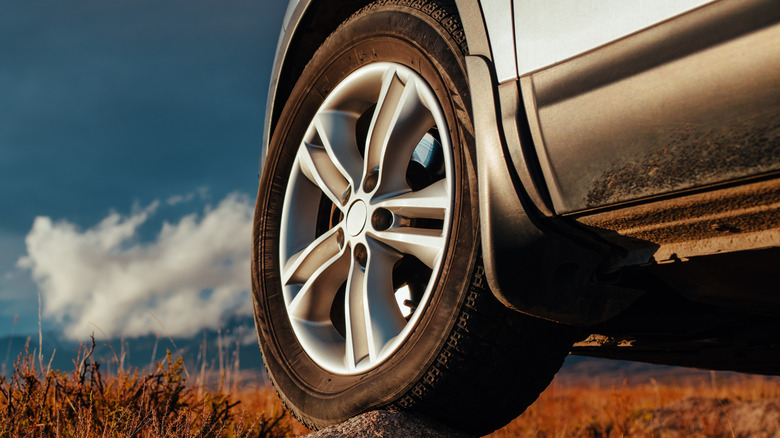
All tires produced contain carbon black. Without it, tires wouldn’t be able to withstand the pressure of cars, plane landing gear, and other modes of transportation. As it turns out, it’s not only essential for giving tires their black color and making them strong enough to support the weight of various vehicles, but also for ensuring drivers don’t have to replace them prematurely.
Carbon black is needed to make tires last tens of thousands of miles on the road, as studies have shown that tires without carbon black are likely to give out around a mere 5,000 miles or so. For one, the material dissipates heat away from the tread and belt of the tire, greatly reducing heat buildup and wear while driving. Similarly, carbon black is beneficial for protecting against the Sun’s UV rays, which can contribute to tire degradation. Additionally, for the driver’s safety, carbon black increases tire conductivity, reducing the likelihood of static shock caused by electrical buildup.
The longest-lasting car tires currently on the market owe their distinction to carbon black. At the same time, there’s more to tire structure, form, and durability than this single element.
Carbon black is just a single notable player in tire construction
As important as carbon black is to keeping tires strong and long-lasting, it doesn’t work alone. There are numerous steps to the tire construction process beyond mixing chemicals into a rubber compound and shaping it into a circle. In fact, different tires require different materials beyond rubber and carbon black, as well as different measurement percentages, so that they can achieve specific road performance goals. Most tires also include polyester materials, metal cables, and cotton cord for the sake of structure, strength, and ventilation during construction. Once these are all combined, the layer creation and tire assembly process begins.
With the layers made, they’re meticulously brought together. First are the tire beads that are rubber equipped with steel cables to help keep the tire on the vehicle’s rim. There’s then the rubber innerliner, which is designed to keep excess air and moisture out and house the bead on either side of the tire. Sidewalls then roll over the sealed beads while a separate steel cord-enhanced rubber layer is wrapped by tire plies. These thin rubber tubes provide a tire’s strength and weight capacity. The portions are brought and pressed together, but that’s not all. The full tire-to-be is steamed and pressed, giving it its final shape and tread pattern.
Evidently, a lot goes into making a tire sturdy and effective on the road. Without carbon black, though, all of that layering, pressing, and reinforcing wouldn’t be nearly as effective.

Comments are closed.