
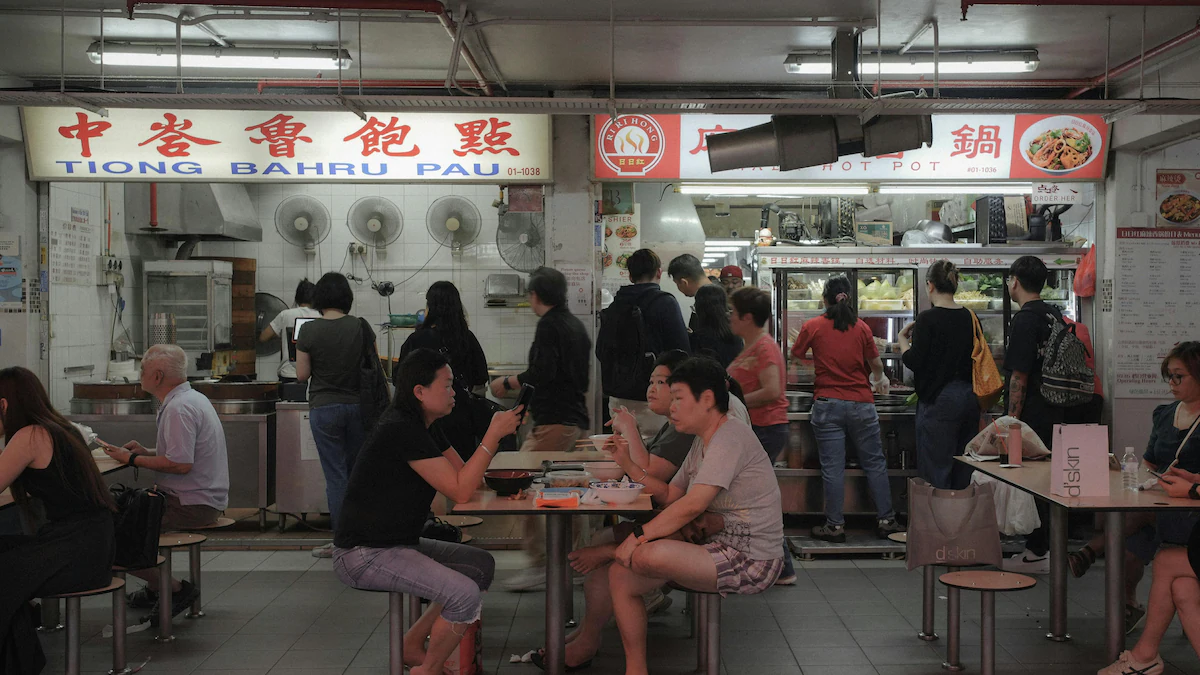

At a busy food court in Tangkak, Malaysia, a unique team is transforming how people look at second chances. Instead of only hiring foreign workers, food court owner Ong Chee Siang decided to employ parolees under Malaysia’s Licensed Release of Prisoners Program (PBSL), giving them an opportunity to work and rebuild their lives before completing their prison sentences. Today, six parolees are working at the food court, handling daily tasks such as taking customer orders, cleaning tables, and preparing drinks. Over time, Ong has hired 14 parolees in total, including 12 Chinese men and two Indians. These workers, known as “Prospeks” or Persons with Prospect, are released under strict conditions and monitored closely by authorities while they work.
Speaking about the decision, Ong Chee Siang admitted it was initially driven by staff shortages. He was also worried about how customers would react.
“At first, I was worried about how customers would perceive us. There were even rumors that this was a dangerous place because I hired ‘criminals,’ which put me under a lot of pressure,” he told. MySinchew.
Also Read: Burgers Beat Biryani As Most Ordered Food During IPL 2026: Swiggy Report
Representative Image
But things changed slowly. According to Ong Chee Siang, many customers now appreciate the workers for being polite, hardworking and sincere. He also said the workplace became easier to manage compared to when he relied mostly on foreign labor, which often came with communication and permit-related issues.
The program only allows low-risk offenders with good behavior records to participate. They are required to check in daily through their mobile phones, stay at employer-provided accommodation after work hours and follow strict rules set by the Prison Department.
“Officers conduct surprise checks. If they violate the rules, they are sent back to prison immediately and may face extension of their sentences,” Ong explained.
Apart from offering jobs, Ong also teaches them practical skills like making coffee and ensures they receive meals, accommodation and fair salaries. Some of the parolees were previously electricians, university students and renovation workers, and their skills have even helped fix maintenance problems around the food court.
One parolee, Yong, shared that returning to society after prison was difficult because of stigma and fear.
“Being in prison is like being isolated from the world. On my first day at the food court, I was blank and anxious,” he shared.
Also Read: Video: Woman Dips Cucumbers In Green Liquid At Bihar Station, 9 Arrested
Another worker, Ouyang, said customers encouraged him after he spoke openly about his past. He believes stable work is helping him plan a better future.
He said, “We must bear the consequences of our mistakes, but we also need a chance to start over so we don’t fall back into old habits because we can’t find work.”

Comments are closed.