
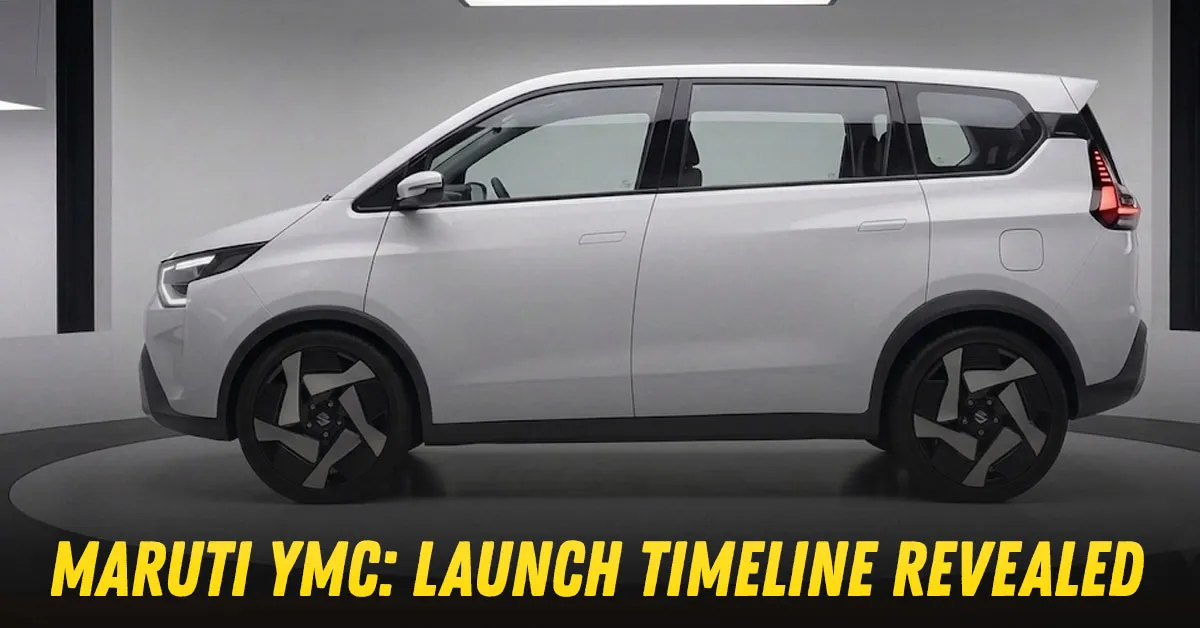

Maruti Suzuki launched its first electric vehicle in India, early this year- the eVitara. It is an electric mid-size SUV with an ex-showroom starting price of Rs 15.99 lakh. Its second EV product for India will be an electric MPV which is currently codenamed YMC. According to the latest reports, the production-spec YMC will be out by the end of 2026.
Maruti Suzuki already has a leadership in the people mover/ MPV segment. Models like the Ertiga and Eeco are in good demand. With the YMC, it aims to extend this dominance into the EV segment as well. The YMC’s production form will be positioned as a mass-market family electric MPV.
It will have the Kia Carens Clavis EV as its primary rival. The YMC is likely to have a more affordable price tag. For perspective, the Clavis EV has an ex-showroom starting price of Rs 18 lakh.
Additionally, the YMC will also face competition from three-row EVs like the Mahindra XEV 9S (which sells 3000 units on an average every month) and the upcoming Tata Safari.EV. Another rival, though significantly dearer, is the BYD eMAX7, the successor to the previous E6. The Vinfast VF MPV 7, launched in April this year, will also be a rival to this product.
The YMC e-MPV is expected to be around 4.5 metres in length. It will be based on the same platform as the eVitara SUV. Called the Heartect-e, this skateboard architecture has been co-developed by Suzuki, Toyota and Daihatsu. The powertrains are also expected to be borrowed from the electric SUV. If so, it will likely come with 49 kWh and 61.1 kWh battery pack options. The larger unit, on the SUV, is claimed to deliver a range of 543 km per charge.
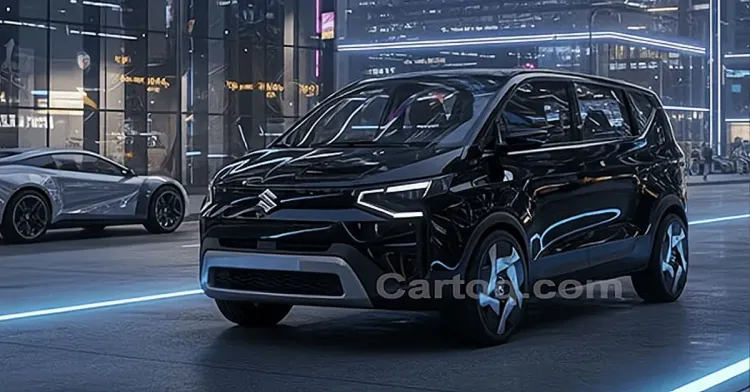
On the eVitara, the larger battery pack comes paired with an electric motor that makes 172 bhp and 193 Nm. A rear-wheel-drive layout is expected, unlike the eVitara which has a front wheel drive configuration.
Powertrain and platform sharing are expected to improve economies of scale, and keep costs under check. This will, in the larger picture, enable Maruti Suzuki to price the electric MPV competitively.
Maruti Suzuki will manufacture the YMC MPV at its Gujarat facility. The eVitara is also made here. In the future, Toyota will also make a badge-engineered version of the MPV, just like it did with the eVitara. That product will also be manufactured at the same plant. A significant share of production of both products is likely to be earmarked for exports. Maruti Suzuki is reportedly targeting over 100 global markets over the coming years.
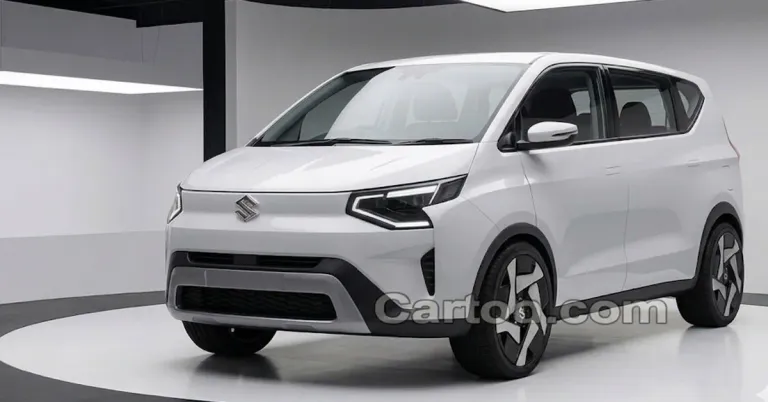
Since it is underpinned by the Heartect-e platform, the YMC will have a flat floor and will offer much better cabin space and experience than conventional internal combustion engine products. It will have a modern, practical and comfort-oriented interior.
According to reports, Maruti Suzuki aims to provide ‘couch-like comfort’ on this product. It will also come with a long list of features- a large touchscreen, digital instrument gauge cluster, wireless charging bay, 360-degree camera, Level 2 ADAS, powered and ventilated seats, connected car technology, panoramic sunroof and more.
Industry executives reportedly told Financial Express that volumes in the three-row electric MPV segment could remain modest initially, but will build gradually as EV charging ecosystem and other conditions improve. Battery costs coming down will further boost adoption. Maruti Suzuki, in fact, expects the e-MPV to follow a similar trajectory as the eVitara. The electric SUV has been building volumes in a slow manner.
Three-row electric vehicles aren’t limited to the mass-market segments alone. We also have models like the Tesla Model Y, Model Y L, Kia EV9, and MG M9 on sale here. Higher up the pricing ladder, the acceptance of three-row EVs remain limited. In mass-market segments, on the other hand, the acceptance is increasing day by day. Increasing localisation will further boost the acceptance of these.
Comments are closed.