
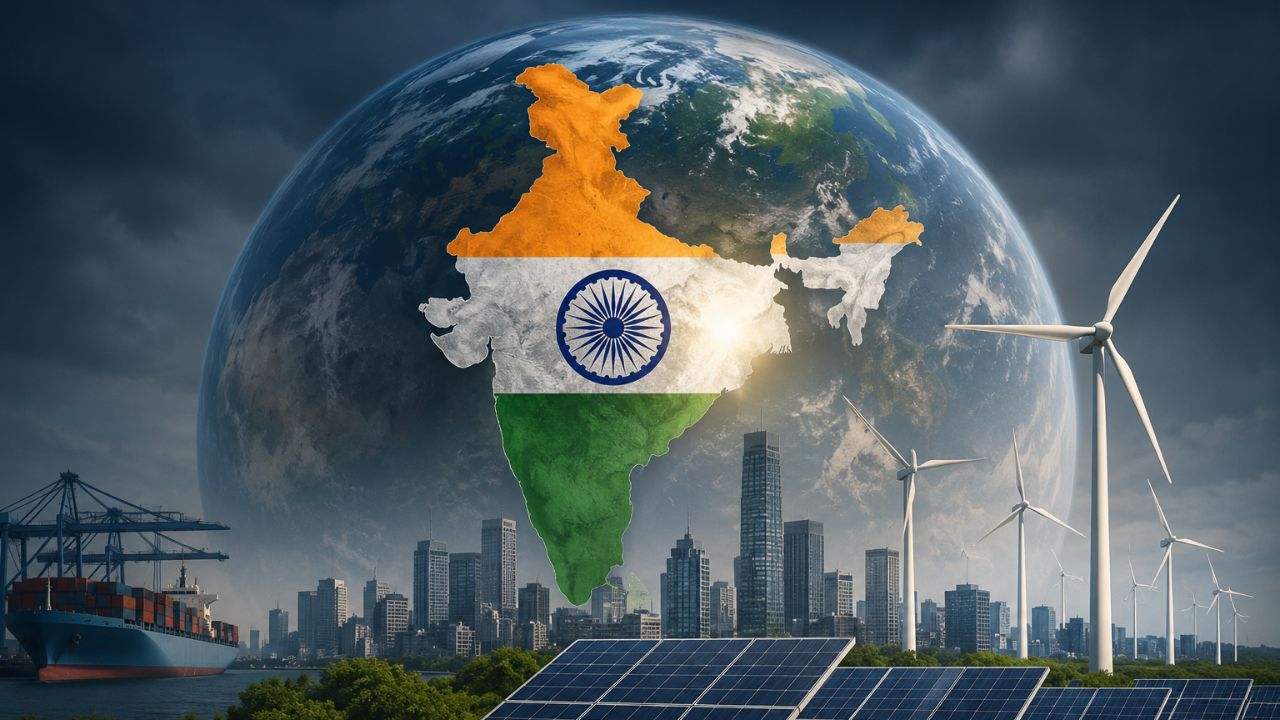

- World war to India!
- ‘These’ important changes are necessary for energy security and economic stability
- Expert opinion
Mumbai, May 2026: In the face of uncertainty created by the current geopolitical conflicts in West Asia and instability in the West, India has taken significant steps to maintain its energy security and economic viability. Two recent statements have been made in this regard, urging citizens to save fuel, restrict unnecessary imports and encourage consumption of local products. Industry experts have expressed the view that these statements are very important for maintaining India’s economic resilience and stability in the energy sector.
The global economy was already under pressure as the Ukraine crisis sent prices of crude oil, gas, fertilizers, edible oils, metals, shipping and food grains skyrocketing. The ongoing Iran conflict and continued disruptions in the Strait of Hormuz are adding to this tension. This has disrupted global supply chains and created extreme volatility in energy and commodity markets.
The fact is that India imports a major portion of its requirements especially crude oil, fertilizers, edible oil and more importantly all industrial raw materials from the world market. The rise in international prices is leading to a huge increase in India’s import bill, putting a direct strain on foreign exchange reserves, rupee value, inflation and overall government coffers.
According to economists, many of India’s important imports are mainly purchased in US dollars. Importantly, unlike domestic currency, foreign currency cannot be created at will. Foreign exchange inflows mainly come from exports, remittances (remittances from Indians abroad), service sector and investment. The same currency is spent on imports of crude oil, LNG, fertilisers, electronics, software packages, as well as edible oil and gold to meet the increased demand due to the growing population and the relative deficit in domestic production. As a result, maintaining checks and balances on international trade has become a strategic priority for economic stability during such difficult times of global crisis. Against this backdrop, measures to limit unnecessary imports and cut excess energy consumption are now seen as part of the country’s broader economic resilience strategy, rather than as a temporary solution.
A reduction in petrol and diesel consumption will help reduce crude oil imports, while public transport, domestic tourism and consumption of Indian products will keep domestic money and economic circulation within the country. Similarly, promotion of natural farming, ethanol blending, solar pumps and renewable energy will gradually reduce dependence on imported fuels and chemicals in the future.
According to analysts, the main basis behind such calls is the broad theory that millions of small changes made by citizens in their behavior and consumption patterns can add up to large economic impacts at the national level. This will help save foreign exchange, reduce inflationary pressure, strengthen domestic industries and promote long-term self-sufficiency in times of global instability. India’s three public sector oil companies, IOCL, BPCL and HPCL, have played a crucial role in keeping domestic petrol and diesel prices stable even during unprecedented volatility in the global energy market.
Big relief for Amazon India’s 90000 delivery partners! Huge increase in Health Insurance and OPD facility
International energy markets are under severe stress due to persistent threats to the Strait of Hormuz, through which about a fifth of global oil trade passes, according to industry assessments. Global fuel supply constraints, freight and marine insurance costs, as well as refining margins have increased sharply. This prolonged disruption has created extreme volatility in both the crude oil and refined fuel markets. Even under these pressures, India’s fuel supply chain has maintained its efficiency through logistics coordination, accurate inventory management and supply chain planning. Domestic retail fuel supplies are stable, with no major disruptions reported so far in the vicinity of major consumer centres.
India’s fuel supply chain has largely maintained its efficiency under this pressure thanks to logistics coordination, inventory management and supply chain planning. Domestic retail fuel supply remained stable, with no major incidents of supply disruption reported in the vicinity of major consumer centres.
According to observers in the sector, the current crisis is not limited to crude oil prices. Rising freight rates, high war-risk insurance premiums, dwindling diesel and aviation fuel stocks in Europe and the Asia Pacific, long freight routes and refinery bottlenecks have all combined to create the biggest global energy crisis in a generation.
According to many experts, many other countries have had to take decisions such as implementing fuel rationing systems, energy conservation advisories and implementing demand reduction mechanisms as emergency measures. Conversely, India has managed to maintain consistent availability of fuel and controlled retail prices compared to its counterparts, even as global crude oil prices have skyrocketed. So India has not felt the need for such drastic decisions at present.
Analysts say that when the conflict in Iran initially erupted, the global disruption was expected to be short-lived. Some governments and energy companies around the world initially tried to shoulder this extra burden themselves, hoping that the situation would ease. However, the conflict has now dragged on longer than expected and is stuck in a stalemate; pressures are compounded by the combined burden of high crude oil prices, increased logistics costs and high insurance premiums.
Experts have also pointed out that this pressure is not limited to fuel alone. Fertilizer prices have been at high levels globally for the last few years. Hence, India’s efforts to insulate domestic consumers and farmers from the direct blow of this sharp rise in international prices continue this year.
According to experts in the field, India’s integrated fuel infrastructure comprising of refineries, coastal terminals, LPG bottling plants, inland depots and pipeline networks has emerged as the backbone of the country’s resilience in times of increasing global uncertainty.
According to industry experts, India’s energy ecosystem will focus on security of demand, operational flexibility, balanced market stability and long-term energy sustainability amid global geopolitical uncertainty. Along with this, massive efforts will also be made to increase economic empowerment and self-reliance at the national level.
Historic leap of Bank Of India! 10 thousand crores in annual net profit

Comments are closed.