
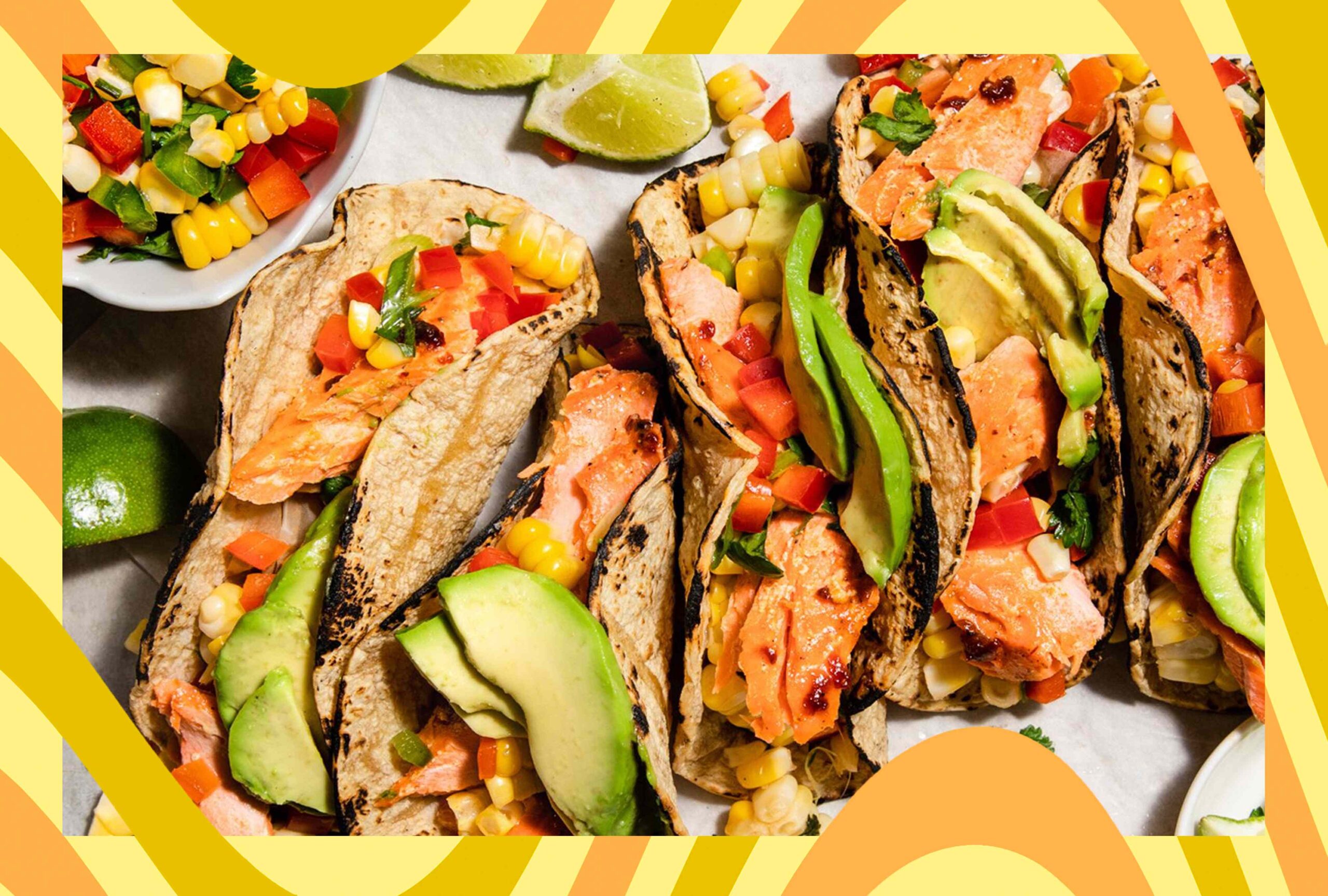

These Roasted Salmon Tacos are deliciously nutritious.
Reviewed by Dietitian Kelly Plowe, M.S., RD
Key Points
- The Mediterranean diet delivers health benefits that support your heart and brain.
- These Roasted Salmon Tacos provide protein, omega-3 fatty acids, fiber and phytonutrients.
- Incorporating Mediterranean-style eating can start with small, practical steps.
When I think about making dinner, I usually start by asking myself three questions. “What do I want to eat?,” “What does my family want to eat?” And the last question: “How much time do I have?” Because I have a solid foundation in nutrition (I’m a registered dietitian) and cooking (I’m a trained chef and recipe developer), I often shape my answers with a culinary and health focus.
These days, I find myself leaning toward more Mediterranean-style eating, with an emphasis on plants and healthy fats. That’s why these Roasted Salmon Tacos are on regular rotation at my house.
While I don’t exclusively follow a Mediterranean-style diet, I do gravitate toward its principles. The term “Mediterranean diet” is used broadly to describe the eating patterns of people in the areas surrounding the Mediterranean Sea (which is quite vast). There is an emphasis on eating a variety of plants, including vegetables, fruits, beans, nuts, seeds and whole grains, as well as enjoying healthy oils and fish.
Why the Mediterranean Diet Tops the List
Research points to a list of protective health benefits when people follow this way of eating, including reducing the risk of cardiovascular disease and other chronic diseases such as cancer., Maggie Moon, M.S., RDadds that the diet “is also associated with a reduced risk of cognitive decline and dementia, perhaps because heart health is so closely tied to brain health.”, Dawn Jackson Blatner, RDN, CSSDadds that the diet has also been shown “to be effective for weight loss, regulation of blood glucose and lipids, decreasing inflammation and blood pressure.” The diet works, says Blatner, “because it’s rich in fiber, omega-3 fats, complex carbs, antioxidants, minerals, vitamins and phytonutrients like polyphenols.”
How to Enjoy These Roasted Salmon Tacos
With so much research and support from dietitians, it’s no wonder I tend to create Mediterranean recipes. Salmon, rich in omega-3 fatty acids that promote heart, brain and eye health, is a staple in my house—not just for the health perks, but because it’s a forgiving fish that cooks quickly. I leave the skin on because it acts as an insulating barrier, preventing the flesh from drying out as it cooks. I also love the mostly hands-off method of roasting the fish, which gives me time to gather the other ingredients. This also means I don’t have to stand at the stove and babysit.
I try to find pieces that are about the same size (so they cook evenly) and, if possible, choose fillets from the belly rather than the tail. The tail end is tapered and gets quite thin, which means it’ll be done before the thicker end. The belly is of more even thickness, which means it will cook at about the same rate.
Besides the salmon, this dish includes a variety of nutrient-packed plants. There’s a simple fresh salsa made with corn, red bell pepper, scallions, jalapeño and cilantro. I add a tiny bit of salt and a big squeeze of lime juice to bring it all together, creating a perfectly crunchy, bold pop of flavor for the tacos. I also include sliced avocado, which adds a delightful creaminess and provides more unsaturated fats that offer anti-inflammatory benefits. Instead of a flour tortilla, I opt for corn. It’s a whole-grain option that provides 1 to 3 grams of fiber per tortilla., Fiber supports gut health, but also plays a role in satiety.
Other Strategies for Mediterranean-Style Eating
Even if you’re not a fan of salmon, there are plenty of steps you can take to incorporate more of the principles of the Mediterranean diet into your current eating pattern. Here are some of my favorite strategies:
- Cook with olive oil. Rich in monounsaturated fatty acids, which may improve “good” cholesterol levels, if olive oil isn’t your first cooking oil option, consider adding it to your rotation.
- Incorporate fruits, veggies and whole grains daily. These foods are the foundation of a Mediterranean-style eating pattern and provide fiber, vitamins and minerals that support overall health.
- Choose fish more often. If salmon isn’t for you, other seafood like sardines, anchovies or tuna offer a good source of omega-3 fatty acids.
- Flavor foods with herbs and spices. Instead of relying on salt or butter, use garlic, basil, oregano and lemon to build flavor.
- Slow down and savor meals. Taking time to eat and enjoy your food is a key (and often overlooked) part of the Mediterranean lifestyle.
Our Expert Take
When I serve these tacos to my family, they happily gobble them up. I enjoy playing around with the recipe a bit, too. If I have prepared slaw mix in my refrigerator, I’ll toss it with some lime juice and add it for extra crunch. If I have strained (Greek-style) yogurt in my kitchen, I’ll serve that alongside as an optional topping. My diners love things spicy, so I’ll also slice up jalapeños or crack open a can of the pickled variety. If I know people are really hungry, I’ll also make homemade guacamole and serve it with corn tortilla chips.
While this dish isn’t traditionally Mediterranean, it reflects many of the same principles. Salmon provides heart-healthy fats and the corn salsa adds fiber and plant-based nutrients. Plus, using simple, fresh ingredients keeps the focus on whole foods and allows me to slowly savor every bite.

Comments are closed.