
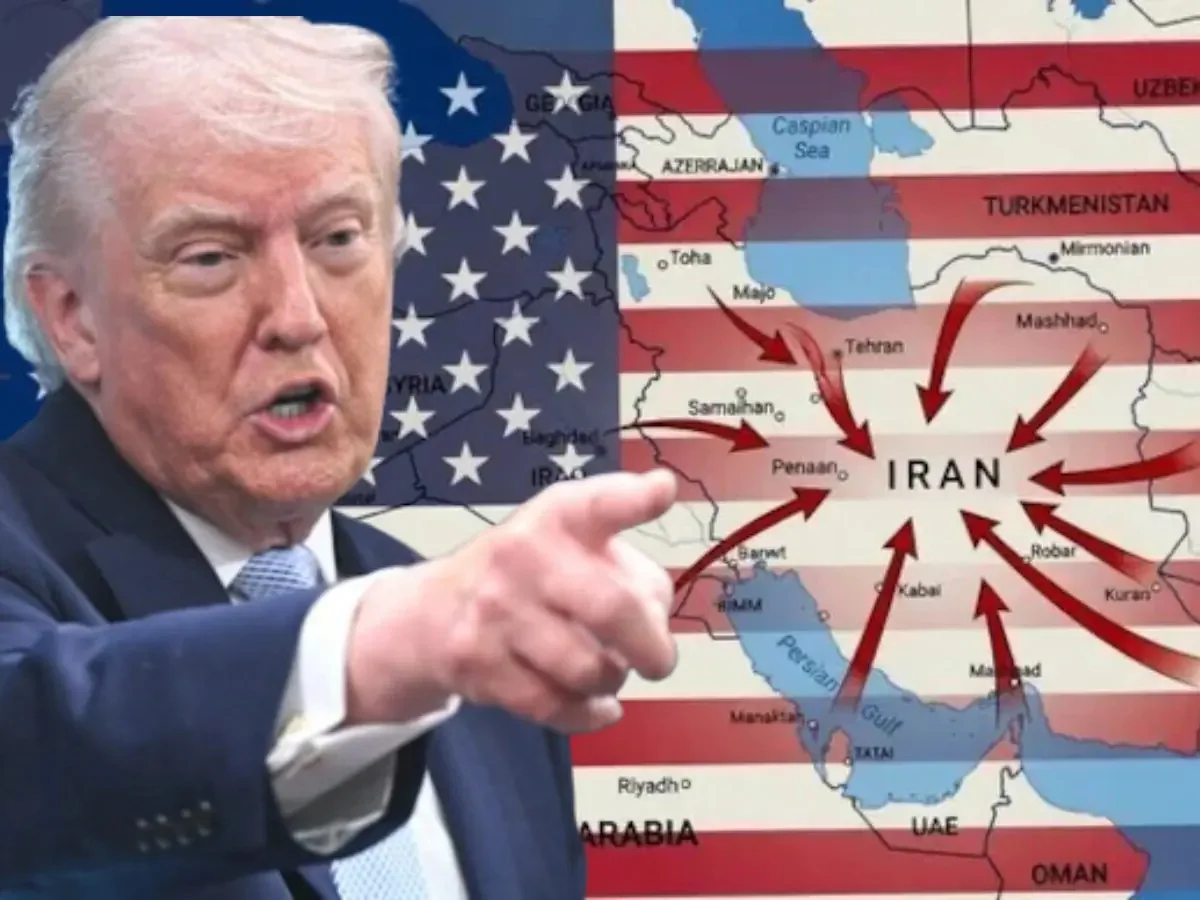
Trump Signals Absolute Dominance? Wild Speculation Sparked Over Viral Gulf Map Covered in American Flag:

As geopolitical tensions simmer in the Middle East, a striking visual shared by Donald Trump has set off an intense wave of global analysis and debate. The post features a prominent map of the Gulf region heavily overlaid with the American flag, sending a massive ripple effect through diplomatic circles. Analysts and social media users are working overtime to decipher the true intent behind this bold imagery, with many viewing it as a loud, uncompromising statement regarding future US policy and strategic dominance in the Middle East.
Deciphering the Imagery: What the Flag-Covered Gulf Map Really Indicates
The core of the controversy lies in the precise geography covered by the star-spangled banner on the map. By draping the American flag directly over the strategic waters of the Persian Gulf and surrounding territories, the post visually asserts an overwhelming US presence and influence over the region’s critical trade routes and energy choke points. Political analysts suggest this heavy symbolism is designed to project absolute strength and warn adversarial nations—particularly Iran—that the United States intends to maintain an unyielding grip on Middle Eastern security and maritime corridors.
Rising Strains: The Intensifying Shadow of an Iran-US Conflict
This provocative visual comes at a time when relations between Washington and Tehran are already sitting on a powder keg. The shadow of a potential Iran-US conflict has loomed large over global politics, and such high-decibel messaging only adds fuel to the fire. For years, the Persian Gulf has been a hotbed for naval standoffs, drone interceptions, and economic sanctions. This latest update is being interpreted by many defense experts as a psychological maneuver to signal that any aggressive moves by regional rivals will be met with decisive, unilateral American power.
Shaking Up the Middle East: Geopolitical Repercussions and Future Strategy
Beyond immediate posturing, the map serves as a stark indicator of a highly assertive and unpredictable foreign policy approach toward the broader Middle East. Regional allies and adversaries alike are closely watching these developments to gauge how future diplomatic and military strategies might shift. While some view the stance as a necessary deterrent to ensure regional stability and protect international shipping lanes, critics argue that such aggressive rhetoric could potentially derail delicate back-channel diplomatic efforts and escalate localized friction into a wider confrontation.

Comments are closed.