
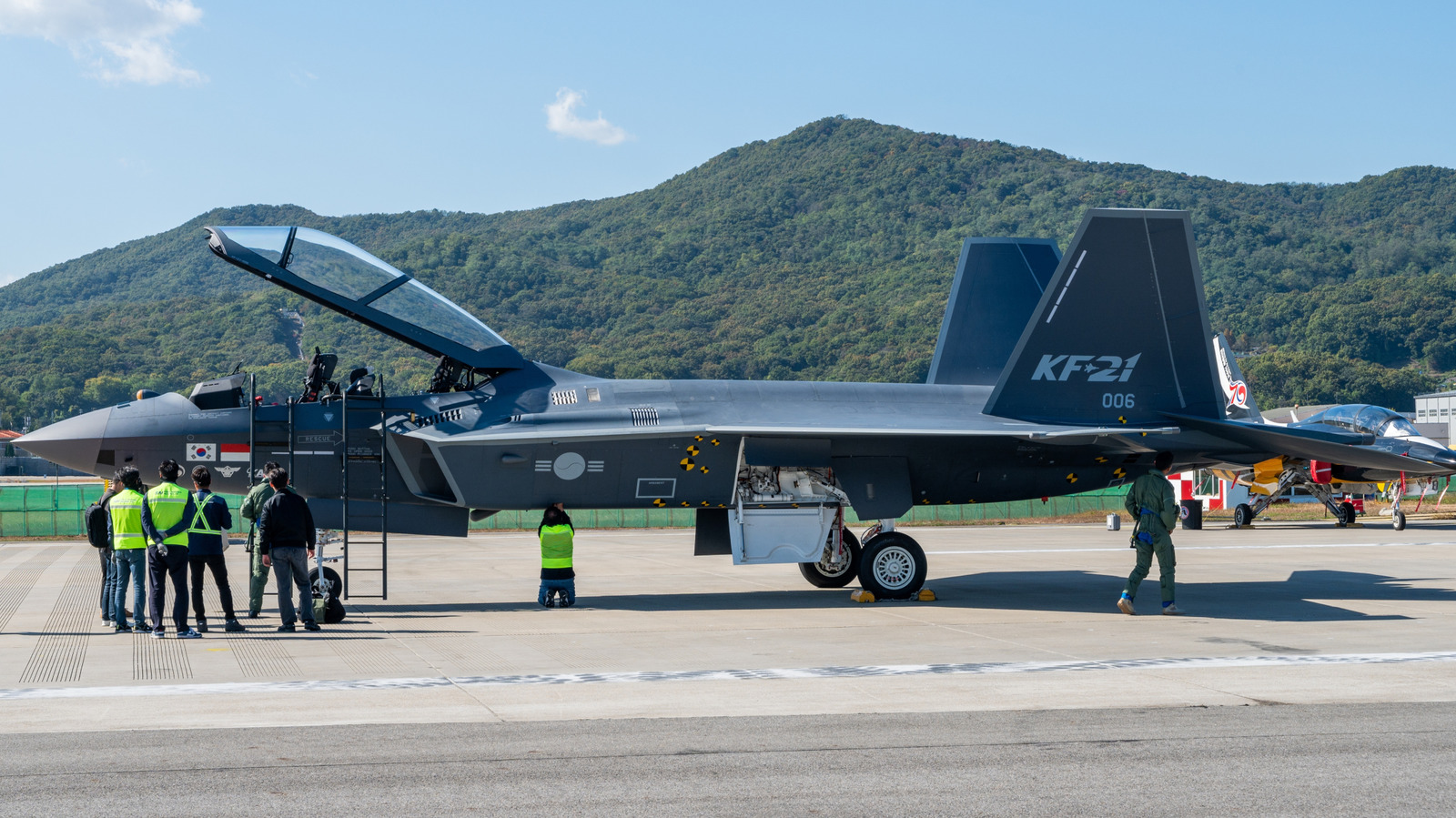

The growth of the Republic of Korea Air Force (ROKAF) has been evident since its beginnings in 1949. As part of South Korea’s military, ROKAF began as a small tactical force and is now considered one of the most advanced forces in Asia. Over the years, South Korea has worked to modernize ROKAF’s fleet with fighter jets like the SU-25. ROKAF is continuing to move forward with the KAI KF-21 Boramae stealth fighter, which is now ready for service.
The Boramae has been in development for over 10 years, undergoing thousands of evaluation conditions on the road to receiving combat approval. The specific KF-21 model that was cleared is the Block I configuration, which is meant for early operation while upgrades are still being developed. Even though this fighter is a step above some of ROKAF’s older aircraft, it’s actually not considered a full fifth-generation fighter. That’s because it doesn’t yet have the level of stealth needed for penetrating heavily defended airspace or conducting deep-strike missions.
Initially, South Korea’s plan was to roll out the KF-21 in stages, with a total of 120 fighters in service by 2032. The first batch of 40 jets, focused mainly on air-to-air operations, would be followed by the remaining 80, which are expected to incorporate air-to-ground capabilities. However, South Korean officials may revise that schedule due to rising production costs. Inflation, supply chain challenges, and other factors are impacting the program’s budget, which could potentially affect its rollout timeline.
How the KF-21 Boramae compares to the F-35
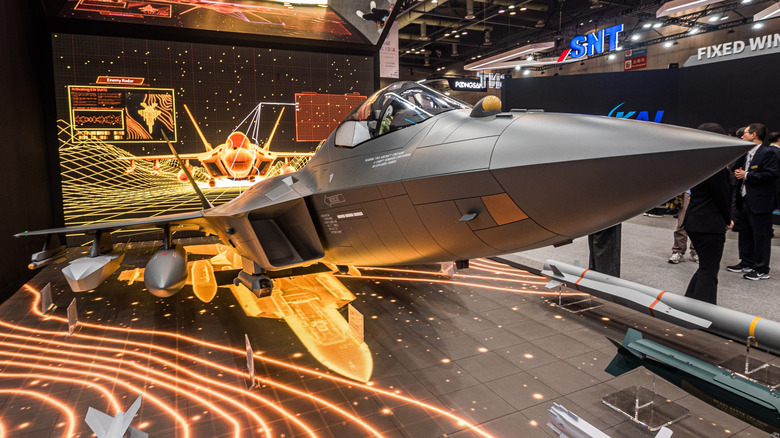
The KAI KF-21 Boramae fighter jet is often compared to the F-35, also known as the Lighting II. Both fighters are built with advanced technology, as well as air-to-air and air-to-ground capabilities. However, the KF-21 is classified as a 4.5-generation fighter, while the F-35 is a full fifth-generation stealth fighter. The difference is that the F-35 is designed for full stealth operations in heavily defended airspace. The KF-21 does not have that same level of stealth capability.
On a related note, there is also a difference between the two fighters when it comes to how weapons are carried on the aircraft. The F-35 carries its weapons, including missiles and bombs, internally. This keeps them hidden from view, allowing the jet to fly less conspicuously. By comparison, this iteration of the KF-21 uses external mounts for its air-to-air missiles and other weapons. This increases the jet’s visibility on radar, especially when carrying a full payload.
Despite its current status, the KF-21 is expected to play a significant role in South Korea’s defense moving forward. The jet will replace the country’s older fighters, while the ROKAF also shifts toward the use of AI and unmanned aircraft systems. Thanks to these broader developments, the program will remain an important part of the nation’s modernization effort now and into the future.

Comments are closed.