
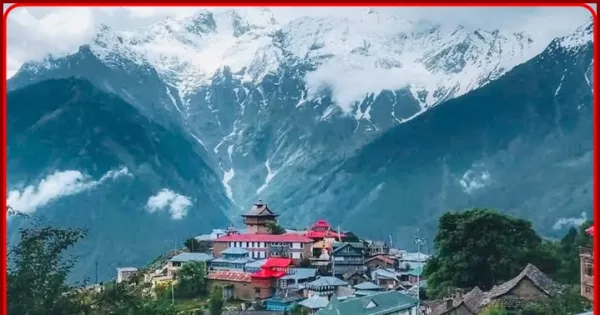

Prime Minister Narendra Modi’s appeal to the countrymen for savings related to the Hormuz crisis is a challenge like a mountain for the hilly state of Uttarakhand, but it would be no exaggeration to call it an opportunity.
Amit Sharma, Haldwani
Globally, Prime Minister Narendra Modi’s appeal to the countrymen for savings related to the Hormuz crisis is a challenge like a mountain for the hilly state of Uttarakhand, but it would not be an exaggeration to call it a golden opportunity. The way Uttarakhand proved itself during the Corona period, in the same way, there is full hope that if, understanding the criticality of the times, it will test itself on the test of self-reliance with smart savings, wisdom and frugality, then these challenges will also be overcome by living up to them.
No one will be unaware of the deepening global energy crisis due to the outbreak of war between America, Israel and Iran in West Asia. The closure of the Strait of Hormuz by Iran has affected 20 percent of the world’s oil trade, although India’s conditions are quite different and India imports 90 percent of its crude oil needs. Huge fluctuations are being seen in the prices of crude oil. Firstly, the prices of commercial cylinders and petrol and diesel have increased recently. In view of the global crisis, Prime Minister Modi, along with presenting a seven-point savings blueprint before the country, also said big things that this is a moral test of ‘Nation First’.
In his appeal to the countrymen, the Prime Minister emphasized on several major savings measures. For fuel savings, suggested options like work from home, virtual meetings, public transport, car pooling as per requirement, and appealed to postpone foreign travel and destination weddings for a year and not to buy gold to save foreign exchange. Let us tell you that the appeal not to buy gold was made because India is the second largest gold importer in the world. Apart from this, the Prime Minister also asked to reduce edible oil consumption by 50 percent as a measure to protect health along with pockets.
Emphasis was laid on reducing the dependence on chemical fertilizers for natural farming, while focusing more on adopting indigenous Make in India, Indian brands in everyday goods, EV and solar, while on adopting solar pumps instead of diesel pumps. The Prime Minister directly described this as the period of ‘disasters of the decade’. First Corona, then war and now energy crisis.
Now the big question is that how will the situation change in Uttarakhand in these challenging circumstances, then let us tell you that Uttarakhand is extremely sensitive geographically and economically. In the year 2025, 12 lakh people were affected by 10 major disasters in the Himalayas, but the mountains and the mountain people have never bowed down and have faced every crisis with courage. Estimatedly, in such circumstances, due to diesel and petrol becoming expensive in the hilly state, vegetables, grains and construction materials will become expensive, and the cost of taxis and hotels will also increase during the tourist season.
The cost will increase due to increase in the price of commercial LPG and urea. Farmers may be affected. In Kumaon-Garhwal, gold is considered important in weddings. Postponing purchases may affect the bullion market and artisans, while work from home may reduce weekend tourism, however, along with the negative, its positive opportunity will boost the local economy of the hills. ‘Vocal for Local’ will increase the demand for woolen shawls, pickles, buransh juice and organic products. In the field of energy security, solar rooftop and PNG connections will reduce the dependence on LPG in the mountains. In the digital economy, if IT professionals stay in Dehradun and Haldwani by working from home, local expenditure will increase.
In such circumstances, Uttarakhand needs to prove itself once again. We have to increase energy self-reliance at the government level. Under PM Surya Ghar Yojana, solar micro hydro and solar hybrid projects will have to be installed in every government building, school, panchayat and dependence on dams will have to be reduced. PNG network will have to be expanded while reducing dependence on LPG. Zero budget natural farming will have to be adopted in the agriculture sector, and chemical fertilizer imports will have to be reduced. The state government will have to promote the purchase of coarse grains like Mandua-Jhangora at MSP and reduce the consumption of edible oil.
The traditional food of Uttarakhand is simple, nutritious and rich in local grains (Madua, Jhangora, Gahat). The traditional food of Uttarakhand like Kafuli, Aloo Gutka, Jhangore Ki Kheer, Phaanu, Chainsu, Bhang Ki Chutney, Mandve Ki Roti, Bari, Bhatt Ki Chudkani, Arsa are no less than anyone. Cold storage chain will have to be created so that fruits and vegetables can be sold cheaply in the local markets and diesel expenses at the market can be reduced. It is good that the state government is adopting measures like fuel-food buffer stock along with focusing on disaster and economic security, however, the biggest need in the state at this time is for electric buses, whose fleet will have to be increased on priority.
To stop diesel consumption, ropeway network will have to be increased in the mountains, and work from home rotation will have to be implemented for government employees. Our Uttarakhand is no inferior to any tourist destination in the world, hence to promote the tourist-religious places of our own state, we will have to draw the attention of the people of the country and the world and for this, new plans and new measures will have to be adopted.
The Central and State Governments are doing whatever they have to do at their level and will continue to do so, but we will also have to adopt the Prime Minister’s seven-point appeal not formally but by putting it into practice. For ‘self-reliant and empowered Uttarakhand’, we will have to return to natural farming along with solar equipment. Focus will have to be on digital measures. Pahari art, products and food will have to be promoted. Unnecessary expenses will have to be avoided in wedding ceremonies.
Like ‘drop by drop fills the ocean’, unless we adopt ‘smart savings’ measures and economise on personally necessary expenses, it will not work. When the country is in crisis, instead of falling into the ifs and buts, we have to focus on ways to keep ourselves economically strong, because with the current challenges, the coming times are of disaster. In such a situation, we will have to seriously consider every aspect and shape our future.

Comments are closed.