
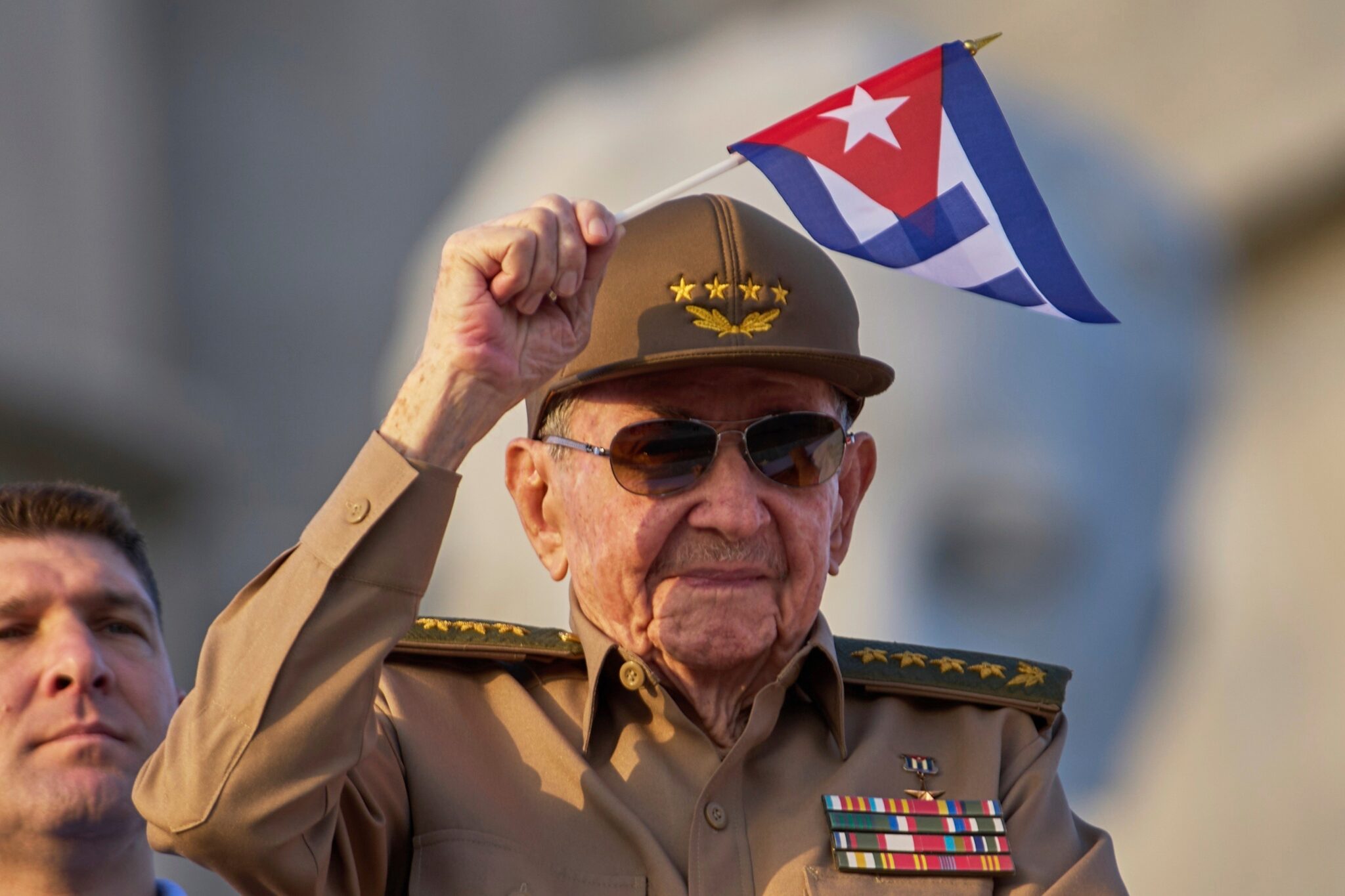

Former Cuban President Raul Castro Indicted in The United States/ TezzBuzz/ WASHINGTON/ J. Mansour/ Morning Edition/ Former Cuban President Raul Castro has reportedly been indicted in the United States over the 1996 downing of exile-operated planes. The move marks a dramatic escalation in President Trump’s pressure campaign against Cuba’s communist government. The indictment comes amid worsening US-Cuba tensions, sanctions, and growing fears of military confrontation. Federal prosecutors charged former Cuban President Raúl Castro over the 1996 shootdown of exile-operated civilian aircraft near Cuba. Cuban President Miguel Díaz-Canel condemned the charges as political justification for possible US aggression.


Raul Castro Indictment Quick Looks
- Former Cuban President Raul Castro was reportedly indicted in the US.
- The charges are tied to the 1996 shootdown of exile-operated planes.
- The Trump administration intensified pressure on Cuba’s government.
- Trump recently warned that “Cuba is next” after Venezuela.
- Secretary of State Marco Rubio offered a $100 million aid proposal.
- Cuban officials criticized Rubio and blamed the US economic blockade.
- Cuba has not officially commented on the indictment itself.
- Raul Castro remains an influential figure in Cuban politics despite retiring.
- The case mirrors earlier US charges against Venezuela’s Nicolas Maduro.
- Cuban President Miguel Diaz-Canel warned military action could cause a “bloodbath.”
- Five Cuban military pilots were also indicted.
- Charges include murder and destruction of an aircraft.
- Prosecutors accuse Castro of ordering the attack.
- Trump has intensified pressure on Cuba following Venezuela operations.
- Cuban President Miguel Díaz-Canel condemned the indictment.
- Secretary of State Marco Rubio urged Cubans to seek political change.
- The case carries potential life sentences or the death penalty.
- The indictment was secretly filed by a grand jury in April.


US Indicts Former Cuban Leader Raul Castro
Former Cuban President Raul Castro has reportedly been indicted in the United States, according to a senior Trump administration official, marking a major escalation in tensions between Washington and Havana.
The indictment represents one of the most aggressive legal actions ever taken by the US government against a former Cuban leader and signals intensifying pressure from President Donald Trump’s administration against Cuba’s communist government.
Cuba’s foreign ministry did not immediately respond publicly to the reported indictment.
The development comes as Trump continues pushing an aggressive foreign policy strategy toward longtime US adversaries across Latin America.
Charges Linked to 1996 Plane Shootdown
According to US officials familiar with the matter, the charges against Castro are expected to center on the 1996 shootdown of planes operated by a Cuban exile group.
The incident involved Cuban military jets targeting aircraft flown by anti-Castro activists near Cuban airspace.
The attack became one of the most controversial moments in US-Cuba relations during the post-Cold War era and intensified longstanding tensions between Havana and Washington.
The Miami US Attorney’s Office planned a ceremony Wednesday honoring victims connected to the incident, while the Justice Department prepared an official announcement tied to the event.
Authorities have not yet publicly released the full details of the indictment.
Trump Administration Increases Pressure on Cuba
The indictment arrives as President Trump escalates pressure on Cuba’s communist leadership.
“America will not tolerate a rogue state harboring hostile foreign military, intelligence and terror operations just ninety miles from the American homeland,” Trump said Wednesday.
The administration has increasingly framed Cuba as a national security threat while linking Havana to broader geopolitical tensions involving Venezuela, Iran, and other US adversaries.
Earlier this year, Trump warned publicly that “Cuba is next” following US military actions involving Venezuela.
The administration previously pointed to criminal charges against former Venezuelan President Nicolas Maduro as justification for military operations that resulted in Maduro’s capture and transfer to the United States.
Cuba Faces Economic Crisis and Sanctions
Cuba continues struggling through one of its worst economic crises in decades.
US sanctions and restrictions on fuel shipments have contributed to severe electricity shortages, food scarcity, and economic instability across the island.
The Trump administration has tightened sanctions while accusing Cuba’s leadership of corruption and repression.
At the same time, US officials have attempted to present humanitarian outreach initiatives toward the Cuban population.
Secretary of State Marco Rubio, whose parents emigrated from Cuba, released a video message Wednesday offering the possibility of a “new relationship” between the two countries.
Rubio proposed a $100 million aid package and blamed Cuba’s leadership for shortages involving food, fuel, and electricity.
Speaking in Spanish, Rubio said humanitarian supplies should be distributed through the Catholic Church and other trusted charitable organizations rather than directly through the Cuban government.
Cuban officials sharply criticized Rubio’s remarks while also acknowledging the ongoing humanitarian difficulties facing the country.
Foreign Minister Bruno Rodriguez accused Rubio of acting as “the mouthpiece of corrupt and vengeful interests.”
Rodriguez also condemned what Cuba describes as a longstanding US economic blockade that has severely damaged the island’s economy.
“He keeps talking about an aid package of 100 million dollars that Cuba has not rejected, but whose cynicism is evident to anyone in light of the devastating effect of the economic blockade and the energy stranglehold,” Rodriguez wrote on social media.
Cuban officials have not directly commented on the potential criminal charges against Raul Castro.
Raul Castro Remains Powerful Figure in Cuba
Although Raul Castro officially stepped down as Cuba’s president in 2018, he remains one of the country’s most influential political figures.
Born in 1931, Castro played a central role alongside his brother Fidel Castro during the Cuban Revolution that overthrew US-backed leader Fulgencio Batista in 1959.
Raul Castro later served as Cuba’s defense minister and helped organize resistance against the failed Bay of Pigs invasion in 1961.
He assumed Cuba’s presidency in 2008 after Fidel Castro became ill and remained in office until transferring power to current President Miguel Diaz-Canel.
Despite formally retiring from the presidency, Raul Castro continues holding significant influence inside Cuba’s Communist Party and military establishment.
His continued political relevance has been reinforced by the growing prominence of his grandson, Raúl Guillermo Rodríguez Castro, who reportedly held private discussions with senior US officials, including Rubio.
CIA Director John Ratcliffe also recently traveled to Havana for meetings involving Cuban officials and Castro’s grandson.
Rising Fears of Military Conflict
The reported indictment has intensified fears of further escalation between the United States and Cuba.
Cuban President Miguel Diaz-Canel warned earlier this week that any US military action against Cuba would result in a “bloodbath.”
The comments reflected growing tensions as the Trump administration increases pressure across several geopolitical fronts simultaneously.
Political analysts say the indictment could further isolate Cuba internationally while also increasing nationalist support inside the island against perceived US aggression.
The legal case is expected to draw major international attention as additional details emerge from the Justice Department in the coming days.
US Charges Former Cuban Leader Raul Castro
Federal prosecutors announced criminal charges Wednesday against former Cuban President Raúl Castro over the 1996 downing of civilian planes operated by a Miami-based exile organization.
The indictment dramatically escalates tensions between the United States and Cuba as President Donald Trump continues expanding pressure against Havana’s communist government.
Castro, who will turn 95 next month, faces charges including murder and destruction of an aircraft for allegedly ordering the shootdown while serving as Cuba’s defense minister.
Five Cuban military pilots were also indicted in connection with the attack.
The criminal case was secretly approved by a federal grand jury in April before being publicly announced Wednesday in Miami.
Charges Linked to 1996 Brothers to the Rescue Shootdown
The indictment centers on the destruction of two small civilian aircraft operated by Brothers to the Rescue, a Miami-based Cuban exile organization.
The group conducted humanitarian missions and rescue operations involving Cubans attempting to flee the island.
On Feb. 24, 1996, Cuban MiG-29 fighter jets fired missiles at two unarmed Cessna planes north of Havana near Cuban airspace.
All four people aboard the planes were killed. A third aircraft narrowly escaped destruction.
According to prosecutors, the attack was ordered directly by Castro.
“For nearly 30 years, the families of four murdered Americans have waited for justice,” acting Attorney General Todd Blanche said during a ceremony honoring the victims in Miami.
“They were unarmed civilians and were flying humanitarian missions for the rescue and protection of people fleeing oppression across the Florida straits.”
US Signals Serious Intent to Pursue Castro
US officials indicated the administration intends to aggressively pursue Castro despite uncertainty over whether he would ever appear in an American courtroom.
“There was a warrant issued for his arrest,” Blanche said.
“So we expect that he will show up here, by his own will or by another way.”
The comments reflected increasingly aggressive rhetoric from the Trump administration toward Cuba.
Observers noted the situation resembles earlier US actions involving former Venezuelan President Nicolás Maduro, who was captured and brought to New York to face criminal charges after a US military operation earlier this year.
Peter Kornbluh, a Cuba expert at George Washington University’s National Security Archive, said Castro now faces serious personal risks.
“He’s going to have to keep his head pretty low from now on,” Kornbluh said.
Cuba Condemns Charges as Political Provocation
Cuban President Miguel Díaz-Canel strongly condemned the indictment, describing it as politically motivated and dangerous.
Díaz-Canel accused the United States of manipulating the facts surrounding the 1996 incident in order to justify possible military aggression against Cuba.
He argued Cuban authorities had repeatedly warned at the time that they would defend Cuban airspace against what Havana considered hostile provocations by anti-government exile groups.
The Cuban government has long defended the 1996 shootdown as an act of national sovereignty.
The indictment further intensified already severe tensions between Washington and Havana.
Trump Expands Pressure Campaign Against Cuba
Trump has increasingly targeted Cuba following US actions against Venezuela earlier this year.
After the capture of Nicolás Maduro, the administration imposed measures restricting fuel shipments to Cuba, worsening blackouts, food shortages, and economic hardship across the island.
Trump has repeatedly threatened further action against Cuba while calling for political and economic change on the island.
Earlier this year, he suggested the United States could pursue a “friendly takeover” if Cuba’s leadership failed to open the economy to American investment and reduce ties with US adversaries.
Asked Wednesday about future plans for Cuba, Trump replied: “We’re going to see.”
The president also said the United States remained willing to provide humanitarian assistance to Cuba.
Marco Rubio Calls for New Cuban Leadership
Secretary of State Marco Rubio delivered a Spanish-language message Wednesday urging Cubans to seek economic reforms and political change.
“In the U.S., we are ready to open a new chapter in the relationship between our people,” Rubio said.
“Currently, the only thing standing in the way of a better future are those who control your country.”
Rubio, whose parents emigrated from Cuba, has become one of the administration’s strongest advocates for tougher action against Havana.
Investigation Dates Back Decades
The investigation into Castro stretches back to the 1990s.
Former federal prosecutors in Miami previously examined allegations connecting senior Cuban military figures to narcotics trafficking and broader criminal conspiracies.
Although earlier indictments targeted lower-level Cuban military officers and intelligence operatives, prosecutors had previously stopped short of charging Castro directly because of political sensitivities during the Clinton administration.
The new indictment marks a historic shift in US policy toward Cuba’s former leadership.
Legal experts say the charges could further destabilize already fragile US-Cuba relations while increasing fears of broader confrontation between the two countries.
More on US News
Comments are closed.