

Trump Delays AI Executive Order Over Industry Growth Concerns/ TezzBuzz/ WASHINGTON/ J. Mansour/ Morning Edition/ The White House postponed President Trump’s planned signing of a major artificial intelligence executive order Thursday. Trump said he delayed the directive because he feared it could weaken America’s competitive advantage in AI development. The move highlights ongoing internal disagreements within the administration over balancing AI regulation with innovation.
Trump AI Executive Order Quick Looks
- The White House postponed Thursday’s AI executive order signing.
- The order focused on AI-related cybersecurity threats.
- Trump said he disliked parts of the order’s language.
- The administration feared the proposal could hurt US AI leadership.
- Trump emphasized maintaining America’s advantage over China.
- Major tech and cybersecurity executives were invited to the event.
- Internal disagreements reportedly delayed the policy rollout.
- The order involved coordination among civilian and national security agencies.
- Axios first reported the postponement.
- The White House has not announced a new signing date.
White House Delays Major AI Executive Order
The White House abruptly postponed President Donald Trump’s expected signing Thursday of a new executive order focused on artificial intelligence and cybersecurity.
The directive had been scheduled for an Oval Office signing ceremony involving top technology, artificial intelligence, and cybersecurity executives.
However, administration officials canceled the event just hours before it was expected to take place.
According to multiple reports, the order aimed to address growing concerns about cyber threats linked to advanced AI systems and emerging technologies.
The White House has not yet announced when the order might be rescheduled.
Trump Says Order Could Hurt US AI Industry
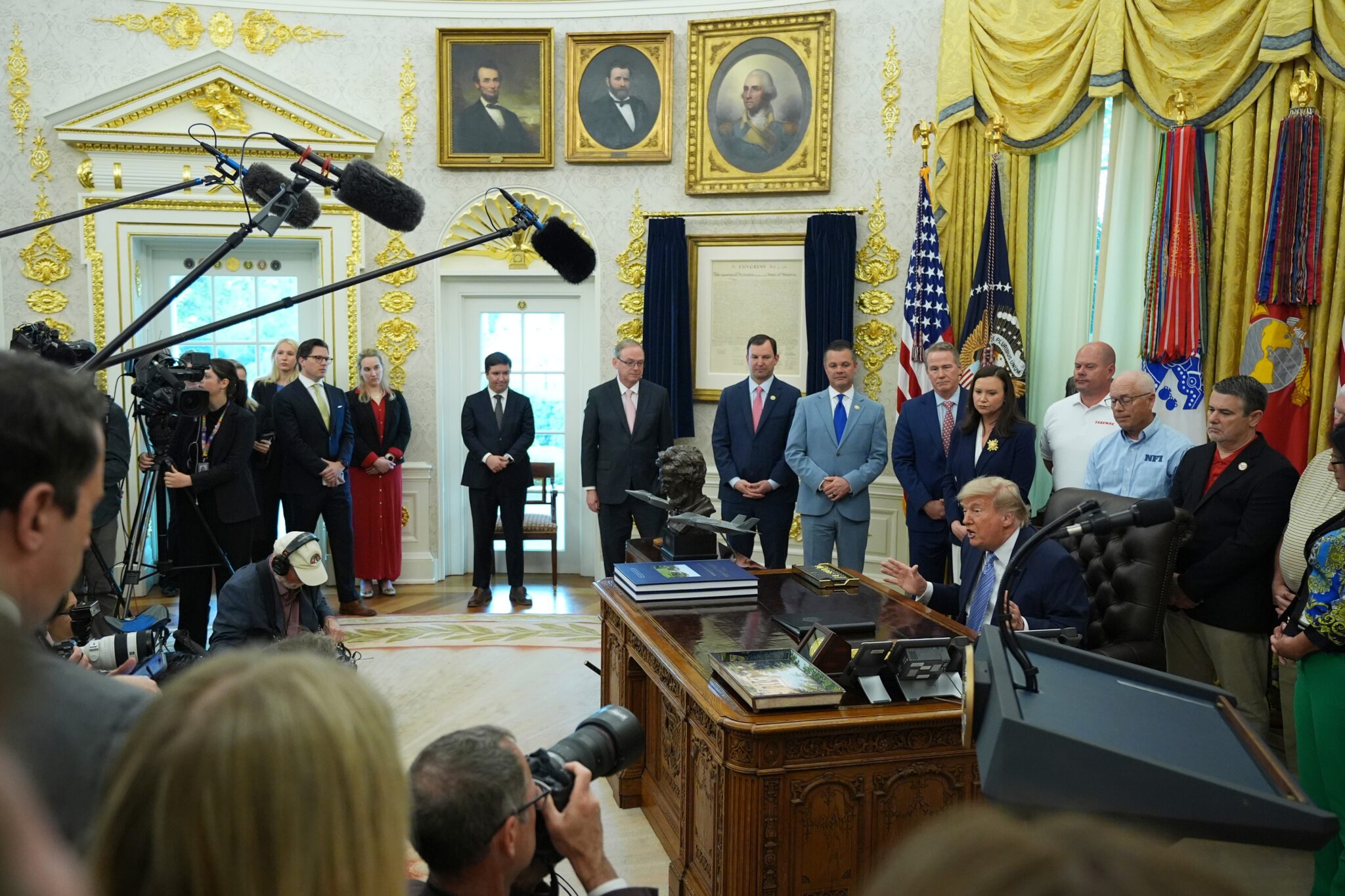
President Trump publicly confirmed the delay while speaking with reporters during an unrelated Oval Office appearance Thursday.
“I didn’t like certain aspects of it, I postponed it,” Trump said.
“We’re leading China, we’re leading everybody, and I don’t want to do anything that’s going to get in the way of that lead.”
Trump suggested parts of the proposed executive order may have imposed restrictions or regulatory burdens that he believed could slow America’s AI sector.
“I really thought that could have been a blocker and I want to make sure that it’s not,” the president added.
The comments reflected the administration’s growing concern about balancing AI oversight with maintaining US technological dominance.
Order Focused on AI Cybersecurity Risks
The planned executive order was expected to direct multiple civilian and national security agencies to coordinate more closely on AI-related cybersecurity threats.
Administration officials have increasingly warned about risks tied to advanced artificial intelligence systems, including potential cyberattacks, misuse by hostile governments, and threats to critical infrastructure.
The directive reportedly sought to establish a broader federal framework for monitoring and responding to those risks.
However, internal disagreements inside the administration appear to have complicated efforts to finalize the policy.
Internal Disputes Delayed Rollout
According to people familiar with the matter, the AI executive order had already faced delays because of disagreements among White House officials and agency leaders.
Some officials reportedly pushed for stronger safeguards and oversight involving powerful AI models.
Others argued that excessive regulation could damage American competitiveness while China rapidly expands its own artificial intelligence capabilities.
The postponement underscores growing tensions inside Washington over how aggressively the federal government should regulate AI technologies that are advancing at unprecedented speed.
Tech Leaders Were Invited to White House Ceremony
The White House had invited major executives from the technology, cybersecurity, and artificial intelligence industries to attend Thursday’s signing ceremony.
The event was expected to signal the administration’s broader approach toward AI governance during Trump’s second term.
Instead, attendees were informed the ceremony would be delayed to a later date.
The sudden cancellation surprised many industry leaders who had already traveled to Washington for the event.
AI Competition With China Drives Policy Debate
Trump’s comments highlighted how heavily geopolitical competition with China now influences US technology policy.
The administration has repeatedly emphasized maintaining American leadership in artificial intelligence, semiconductors, cybersecurity, and advanced computing systems.
Officials fear China could eventually surpass the United States in key AI sectors if American companies face overly restrictive regulations.
At the same time, lawmakers and national security experts continue warning that insufficient safeguards around AI could create major economic, military, and cybersecurity risks.
The debate has become one of the defining policy challenges facing governments worldwide.
White House Remains Silent on New Timeline
The White House did not immediately respond to requests for comment regarding the postponement or possible revisions to the order.
Officials also have not provided a timeline for when Trump may revisit or revise the executive action.
Axios first reported the delay before Trump later confirmed it publicly.
The administration’s next steps will likely be closely watched by both the technology industry and national security officials as Washington continues struggling to define its long-term AI strategy.
AI Regulation Debate Continues Intensifying
The postponed executive order reflects the broader uncertainty surrounding artificial intelligence regulation globally.
Governments are increasingly attempting to balance innovation, economic competition, cybersecurity protections, and ethical concerns involving rapidly evolving AI systems.
Supporters of stronger oversight argue AI technologies could eventually threaten jobs, privacy, elections, financial systems, and national security if left largely unregulated.
Critics of aggressive regulation warn that slowing private-sector development could allow rival nations to gain strategic technological advantages.
Trump’s decision to postpone the order demonstrates how politically and economically sensitive those debates have become inside the United States.
More on US News
Comments are closed.