
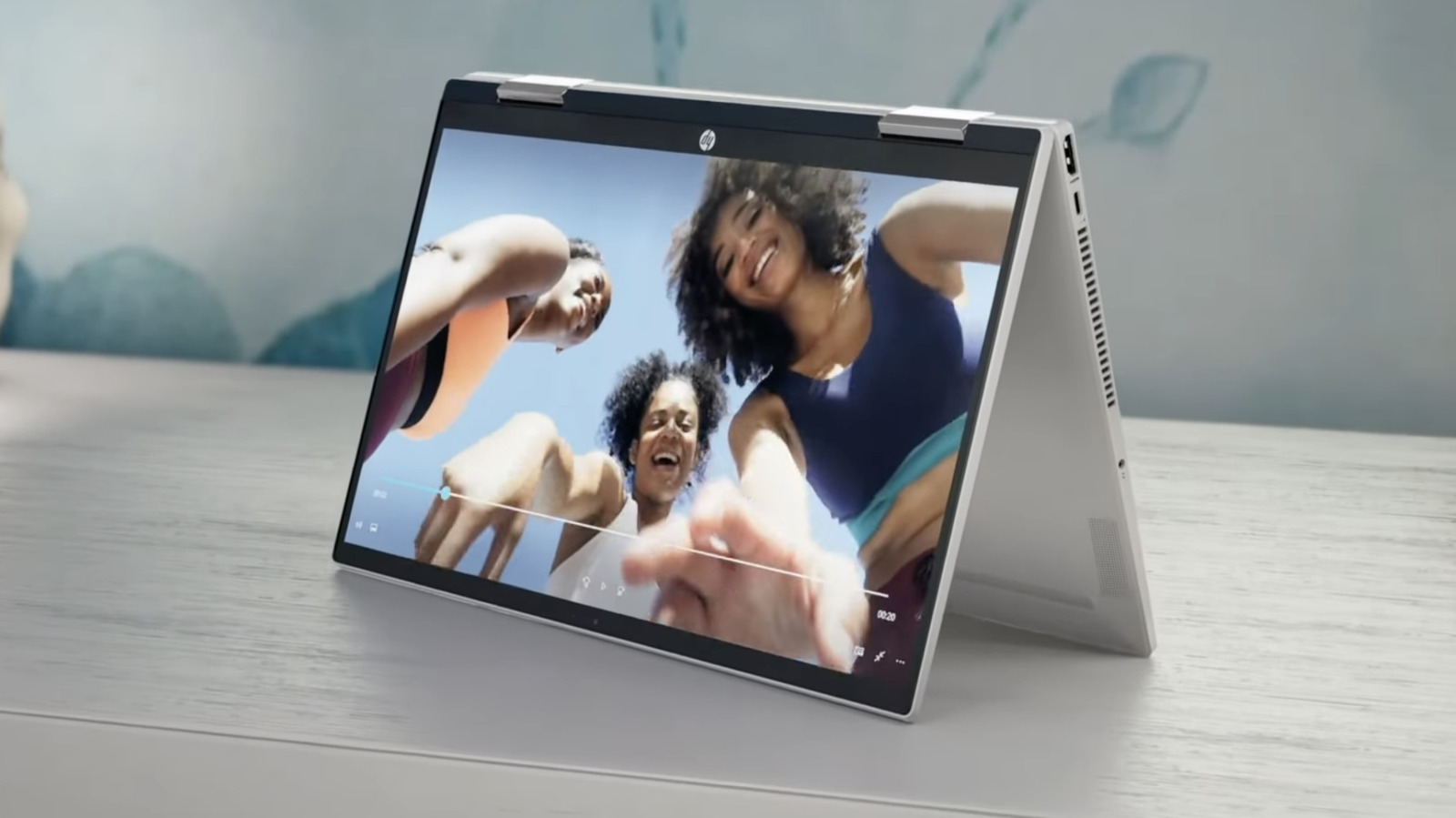

Walk into any electronics store, and if it has a premium section, you’ll spot several 2-in-1 laptops sitting around. These are the convertible kind that aim to offer the best of both worlds between a tablet and a laptop, or at least attempt to. Some even let you yank the keyboard off entirely. They’ve been around for over a decade now, and yet, most folks still walk out of the store with a regular clamshell instead. So what gives?
Well, the short answer is the compromise problem, which is something tech reviewers often point out. A 2-in-1 wants to be two things at once, and trying to pull that off almost always means it ends up being a worse version of each. Slap a 360-degree hinge on a laptop and sure, it folds flat into a tablet, but then you’ve got a slab that weighs as much as the notebook it just was. Try to work around that by going with something lighter and detachable like Microsoft’s Surface Pro, and the tablet half does start feeling great. But then rest something like that on your lap with the keyboard attached, and it feels awkward and floppy. Sadly, that compromise angle isn’t the only thing holding back this category.
The pricing doesn’t help either
Another major factor that doesn’t work out in convertibles’ favor is the price. They always cost more than their clamshell counterparts with similar specs because of the additional hardware — mainly the extra hinge engineering and the touchscreen display. Take Dell’s lineup as an example. A basic Inspiron 14 will run you around $849. But swap over to the 2-in-1 version of the same machine, and you’re suddenly looking at $949. On top of that, the SSD is half the size.
The situation isn’t any better with detachables. In fact, it’s often worse. For instance, Microsoft’s Surface Pro 11 starts at $999, which sounds reasonable at first until you find out the keyboard isn’t included. For that, you’ll have to tack on another $139 for the base Surface Pro Keyboard. Then you’ll need even more if you want a stylus. A premium combo can push past $1,400 pretty easily.
For that kind of money, you could grab a strong traditional notebook with similar specs and still have cash left over for a separate standalone tablet, despite there being no such thing as a perfect tablet for everyone. So yes, the math just doesn’t sound that attractive. Many people who actually need a tablet and a PC also prefer to have both as separate machines, which is something that turns even more appealing since chances are you’d end up with better performance on both. It’s also why Microsoft Surface Pro alternatives may be worth taking a look at.
Then there are the hardware quirks
Then there’s the list of small annoyances that wear you down once you actually live with one of these machines. Hinges, again, are a recurring issue. Take the original Samsung Galaxy Chromebook from 2020. It had a beautiful design and a gorgeous 4K AMOLED display. But as Laptop Mag pointed out, the hinge was so weak that the screen would wobble every time you tapped it. It’s an inherent design flaw that comes with the territory: when you fold a 2-in-1 into tablet mode, the base flops around loosely behind the display with nothing anchoring it.
Kickstands are their own headache. Try balancing something like the Dell Latitude 7350 Detachable or the Lenovo ThinkPad X12 Detachable on your lap during a flight and the slate might just keep wobbling around. The high center of gravity in the tablet half makes it tip backward the moment your knees shift. Plus, the thin edge of the stand can also dig into your thighs after a while. And because everything has to live inside the tablet body on a detachable, ports take a hit too — you’re usually stuck with a couple of USB-C ports and not much else.
Maybe because of all this, Samsung seems to have landed on a different philosophy with the Galaxy Book series. The 360 model in that lineup is mostly a laptop built to offer that occasional tablet functionality when you actually want it, rather than a device trying to be both things equally. The point is to do one thing properly, then let the other be a bonus. The catch, once again, is that you pay for the privilege. A standard Galaxy Book5 currently runs $1,199.99, while the 360 version with the flip hinge jumps to $1,549.99. That’s $350 extra for a hinge.

Comments are closed.