
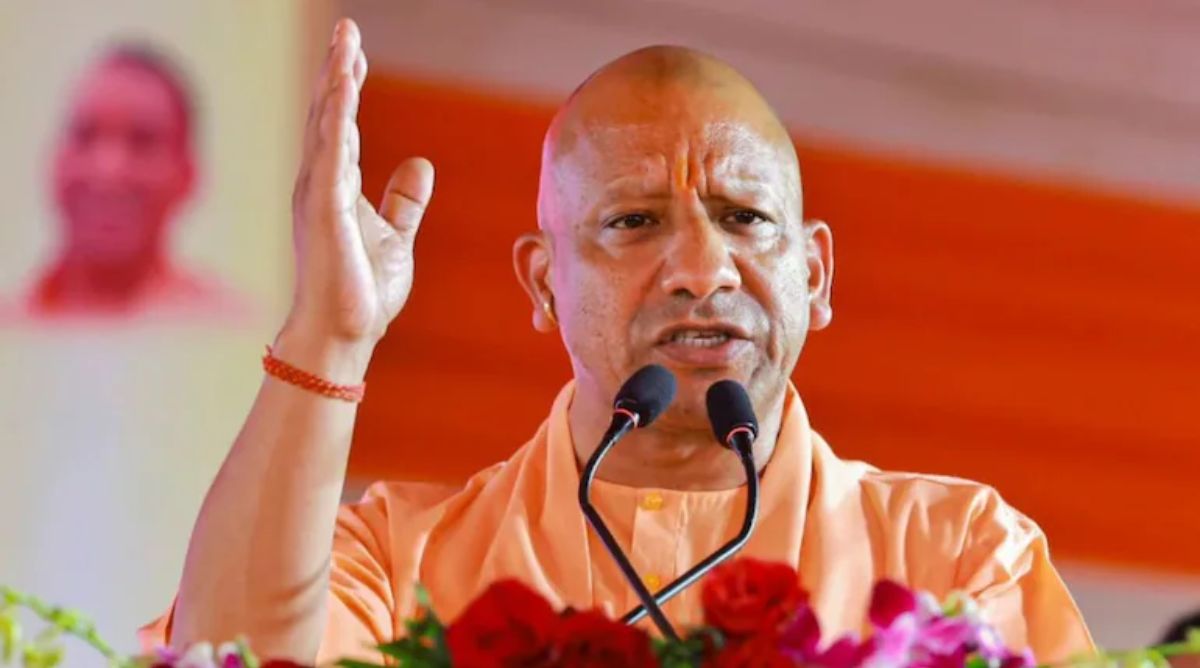
Chief Minister reviewed the state tax department, said – along with increasing revenue, there should be special focus on trust based administration.

UP News: Chief Minister Yogi Adityanath said that instructions have been given to the state tax department that along with increasing the tax collection, arrangements for facilities, respect and quick resolution should be ensured to the honest businessmen. The Chief Minister said that the role of the State Tax Department is extremely important in taking the state economy to the target of one trillion dollars and the department has to present a model of trust-based governance along with revenue growth.
The Chief Minister was holding a special meeting with the administration, headquarters and field level officials of the State Tax Department on Monday. The Chief Minister asked the officials to make the tax system more simple, digital and accountable. He directed that unnecessary delays in processes like GST registration, return filing, appeal disposal and refund should be ended. He directed to maintain constant communication with traders, make small businessmen aware and run taxpayer assistance programs up to the district and block levels. The Chief Minister said that it is necessary to encourage legitimate trade along with preventing tax evasion by using technology and data analytics.
It was informed in the meeting that in the financial year 2025-26, the state received a total revenue of Rs 1,15,977 crore under GST and VAT, which was about 98.8 percent of the revised estimate. Uttar Pradesh stood second in the country in GST, while Maharashtra stood first and Karnataka stood third. It was also informed in the meeting that Rs 2658 crore was deposited as GST dues, which is 228 percent more than last year. At the same time, Rs 800 crore was recovered as VAT arrears, which is 29 percent more than last year. Rs 2071 crore was recovered through enforcement units, which was 13 percent more than last year.
Officials said that the department has been given a total target of Rs 1,98,071 crore for the financial year 2026-27, of which the target of GST is Rs 1,49,956 crore and the target of VAT is Rs 48,115 crore. The state collected revenue of Rs 10,896 crore in April 2026, an increase of 9.6 per cent compared to the same period last year.
Zone-wise review revealed that revenue growth was recorded in most of the zones of the state in April 2026. Gautam Budh Nagar zone recorded 18 percent growth with a collection of Rs 1506 crore, while Saharanpur zone witnessed 35.1 percent growth and Varanasi I zone witnessed 33.2 percent growth compared to the same period last year. Moradabad zone also recorded a good growth in April 2026 relative to April 2025. The Chief Minister directed the zones with relatively low performance to ensure achievement of the target by making a special action plan. He instructed that senior officers themselves should go to the field and communicate with businessmen.
The Chief Minister directed to continue taking strict action against fake firms and tax evasion. It was informed in the meeting that FIRs were registered in 477 cases against bogus firms and 168 arrests were made. SIT was formed on 7 November 2025. Input tax credit of Rs 180 crore was blocked and demand of Rs 2250 crore was generated through adjudication action. During the review of appeal disposal, it was told that in the year 2025-26, 52,432 appeals of GST and 11,365 of VAT, a total of 63,797 appeals were disposed of. At present 18,504 appeals of GST and 2,193 of VAT, totaling 20,697 appeals are pending. The Chief Minister gave instructions for timely disposal of pending appeals.
Officials told in the meeting that Uttar Pradesh has become the state with the highest number of GST taxpayers in the country with 21.82 lakh active taxpayers. The average time for disposal of GST registration applications in the state is 8 days, while the national average is 14 days. The system of 100 percent physical verification is implemented in the state. Even in terms of return admissions, the state is ahead of the national average. More than 90 percent of taxpayers are filing returns by the due date, while the average monthly return filing percentage is 93 percent in the state and 91 percent at the central level. More than 99 percent of returns for the past months have been filed.
It was informed in the meeting that the average time for disposal of GST refund cases is 27 days in Uttar Pradesh, while the national average is 48 days. The Chief Minister directed that the refund system should be made more transparent and prompt so that the working capital of traders is not affected. Regarding technology-based tax administration, officials said that legal action is being taken against mismatched data in 1.59 lakh annual returns by determining 16 parameters. A module has been developed for issuing integrated notices. During scrutiny of 1.33 lakh dealers in the year 2025-26, a demand of Rs 2369 crore was generated and Rs 345 crore was deposited. Virtual hearing facility has been provided in 22 corporate circles. The Chief Minister said that data based monitoring and AI based analysis will increase the efficiency of tax administration and effective control on corruption will be possible.
The Chief Minister directed to further expand the dialogue programs with businessmen. It was informed in the meeting that trader dialogue programs were organized with administrative officials in all 75 districts, in which GST registration, return filing and GST 2.0 reforms were discussed in detail. Traders were also given training for filing returns and Vyapar Bandhu meetings were organized in all the districts. An action plan has also been prepared by the State Tax Department to run dialogue programs at the block level from June 2026.
It was also informed in the meeting that communication has been established with various business sectors, business organizations and advocate associations at the state level. Coordination with other departments including CGST, DGGI, Railways has been increased. Keeping in view the international circumstances, dialogue programs were also organized with bullion traders at the state and district level.

Comments are closed.