
Infrastructure acceleration helps reshape urban development toward sustainability: Vinhomes

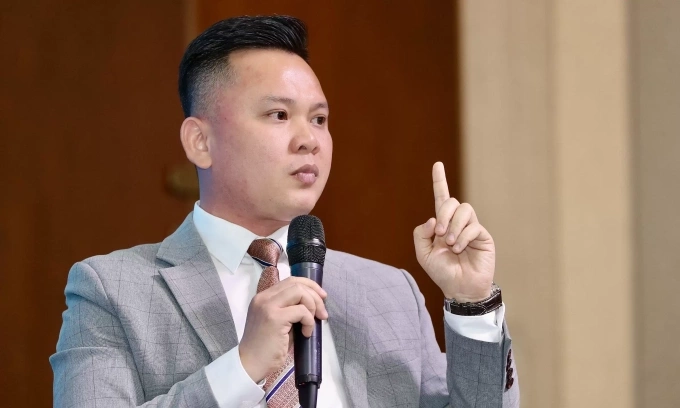
Nguyen Thanh Tam, Sales Director of Vinhomes Joint Stock Company, talked with Read on the sidelines of the seminar “Can Gio – A New Growth Pole for Ho Chi Minh City.”
Drawing on years of experience in the property market and involvement in the 2,870-hectare Vinhomes Green Paradise Can Gio project, Tam shared his views on the southern real estate market, including public investment, interest rates, buyer behavior, and market outlook.
What stands out about Ho Chi Minh City’s real estate market at the moment?
Alongside positive macroeconomic signals, relatively stable interest rates, gradual legal improvements, and the return of many developers to the market, one of the most significant drivers in HCMC today is public investment. Beyond supporting infrastructure development, it is also contributing to the formation of new economic zones, expanded urban areas, and housing developments aimed at meeting growing demand.
From now until 2030, HCMC is expected to mobilize more than VND1 quadrillion in public investment capital. At the same time, Dong Nai and Tay Ninh provinces are accelerating regional infrastructure projects. In my experience following the market over more than a decade, the southern region has not previously experienced a development cycle of this scale and level of connectivity.
Within a relatively short period, several major projects have either broken ground or accelerated construction, including the Bien Hoa-Vung Tau Expressway, Ring Road 3, urban metro lines, and the Ben Luc-Long Thanh Expressway, alongside strategic projects such as the HCMC-Can Gio high-speed railway, Can Gio Bridge, and the Can Gio-Vung Tau coastal route. These projects are expected to significantly reshape urban development patterns in HCMC and the southern region.
For example, Long Thanh International Airport, designed to handle up to 100 million passengers annually, is expected to create demand not only for logistics, commerce, and tourism but also for housing, services, and social infrastructure. These infrastructure projects are contributing to a transition from a development model concentrated in the urban core toward a more multi-centered structure with expanded living and economic spaces.
Once ring roads and strategic transport routes are completed, connectivity between central and suburban areas is expected to improve significantly. This could encourage the development of new urban areas offering larger living spaces and expanded amenities.
Over the next 10-15 years, it may be difficult for the market to see another public investment cycle of similar scale and coordination. As the strategic infrastructure network becomes operational, HCMC could enter a new phase of urban development with emerging satellite areas and new economic hubs.
Nguyen Thanh Tam, Sales Director of Vinhomes Joint Stock Company. Photo by Hoang Trieu |
How will interest rates affect purchasing power?
Interest rates generally move in cycles. Earlier this year, rates increased before moderating again. At present, the State Bank has maintained relative stability, which is considered a positive signal for the market.
During the 2010-2015 period, the property market reacted strongly to changes in interest rates. However, the current market differs because there remains substantial underlying housing demand.
Toward the end of the year, interest rates could ease further. In addition, developers offering financial support policies may help sustain purchasing demand.
For example, Vinhomes currently provides policies aimed at helping buyers manage interest rate risks over longer periods, alongside other incentives. The goal is to support buyers seeking housing products intended for long-term use.
Amid the current landscape, which real estate segment do you believe has the greatest potential?
Previously, buyers focused primarily on properties in central districts. However, as land supply in those areas becomes limited and prices rise, attention has gradually shifted toward projects located near major infrastructure systems, including ring roads, metro lines, expressways, and airports.
At the same time, buyer expectations have evolved. Consumers today place greater emphasis on living environments, amenities, management quality, and overall urban planning. As a result, projects increasingly need to offer internal ecosystems rather than relying solely on surrounding infrastructure.
In the past, developers often promoted projects based on proximity to existing facilities such as markets or roads. Today, successful urban developments are expected to function more independently, integrating residential, commercial, educational, healthcare, and entertainment components.
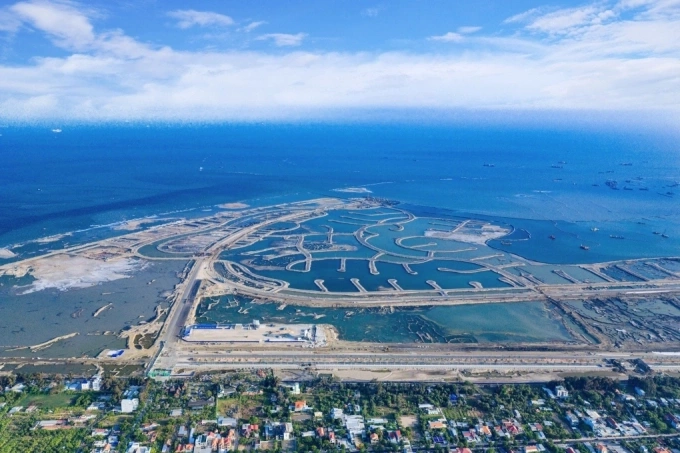 |
The 2,870-hectare Vinhomes Green Paradise coastal mega-city in March 2026. Photo courtesy of Vinhomes |
Infrastructure improvements are also influencing consumer behavior and housing preferences.
A decade ago, many homebuyers prioritized living in central districts. Younger generations today, particularly those born in the late 1980s and 1990s, are often more open to suburban living environments that offer integrated services and international-standard amenities.
Rather than focusing solely on central locations, many buyers now prioritize living quality, green space, convenience, and overall urban experience. This shift is gradually changing the market’s demand structure.
Does this influence Vinhomes’s strategy?
Many of Vinhomes’s recent projects in southern Vietnam have been developed outside traditional city-center locations. The company aims to develop projects linked closely with infrastructure expansion and long-term urban planning.
In parallel, major cities are seeking to reduce population pressure in older downtown districts. Vingroup and Vinhomes aim to align with these broader urban development strategies through the creation of new residential and economic areas.
For example, the 2,870-hectare Vinhomes Green Paradise project in Can Gio is planned as an integrated urban area combining residential, commercial, tourism, healthcare, education, and entertainment facilities. Planned components include the Song Xanh Theater, an 800-hectare artificial lagoon, a landmark tower, and the 122-hectare VinWonders park.
The project is intended to support tourism, long-term residence, and commercial activities in Can Gio, while contributing to broader economic connections with central Ho Chi Minh City.
Infrastructure projects connected to the area include the Ben Thanh-Can Gio high-speed railway, Can Gio Bridge, the Can Gio-Vung Tau coastal route, the Ben Luc-Long Thanh Expressway, and Long Thanh Airport.
If implemented as planned, these projects are expected to improve accessibility between central Ho Chi Minh City and Can Gio, potentially increasing tourism and residential demand.
The project targets approximately 40 million annual visitors and a long-term residential population of more than 200,000 people.
 |
5,000 runners participated in the VM Green Paradise Can Gio race, starting from the internal roads of Vinhomes Green Paradise on May 1, 2026. Photo courtesy of VM |
What advice would you give homebuyers at this stage?
Buyer priorities vary, but several factors remain consistently important, including developer reputation, legal transparency, and construction progress.
Buyers should also consider how developers manage and operate completed urban areas. A project’s long-term livability depends not only on the quality of individual homes but also on the surrounding ecosystem and community activity.
At present, Vinhomes operates residential communities serving nearly 700,000 residents nationwide. Projects such as Vinhomes Green Paradise Can Gio are planned to integrate broader service ecosystems including healthcare, education, retail, tourism, and entertainment.
Construction progress is also an important consideration for buyers evaluating long-term project value. Developers with experience operating large urban areas may provide greater confidence regarding future project delivery and management.
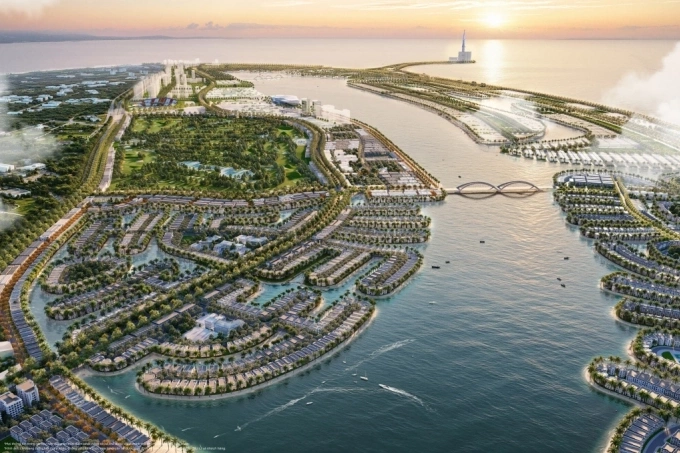 |
Artist perspective of the Vinhomes Green Paradise mega-urban area. Photo courtesy of Vinhomes |
What role do distribution agencies play in the current recovery of the real estate market?
Distribution agencies continue to play an important role in connecting developers with buyers and helping communicate project information to the market.
As the market becomes more selective, partnerships between distributors and reputable developers are becoming increasingly important. Buyers today tend to prioritize projects with clear legal status, strong implementation capability, and established credibility.
For distributors, cooperation with developers that have long-term project pipelines and stable development strategies can also help ensure more sustainable business operations over time.
Comments are closed.