

India’s engineering talent has long powered the global software economy, but a quieter shift is taking shape in robotics. What was once a niche field limited to research labs and large manufacturing companies is becoming a real career path for young engineers. Startups working on drones, warehouse automation, defence systems, industrial robotics, and autonomous vehicles are hiring aggressively, and many are being built by Indian founders with experience across both India and Silicon Valley.
For years, the biggest problem was not talent but direction. India produces a huge number of engineering graduates every year, yet very few seriously considered robotics as a long-term profession. Software jobs in fintech, consulting, and large tech firms offered stability, higher starting salaries, and a much clearer career ladder. Robotics looked uncertain, expensive, and difficult to break into. That gap is beginning to narrow.
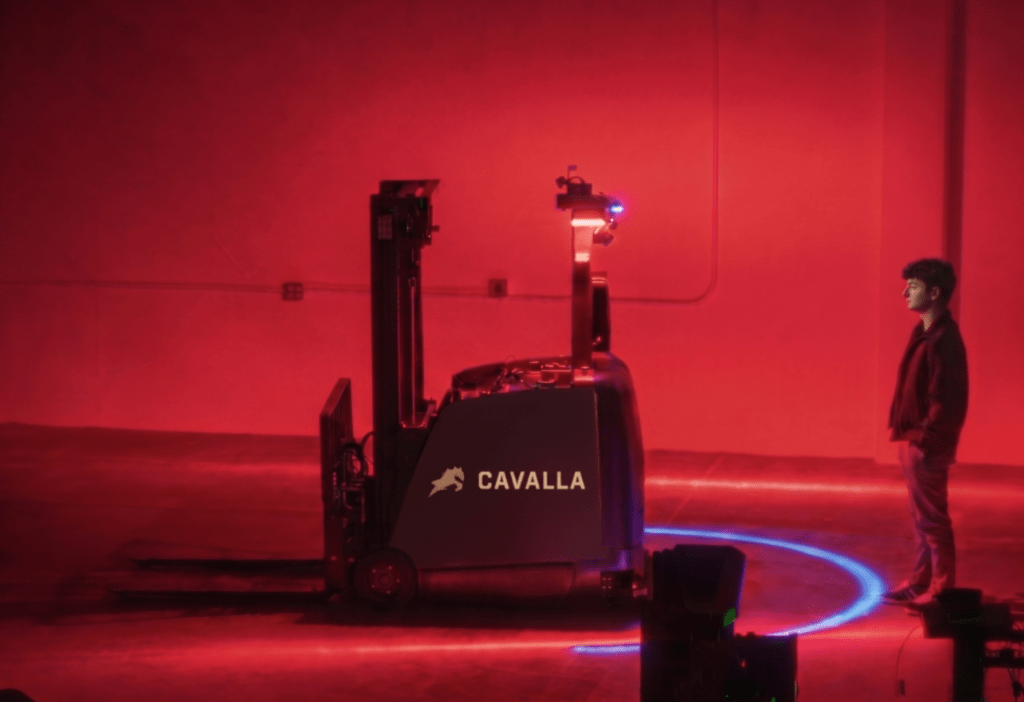
A growing number of engineers are now entering the field through not only conventional disciplines, mechanical engineering, computer science, aerospace, and electronics, but also increasingly from branches with no trivial connection at all. The reason is that robotics has stopped being a single discipline. A modern autonomous system is a stack: sensors feeding perception models, perception feeding a planner, the planner talking to a controller, the controller closing the loop on hardware that has its own dynamics and failure modes. No single specialisation covers that stack end to end, which is why teams increasingly value engineers who can reason across layers rather than optimise within one. “The engineers who do well in robotics are the ones who can hold the whole stack in their head at once,” says Aayush Agrawal, a founding team member and Head of Engineering at Cavalla, one of the fastest growing robotics startups out of San Francisco. “When a forklift misbehaves in a customer warehouse, the answer is almost never in one place. It’s a perception edge case interacting with a planner assumption interacting with how the hardware actually responds. You need people who are comfortable chasing a bug across all of it.”
Agrawal’s own path is a useful case in point. At Cavalla, he leads engineering on the company’s autonomous forklift platform deployed in customer warehouses, but he didn’t begin in a robotics program. He studied chemical engineering at IIT Madras before gradually moving toward autonomous systems through student projects and startup work.
Asked how a chemical engineering student ends up running engineering at a robotics company, Agrawal smiles. “Honestly, the discipline mattered less than I expected. Engineering as a field teaches you to think about systems with a lot of moving parts, feedback loops, things that can go wrong in non-obvious ways. That mental model carries over more than people assume. Being a good engineer is more about using key engineering principles in your day-to-day decisions and work, than about accumulating expertise over a specific stack of tools. The tools change every few years. The way you reason about a problem doesn’t. “
At IIT Madras, he led Team Abhiyaan, a group of more than 50 engineers building an indigenous driverless shuttle for the campus. The team became the first from India to win an award at the Intelligent Ground Vehicle Competition design challenge in the United States, a result that helped put Indian student teams on the map in autonomy research. He went on to work at ideaForge, India’s leading drone manufacturer, before co-founding TelebortiX, a startup focused on large VTOL drones for the Indian defence market, working on heavy-duty unmanned systems when India’s drone ecosystem was still in its early stages. He then joined Carnegie Mellon University’s Robotics Institute, one of the most respected robotics research centres in the world, where he worked on DARPA-funded autonomy research before moving into his current role as part of Cavalla’s founding team.
What’s notable about that trajectory is its pace. Asked what accounts for it, Agrawal is matter of fact. “I think it’s just that I’ve been lucky enough to work on a lot of different modalities and elements of robotics.” Ground vehicles at Abhiyaan, aerial systems at ideaForge and TelebortiX, research-grade autonomy and medical systems at CMU, and now industrial robotics at Cavalla. “Each project teaches you a different lesson about what breaks in the real world. Founders or founding teams need not be someone who’s the world’s best at one thing. They need someone who’s seen enough failure modes across the stack to know which problem to attack first, and which ones will solve themselves if you get the architecture right. That’s the thing I think I’ve gotten reasonably good at.”
The point cuts against the prevailing career advice. Across most of tech, the message to young engineers right now is to specialise harder, partly because AI is widely expected to compress the value of generalist work. Agrawal pushes back on that framing when it comes to robotics. “Specialisation matters, I’m not arguing against it. You absolutely want the best perception person, the best controls person, the best systems engineer on your team, and each of them should be optimising their layer as aggressively as they can. But the mistake is assuming that’s sufficient. A robot is a cohesive solution, not a collection of locally optimal parts. If your perception team ships a model that’s 2% more accurate but adds 40 milliseconds of latency the planner can’t absorb, the whole system gets worse. Someone has to hold the cohesive view. In robotics, that’s not optional, and I don’t think AI changes that any time soon. If anything, it makes the integration problem harder, not easier.” A robotics engineer today may need to understand perception systems, hardware design, embedded software, testing, and field deployment within a single project cycle.
This matters because robotics is fundamentally different from pure software. Writing code is only one part of the work. Machines interact with uncertain environments, physical constraints, and safety risks. Systems fail in messy ways. Hardware breaks. Sensors produce noisy data. Real-world deployment often matters more than polished presentations.
India’s startup ecosystem is also becoming more supportive of this kind of engineering. Five years ago, students interested in robotics often struggled to find internships, labs, or early-stage companies in the field. Now there are startups building warehouse robots, agricultural drones, industrial inspection systems, and autonomous mobility products across Bengaluru, Chennai, Hyderabad, and Delhi.
The defence and manufacturing industries have created new demand. Government support for drone production and local manufacturing has encouraged founders to work on hardware businesses that earlier seemed difficult to sustain in India. Investors who once preferred software-only startups because of lower costs and faster returns are showing greater interest in robotics and autonomous systems.
Asked where he sees the next five years going for engineers entering the field now, Agrawal thinks for a moment. “The thing I’d tell someone starting out is that the boring parts of robotics are where the real differentiation is going to come from. Everyone can get a demo working in a controlled environment. The companies that win are the ones that figure out reliability, deployment, what happens on day 400 in a customer site nobody’s been to in six months. That’s not a glamorous answer, but it’s the honest one. If you’re choosing what to learn deeply, learn the things that make systems work when nobody is watching.”
“The talent has always been there,” he adds. “What’s changing is that the ecosystem is finally giving people a reason to stay in robotics for the long term, instead of treating it as a detour on the way to a software job.” Engineers with his kind of profile, built across competitions, defence startups, top research labs, and commercial deployments, are increasingly the kind of bet investors are willing to make.

Comments are closed.