
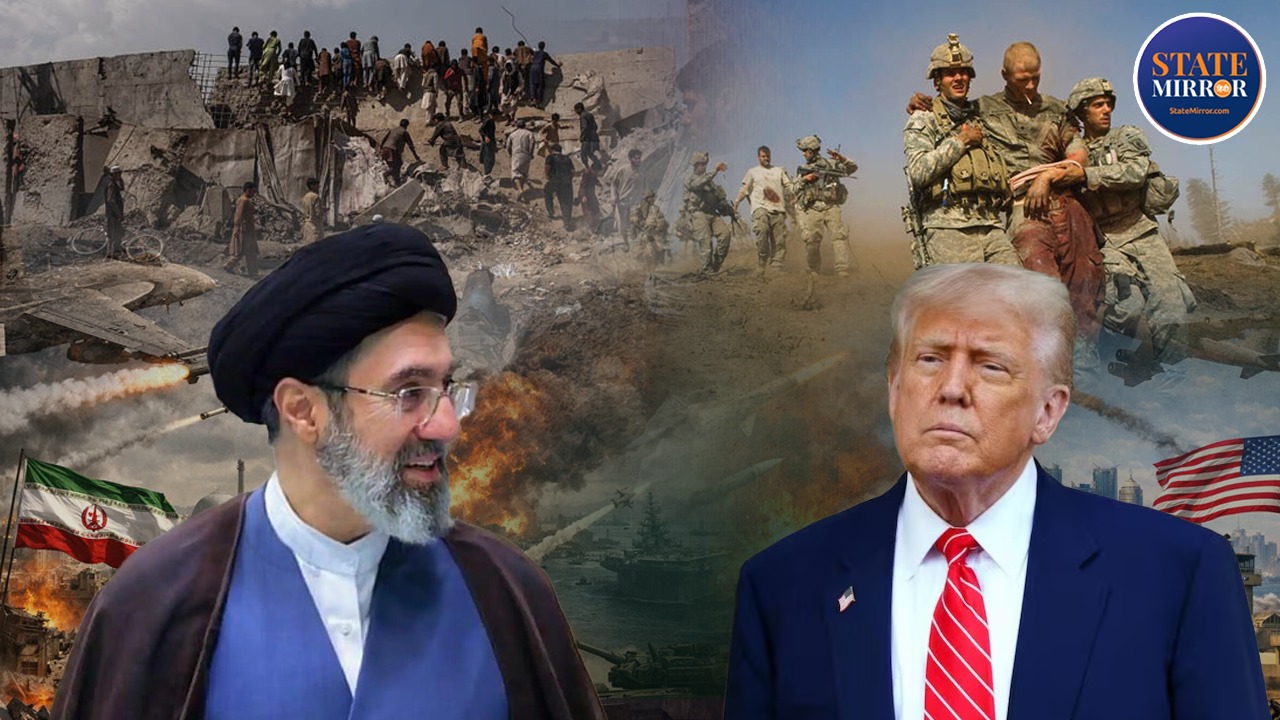

While withdrawing its forces from Afghanistan in 2021, America had claimed that it was now ending the era of Forever War. Before that, the Iraq War had also proved to be politically, economically and militarily heavy for Washington. But now the increasing tension in West Asia, conflict with Iran and American military activity in the Gulf region have once again raised the same question. Is America once again trapped in a conflict with no clear end? The only difference is that this time the nature of war has changed. Now instead of tanks and major land occupations, we may see a long-term conflict through sea routes, drones, cyber attacks, economic sanctions and proxy organizations.
Is there any clear goal visible in this conflict?
The biggest reason for the prolongation of any war is its unclear goal. America’s Iran policy The same problem appears in . On one hand, Washington wants to stop Iran’s nuclear program, on the other hand it also wants security of maritime trade in the Gulf region. Along with this, America also wants to maintain Israel’s security, regional balance and its military influence.
The problem is that none of these goals can be easily achieved and declared a “victory”. Even in Iraq and Afghanistan, America could not take it to the final destination due to lack of clear strategy. The result was that the war continued to spread and its costs kept increasing. The same danger is visible in the Iran crisis. Before all this, America had also suffered losses in the Vietnam War.
Iran works on long strategy instead of traditional war?
Iran’s military thinking is considered completely different from America’s. Tehran has been adopting a policy of low-cost and prolonged pressure instead of a direct major war. That’s why it has invested in regional affiliates and proxy networks over the years.
Hezbollah in Lebanon, Houthi organization in Yemen, Shia groups active in Iraq and Syria are considered part of Iran’s broader strategy. Through these organizations, Iran puts pressure on America and its allies without declaring war directly.
Apart from this, Iran also has the capability of cyber attacks, drone technology and creating obstruction in sea routes. Increasing tension in the Strait of Hormuz could affect the entire world’s energy supply. This is the reason why this conflict can continue for a long time despite limited military action.
Is the pressure on the American Army increasing from many fronts?
America is not focusing only on West Asia at this time. On one hand, it is working on a strategy to stop China’s growing influence in the Indo-Pacific region. On the other hand, Ukraine is also providing military and economic support against Russia in the war. Its naval presence also remains constant in the Red Sea and Gulf region.
In such a situation, new tension with Iran can increase the pressure of ‘multi war’ on the American army. Defense experts believe that maintaining military activity in different areas for a long time is extremely expensive economically and strategically risky. The same situation once existed during the Iraq and Afghanistan wars.
Could the oil market conflict be prolonged?
Any crisis in West Asia does not remain just regional, because it has a direct impact on the global energy market. About 20 percent of the world’s oil transportation route passes through the Strait of Hormuz. If tension increases here, there may be a sharp rise in the prices of crude oil.
The increase in energy prices impacts inflation, global trade and economic growth. This is why every small military incident creates a big reaction in the international markets. Due to this, the conflict remains in the global discussion and political pressure increases.
Can domestic politics also increase the crisis for America?
Any military conflict in America also impacts domestic politics. If there is a major attack on American soldiers or bases in West Asia, the pressure on the government to retaliate increases. After this, the cycle of retaliation, counter-attack and then new attacks can begin.
Even after the Iraq War, America was engaged in similar proxy conflicts for a long time. This is why many experts fear that the Iran crisis may gradually turn into “permanent military tension”.
What does this mean for India?
The crisis in West Asia is very sensitive for India. India fulfills a major part of its energy needs from the Gulf region. If oil becomes expensive then it will have a direct impact on inflation and economic growth.
Apart from this, the security of millions of Indians working in Gulf countries and the foreign currency coming from there is also important. India’s import and export may be affected due to sea trade becoming expensive. Besides, India may also have to face the challenge of maintaining balance between America, Israel and Iran. This is the reason why the Iran crisis is not just a problem of West Asia but is becoming a long-term challenge for global politics and economy.

Comments are closed.