

19
Unlike Iran, neither Israel nor Lebanon is ready to align the Hezbollah issue with US President Donald Trump’s peace talks with Iran.
At a time when US President Donald Trump says that a peace deal with Iran is almost ready and will be done if Tehran does not cross his red lines, the question being asked in Israel is how far Iran will go to bring Lebanon—rather, the interests of Iran’s proxy militia, Hezbollah—to the table as part of the “peace package”. After all, just over a week ago, Iranian Foreign Minister Abbas Araghchi wrote to Hezbollah secretary-general Naim Qassem that a US-Iran peace deal would hinge on a ceasefire on the Israel-Lebanon front, describing the matter as non-negotiable and one of Iran’s “legitimate demands”. The interesting part of the story is that the governments of Israel and Lebanon are already engaged in direct discussions in the US about a long-term ceasefire—in fact a ceasefire has already been declared by the two governments ever since April 16, 2026. This was after Hezbollah reopened Lebanon’s Israeli front by firing rockets on 2 March 2026 as a response to the US-Israeli attack on Iran on 28 February. As part of the ceasefire process, talks between Israel and Lebanon took place in the US on Thursday and Friday, while further negotiations are scheduled for early June.
However, the Israel-Lebanon ceasefire is only on paper, because ignoring the deal struck by the Lebanese government, the Hezbollah militia is continuing with its attacks on Israel, and Israel is hitting back in southern Lebanon. The bottom line is the war is ongoing.
Unlike Iran, neither Israel nor Lebanon is ready to align the Hezbollah issue with Donald Trump’s peace talks with Iran. Israel fears that any ceasefire forced on them by the Trump administration will tie its hands against any potential action against the Hezbollah if the latter violates the ceasefire again—which, Israelis believe, it will. As for the Lebanese government, it has tried for a long time but failed miserably to disarm the Hezbollah, the Islamist jihadi group which has become a state within a state and is perhaps the most heavily armed non-state actor in the world, which enjoys full backing from the Iranian regime. Their goal is the same—annihilation of Israel and the West. But the Lebanese government is fed up that the Hezbollah starts a rocket fight with Israel at every given opportunity, thus making Lebanon a target of Israel. On March 2—the day Hezbollah again fired rockets at Israel—Lebanese Prime Minister Nawaf Salam announced a ban on Hezbollah’s military activities and said that its role would be restricted to the political sphere. But Hezbollah is not paying any heed to the Lebanese government and is continuing as it is, while banking on Iran putting pressure on Israel via the US.
HEZBOLLAH’S WAR OF ATTRITION
From the lookout point at Tefen industrial area on a hilltop in Upper Galilee, around 10 km from Israel’s border with Lebanon, one gets a near-complete view of the valley below stretching out to Lebanon’s hills. It’s here that Hezbollah is carrying out its war of attrition against Israel, by constantly targeting its citizens. These are Israel’s northern areas and post the 7 October 2023 massacre of Israelis by the Hamas, it was from here that 43 communities comprising around 60,000-70,000 people were displaced for one and a half years after coming under heavy rocket and missile fire from the Hezbollah. At the time, Hezbollah’s ballistic missiles were reaching right up to Tel Aviv in the heart of Israel, but it were these northern areas that bore the brunt of Hezbollah’s firepower. Israel responded with a heavy hand, by not only decapitating the Hezbollah leadership, including chief Hassan Nasrallah in Beirut, but also by destroying much of Hezbollah’s long range missile capabilities. Israel also went inside Lebanese territory and pushed the Hezbollah forces behind the “forward defence line” to create a buffer zone. After which, Israel believed that the situation had stabilised and the residents could return home up north.
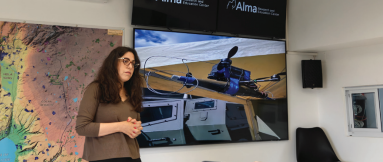
According to Sarit Zehavi, founder and CEO of the Alma Research and Education Center, an independent Israeli thinktank in Upper Galilee, all the communities returned after being assured by the Israeli government that the area was secure and would be free from attacks by the Hezbollah. But that hasn’t happened, for Hezbollah has changed its “military” tactics. It has now shifted to using primarily small, “unsmart” First-Person View (FPV) drones with fibre optic cables that are sometimes kilometres long, because of which these drones can be operated manually deep inside the northern areas. The FPVs cannot be detected by Israel’s air defence system, the Iron Dome, and take a heavy toll on human lives. Sarit lost her cousin’s son, a young soldier, a few days ago in one such drone attack. Other soldiers too have died, as well as civilians. Israeli security experts admit that they are yet to resolve the problem of these near-daily drone attacks.
Sarit, still emotional from the death of her nephew, says the mayors of these northern areas are now pushing for decisive action against Hezbollah and want Prime Minister Benjamin Netanyahu’s government to attack the Beirut neighbourhood which is a known Hezbollah stronghold. As Sarit puts it, “a tactical problem is now becoming a strategic problem” for PM Netanyahu.
At the time of going to press, Israel has intensified its military operations in southern Lebanon and is not ruling out the possibility of major strikes on a particular Beirut neighbourhood and the western Beqaa Valley.
But Lebanon too is suffering. The Shia villages located in the buffer zone were all dual use villages that were being used as weapons-dumps by the Hezbollah. The IDF has cleared these villages, as a result of which Lebanon is now dealing with the major problem of internally displaced people and related humanitarian issues.
WHO IS FUNDING HEZBOLLAH?
Hezbollah is far weaker today than it was in 2023-24, though its elite Radwan Force still exists, if diminished. Its finances are strained, with some funding allegedly coming from Turkey and Qatar. Still, there is little reason to think the group is leaderless, says Jonathan Elkhoury, a Lebanese Christian whose parents fled to Israel to escape Hezbollah’s atrocities. He alleges that members of the Islamic Revolutionary Guard Corps (IRGC) are in Lebanon directing military operations against Israel. Hezbollah remains one of the IRGC’s most effective instruments against Israel and the West, which helps explain why Iran wants the group included prominently in any deal with the United States.
LEBANESE AND HEZBOLLAH RELATIONS
Courtesy Lebanon’s peculiar French-made Constitution—following the practice of confessionalism (or confessional democracy), where power is distributed among different communities to ensure representation for all—Hezbollah has increasingly entrenched itself in the power structure of the country to the extent of bypassing the ruling government and running its own writ in both civilian and military spheres. It’s a curious situation where the Hezbollah is banned but is also a part of the ruling government.
When in 2000 Israel vacated areas in southern Lebanon it had occupied since 1982, the agreement was that the Lebanese government would disarm the Hezbollah. But that did not happen and now the Hezbollah is too entrenched for its weapons to be taken away. Any such attempt made by the Lebanese government will lead to confrontation and civil war, says Sarit. The problem is the presence of the Hezbollah in every sphere of Lebanese life. The Lebanese army too is infiltrated with Hezbollah elements, so it is difficult to untangle the strands.
However, according to Jonathan Elkhoury, the Lebanese population in general—the Christians, Sunnis and Druze and other minorities—is tiring of Hezbollah. In fact the Lebanese government, in spite of Lebanon’s hatred towards Israel, is softening its stance as obvious from its decision to talk to its neighbouring country. According to Jonathan, except for the Shias who are Hezbollah’s support base, the militia is not being appreciated by the Lebanese public.
SHARE FACTOR
The money from Iran has dried up. But in that vacuum have allegedly stepped in Turkey and Qatar. Weapons smuggling from Iran has stopped, because of Syria’s new President, Ahmed al Sharaa (Jolani) who is Sunni and anti-Iran, as well as ex ISIS. While Bashar al-Assad, Syria’s previous ruler was a conduit, Jolani has been largely effective in stopping that flow. But intelligence sources are worried that unless some action is taken, Hezbollah will start rebuilding its arsenal.
MASSACRE AT SWEIDA
But then there are bound to be consequences when ISIS is sought to be mainstreamed. High up in the mountains of Upper Galilee is a Druze emergency room in the village of Julis. There Akram Mansour shows video evidence of the massacre of the Druze minorities in the Sweida region of Syria. According to the Druze, the Jolani government’s ISIS troops killed, raped and maimed thousands of Druze between 13 and 19 July 2025. Mansour says that a ceasefire happened in that massacre because Israel had bombed the ISIS. But the Druze—who have taken to arms, the reason why they have survived, says Mansour—are now under siege by Jolani’s men and are facing a humanitarian crisis.
Although there are others who say that the fight was initially between the Druze and the Bedouins, and that Jolani’s forces got involved to stop the two sides. The truth may be somewhere in between, but there is enough evidence of a massacre having taken place at Sweida, including videos shot by western journalists.
The Druze claim adds another layer to an extremely complex situation.
In this curious mix, Israel cannot move without US assent and Trump may not be in the mood to give any permission to Israel against Hezbollah. Meanwhile, Iran is trying to get a deal on Hezbollah as that has the potential to tie Israel’s hands. Hence, from Tel Aviv to Beirut all eyes are on the peace deal that is likely to be ready soon.

Comments are closed.