
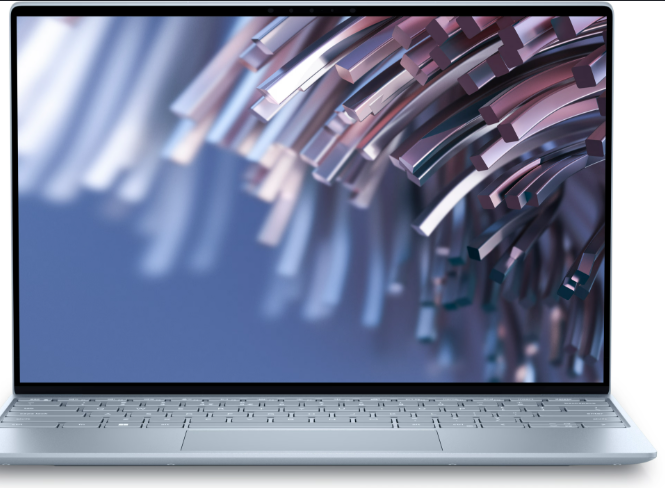

A major price war is hitting the consumer computer market. According to a Bloomberg report, Dell Technologies Inc. has officially introduced a radically repositioned version of its flagship Dell XPS 13 touchscreen laptop at the Computex trade show in Taipei. Priced at an aggressive $699 entry point, this thin-and-light laptop represents Dell’s direct counter-offensive against Apple’s highly successful budget machine, the MacBook Neo.
Historically, the XPS lineup served exclusively as Dell’s premium, luxury consumer tier. However, this strategic shift down-market signals a massive change in personal computer economics. Dell is actively targeting students and young professionals by matching high-end design with entry-level pricing.
While Apple’s MacBook Neo holds a $100 price advantage at its baseline $599 retail price, Dell COO Jeff Clarke insists that the Dell XPS 13 touchscreen laptop delivers a vastly superior hardware experience. Dell’s product team explicitly highlights several key features that consumers will not find on Apple’s budget alternative.
The physical and functional comparison reveals a highly competitive strategy:
- The Touchscreen Experience: The new XPS 13 features a brilliant 13.4-inch display with full touch functionality, a hardware feature that Apple continues to exclude from its entire macOS laptop lineup.
- Pro-Grade Display Fluidity: The display supports a smooth 120Hz variable refresh rate and covers 100% of the DCI-P3 wide color gamut. By contrast, the MacBook Neo remains locked to a standard 60Hz display with basic sRGB coverage.
- Unmatched Port Speed: Dell packs two fully functional USB-C ports. Crucially, the secondary port supports high-speed data transfers up to 10 GB/s, drastically outperforming the MacBook Neo’s sluggish 480 MB/s secondary port.
- Form Factor Efficiency: Despite housing active dual-fan cooling, the aluminum XPS 13 measures just 12.7mm thick and weighs an incredibly light 2.2 pounds (0.9kg). This engineering feat makes it half a pound lighter than Apple’s 2.7-pound frame.
The Silicon Blueprint: Intel Wildcat Lake vs. Apple Silicon
To achieve this aggressive $699 price point without destroying its profit margins, Dell partnered deeply with Intel. The base model XPS 13 ships with Intel’s brand-new Core Series 3 “Wildcat Lake” architecture. Intel engineered this specific low-power x86 processor generation to compete head-to-head with the thermal and battery efficiency of Apple Silicon.
Thanks to these architectural improvements, Dell boasts up to 17 hours of continuous video streaming on a single charge. For users demanding more processing power, Dell will introduce higher-tier configurations later this summer. These upcoming models will feature premium Intel Core Ultra Series 3 “Panther Lake” chips, up to 32GB of RAM, and 1TB of solid-state storage. This upgrade path exposes a major limitation of the MacBook Neo. Apple permanently solders the Neo at 8GB of unified memory with absolutely no path for future upgrades, giving Windows OEMs a massive selling point for long-term productivity growth.
Strategic Compromises and the Battle for the Classroom
To hit this competitive price window amidst rising global component and memory shortages, Dell had to make some design concessions. Most notably, the new XPS 13 drops the traditional 3.5mm analog headphone jack. Consequently, users must rely on wireless Bluetooth earbuds, the built-in quad-speaker array, or external USB-C dongles for audio tracking.
Nevertheless, the battleground for this hardware war is clearly the education market. Dell is offering an aggressive back-to-school promotional discount, dropping the XPS 13 price down to $599 for students aged 16 and older. While Apple still undercuts Dell by maintaining a $499 education store price for the Neo, Dell’s identical $599 student matching tier provides a compelling alternative. Students can now access a premium, lightweight aluminum chassis with facial recognition unlocking and a high-refresh touchscreen for a fraction of traditional ultrabook costs.

Comments are closed.