
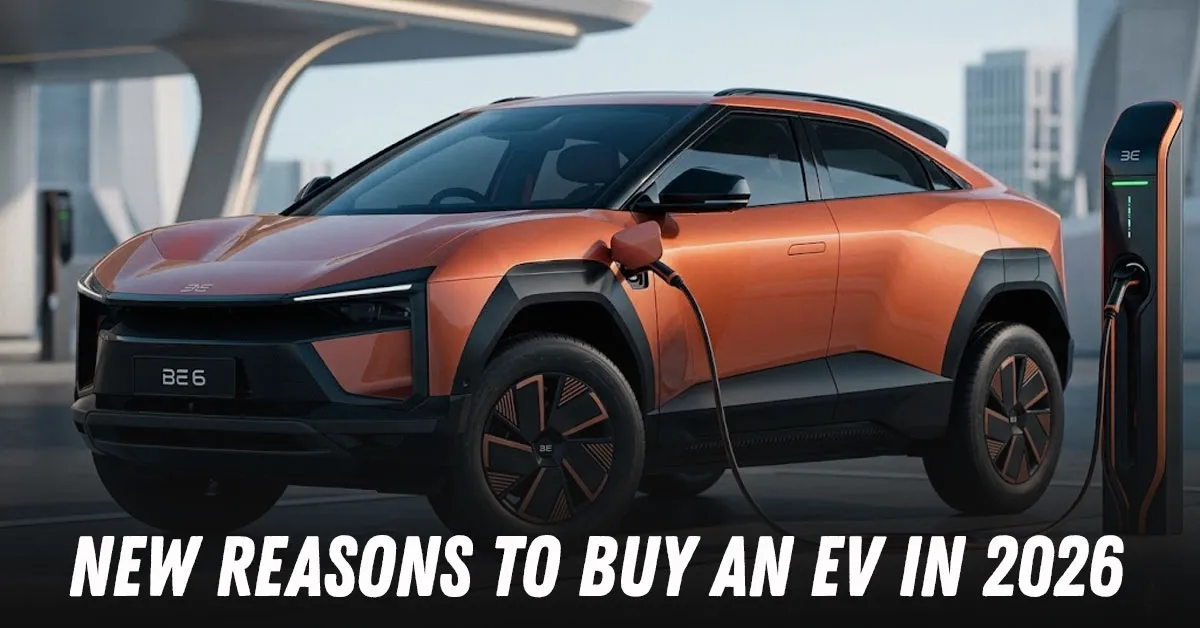

Electric vehicle adoption has increased sharply in recent months. The latest developments in India’s fuel strategy have further accelerated adoption. We now have new reasons to buy electric vehicles- from rising fuel prices to lifetime battery warranties. Here’s a closer look.
Initially, EVs used to command a sizable price premium over corresponding internal combustion counterparts. In the last few years, this price difference has slimmed out significantly. Battery prices coming down and the recent GST revision have both facilitated this drop. This shift particularly matters in the case of affordable EVs, as they cater to a cost-sensitive segment of buyers. The internal combustion version of the Tata Nexon (base variant), in 2023, used to be Rs 6.69 Lakh cheaper than the entry-spec Nexon EV variant. In 2026, this price difference has come down to Rs 5.12 lakh.
The introduction of Battery as a Service (BaaS) has also played a key role in bringing about near-parity in EV- internal combustion prices. BaaS is essentially the concept of paying just for the car and considering the battery pack as a subscription. In it, the buyer pays an upfront cost for the car and an additional battery rent for every km covered. Of course, charging costs are not included in these.
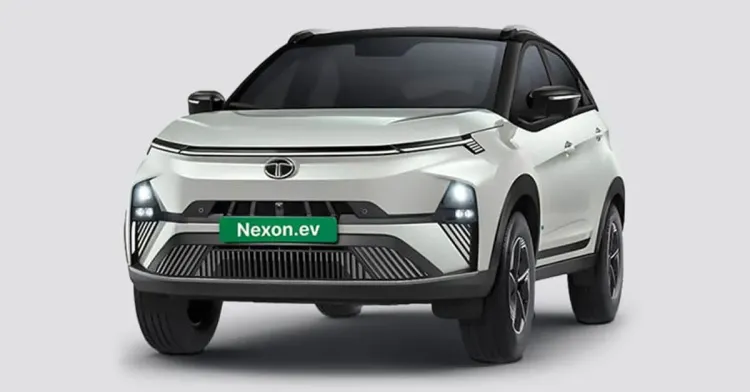
BaaS has brought down the upfront costs of many EVs. The new Tiago.EV, for example has a starting price of Rs. 6.99 lakh, ex-showroom. This is the outright purchase price. The BaaS price is Rs 4.69 lakh and a battery rent of Rs 2.6 per km covered. Interestingly, the petrol-powered Tiago also starts at Rs 4.69 lakh, ex-showroom. Price parity achieved with the help of BaaS!

The West Asia war and related geopolitical tensions have caused the global crude oil prices to soar. India is a country that’s heavily dependent on imported crude for its fuel needs. Due to this, the fuel prices in our country have had notable hikes in recent days. Over a span of 11 days in May, fuel prices went up by Rs 7.50 per litre.
At the time of writing, petrol sells for Rs 102.12 per litre and diesel prices stand at Rs 95.20 per litre in Delhi. Petrol and diesel getting more expensive have also been pushing people toward EVs.
While the government has guaranteed that India has enough petrol, diesel and LPG reserves, the war and related uncertainties have made many fear fuel shortages or rationing in the near future. These anxieties are also helping EV sales. Electric vehicles, as you know, can be charged at home and would in a way, guarantee commutes even in the unfortunate event of a fuel crisis.

India’s blending program is also, in a way, driving EV adoption! E20 (20% Ethanol-blended petrol) has now become the standard here. The government is already studying the feasibility of increasing blending- maybe to E27 or E30. No clear direction has been arrived upon yet. What we know for sure is that the petrol vehicles on sale here now are not designed for blends beyond E20.
Even diesel is not being spared. The government plans to mix isobutanol in diesel. The end goal is to reduce crude imports. Vehicle owners are already concerned about these developments and some have found EVs as the ‘safer bets’.
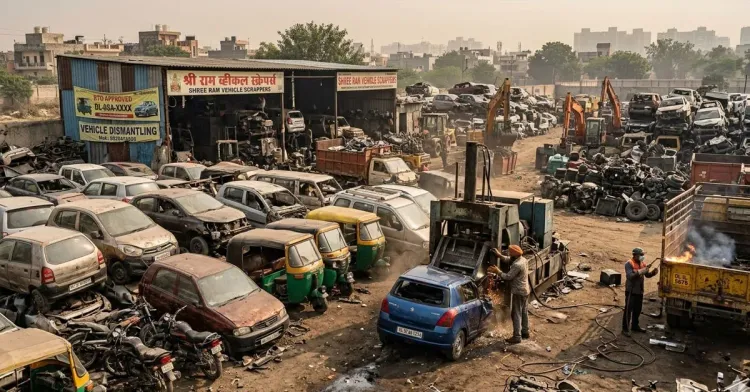
Another possible factor facilitating EV adoption here is the scrappage policy. The government wants to remove old (diesel cars older than 10 years and 15+ years old petrol cars) vehicles from our roads, in some states. This policy, however, doesn’t cover electric vehicles as they don’t have tailpipe emissions.
Electric vehicles continue to be incentivised in some states. This helps manufacturers to price them better and give the customers an added sense of value. These incentives are also driving sales in many cases.

Even on the product level, EVs have been evolving fast. In the past few years, we have seen battery packs get more energy-dense, their packaging efficiencies improve and size reduce. Even the high voltage architectures have evolved significantly. 500 km of range has now become a common find. Lifetime battery warranties are now available even on budget EV models like the Punch.EV and Tiago.EV. All of these add to the confidence of EV owners, effectively increasing adoption.

EVs are no longer limited to a single body style or segment. You now have plenty to choose from- electric hatchbacks, micro-e-SUVs, mid-size e-SUVs, electric MPVs, and even electric sports cars. These span a wide range of prices, and add to EVs’ acceptance here.

DC charging infrastructure is an inevitable part of peaceful EV ownership, particularly in the case of those that claim to deliver longer range figures. The fast charging network has been developing rapidly in the recent past. Their increasing numbers, especially long highways, is giving people more confidence to invest in an EV.
Comments are closed.