
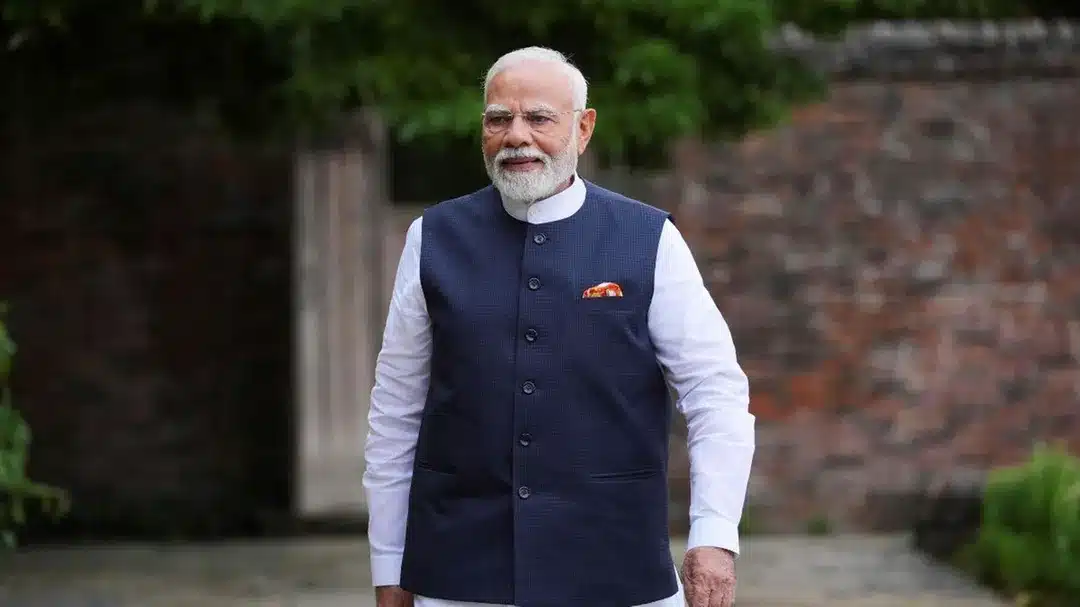

Prime Minister Narendra Modi is poised to enter the history books on June 10, 2026, when he becomes India’s longest-serving continuously elected Prime Minister, surpassing the record held by the country’s first Prime Minister, Jawaharlal Nehru.
Modi, who first took oath as Prime Minister on May 26, 2014, will complete 4,399 consecutive days in office, overtaking Nehru’s record of 4,398 days, which lasted from May 13, 1952, until his passing on May 27, 1964.
The milestone marks another significant chapter in Modi’s political journey. In July 2025, he had already surpassed former Prime Minister Indira Gandhi’s longest uninterrupted tenure of 4,077 days.
A Record in a New India
The achievement comes at a time when India has transformed dramatically in scale and complexity compared to the early years of Independence.
When Nehru led the nation after the first general elections, India’s population was around 340 million. Today, the country is home to more than 1.46 billion people, making governance far more challenging and multifaceted.
India’s democratic landscape has also expanded significantly. From 53 political parties contesting the first general election in 1951-52, the number rose to 744 parties participating in the 2024 Lok Sabha elections. The voter base has similarly grown from approximately 170 million voters to more than 830 million.
Different Political Eras
Political observers note that Modi and Nehru governed under vastly different circumstances.
Nehru operated in a Congress-dominated political environment, with the party securing an overwhelming majority in Parliament. Modi, on the other hand, has led the country during an era marked by stronger regional parties, coalition politics across states, digital media scrutiny, and an increasingly competitive electoral landscape.
Notably, Modi is the first non-Congress Prime Minister to complete two consecutive full-majority terms and the first leader since Nehru to secure three consecutive Lok Sabha election victories as an incumbent Prime Minister.
Expansion of Education and Healthcare
During Modi’s tenure, India has witnessed substantial growth in higher education and healthcare infrastructure.
The number of Indian Institutes of Technology (IITs) increased from 16 to 23, while Indian Institutes of Management (IIMs) expanded from 13 to 21. Similarly, the number of All India Institutes of Medical Sciences (AIIMS) rose from seven to 23 between 2014 and 2026.
These developments have been highlighted as part of the government’s efforts to improve access to quality education and healthcare across the country.
Governance in the Digital Age
Unlike Nehru’s era, which lacked private television networks, social media platforms, and instant communication technologies, Modi’s leadership has unfolded under constant public scrutiny.
Digital media, 24-hour news cycles, and social platforms have transformed the way governments communicate and engage with citizens, making modern governance significantly more transparent and responsive.
Another Landmark in Modi’s Political Career
Earlier this year, Modi also became India’s longest-serving elected head of government when his combined tenure as Gujarat Chief Minister and Prime Minister crossed 8,930 days.
With June 10 now approaching, the Prime Minister is set to break a record that has stood for more than six decades, further cementing his place in India’s political history as the longest continuously serving democratically elected Prime Minister.
Comments are closed.