
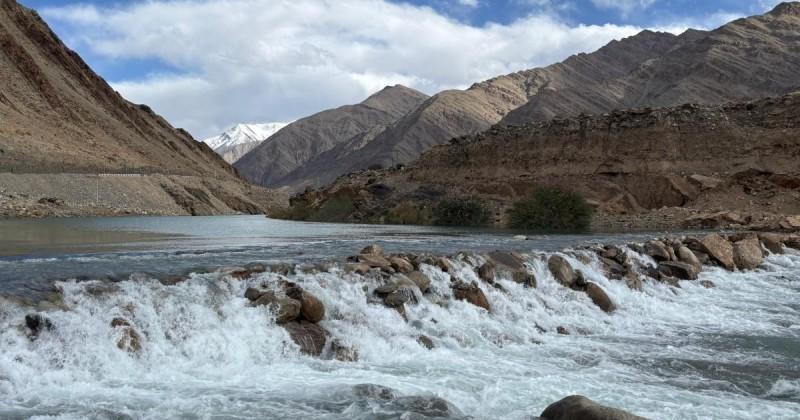

Wednesday marked a historic day for the farming community and the people of Ladakh as the country’s first-ever rock check dam was formally inaugurated by Lieutenant Governor Vinai Kumar Saxena.
The ambitious rock check dam has been constructed on the Indus River in Leh under the “Sindhu Jal Samriddhi Abhiyan”, conceived as a sustainable and cost-effective solution for water conservation and agricultural sustainability in Ladakh.
Officials said the “Sindhu Jal Samriddhi Abhiyan” is a campaign launched in the Union Territory of Ladakh to address recurring seasonal water scarcity in the high-altitude region.
Inaugurated the first of its kind Rock Check Dam on River Sindhu in Leh, under the ambitious “Sindhu Jal Samriddhi Abhiyan”, conceived as a sustainable, cost-effective solution for water and agricultural sustainability in Ladakh.
Unlike the traditional concrete check dams, this… pic.twitter.com/Uecid2aZyT
— LG Ladakh (@lg_ladakh) May 27, 2026
The eco-friendly rock check dam, located around 44 kilometres from Leh at an altitude of 11,400 feet, has been designed as a sustainable and low-cost solution to improve irrigation facilities and strengthen water security in remote villages of Ladakh.
After inaugurating the dam, Saxena posted on social media, “Inaugurated the first-of-its-kind Rock Check Dam on River Sindhu in Leh under the ambitious ‘Sindhu Jal Samriddhi Abhiyan’, conceived as a sustainable, cost-effective solution for water and agricultural sustainability in Ladakh.”
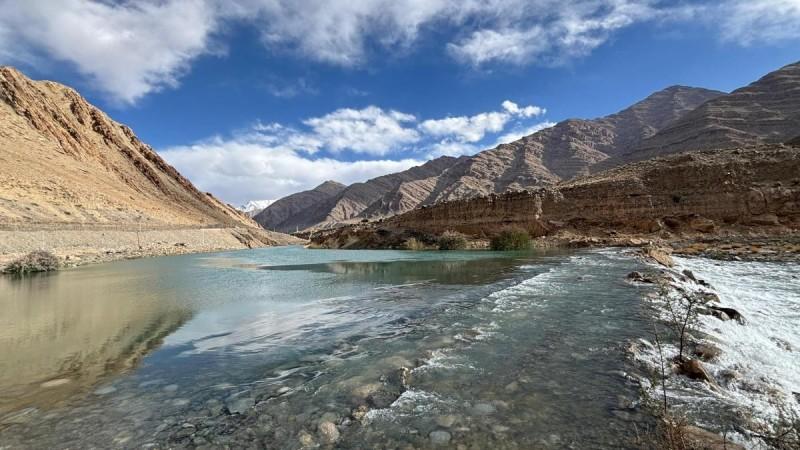
Eco-Friendly and Innovative Structure
The Lieutenant Governor said that unlike traditional concrete check dams, the innovative rock check dam is a semi-permanent structure built by interlocking large rocks collected from the riverbed. The structure slows down the river flow and creates a large water pondage area that can be used by farmers for irrigation and agricultural purposes.
Key Features of the Rock Check Dam
- Location: Upshi, Ladakh
- Altitude: 11,400 feet
- Length: 200 feet
- Base Width: 30 feet
- Top Deck Width: 15 feet
- Height: 5 feet
- Rocks Used: Approximately 180 metric tonnes
- Pondage Area: Around 500 metres upstream
- Water Storage Capacity: Approximately 40 million litres
- Construction Time: 7 days
- Estimated Cost: Rs 10 lakh
Speaking on the occasion, Saxena said the Sindhu Jal Samriddhi Abhiyan would help improve irrigation facilities, enhance water security and support sustainable agriculture in Ladakh’s remote villages.
Describing it as another innovative ecological initiative after the launch of Project Him Sarovar, the Lieutenant Governor said the project had been designed as a model for long-term water and agricultural sustainability while preserving Ladakh’s fragile ecosystem.
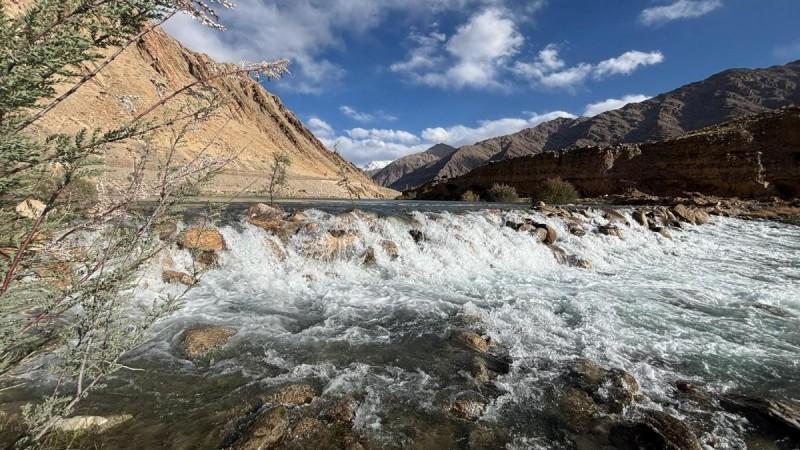
According to officials, the check dam at Upshi measures nearly 200 feet in length, with a base width of 30 feet and a top deck width of 15 feet. Standing five feet above the riverbed, the structure has been engineered to withstand increased water discharge during the summer months.
Officials said the present flow of the Indus River is around 25 cusecs, which is expected to increase nearly eight-fold to about 200 cusecs during July and August. “The design has been prepared to withstand high water pressure during peak flow periods,” an official spokesperson said.
Constructed between May 12 and May 18, the project was completed within seven days. During the construction period, the Lieutenant Governor conducted three site visits to monitor the progress of the work.
The rock check dam has specifically been designed to withstand water pressure and prevent damage during periods of high river flow in summer.
“I am confident that this rock check dam will emerge as a model of engineering ingenuity and ecological sensitivity. It will provide a sustainable solution to farmers’ irrigation problems, strengthen water security and support sustainable agriculture in remote villages of Ladakh,” Saxena said.
He added that the initiative aims to augment water availability by creating rock check dams at strategically identified narrow stretches of the Indus River, where tapping river water becomes easier and more effective.
The project has been designed to address a major challenge faced by farmers in Ladakh during the sowing season, when the Indus River becomes shallow in several stretches, making it difficult for conventional motors and pumps to lift water to uphill agricultural fields.

Comments are closed.