
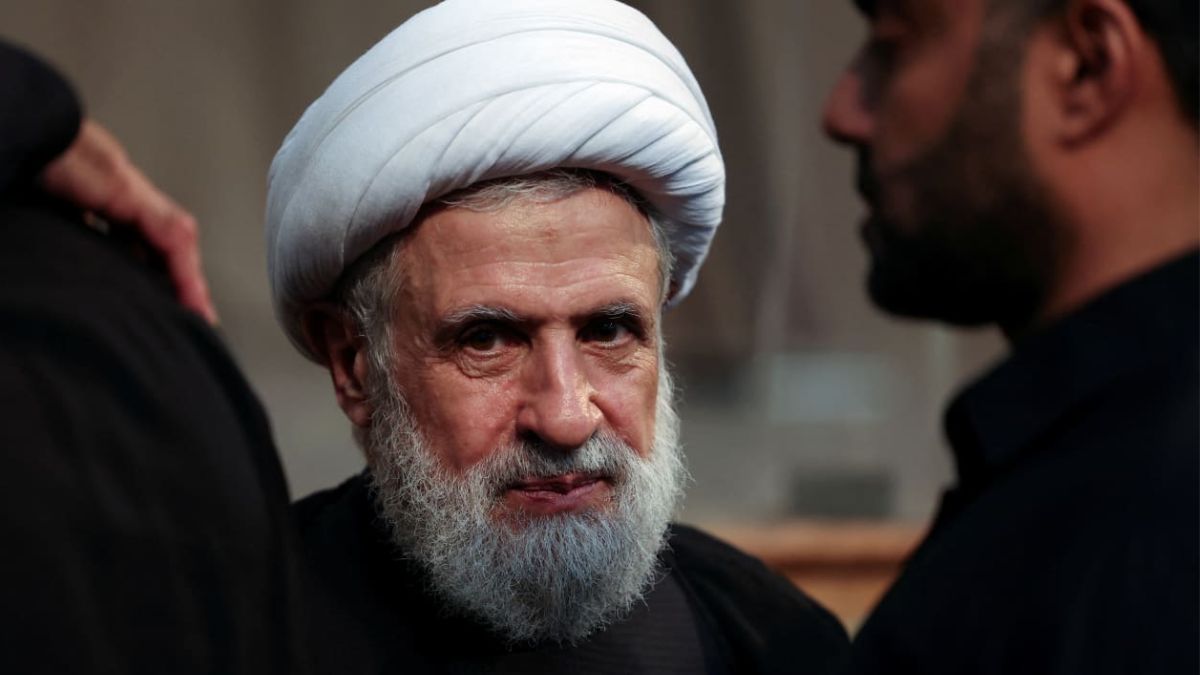
Hezbollah chief says group has made ‘No commitment to halt resistance’, Vows to continue responding to attacks

Hezbollah’s chief has declared that the Lebanese armed group has not committed to refraining from military action and will continue responding to what it describes as Israeli aggression as long as attacks persist. The remarks come at a sensitive moment as regional and international mediators attempt to solidify a ceasefire between Israel and Lebanon.
Speaking publicly amid ongoing tensions along the border, the Hezbollah leader said, “We have not given any commitment to anyone not to resist the aggression and respond to it. And as long as the aggression continues, we will confront it with all the power we have.”
The statement is among the strongest indications yet that Hezbollah remains prepared to continue military operations despite growing diplomatic efforts aimed at reducing hostilities in southern Lebanon.
Hezbollah responds to ceasefire discussions
The comments come just days after diplomatic efforts intensified to establish a ceasefire framework between Israel and Lebanon. Lebanese officials have expressed cautious optimism about the prospects for reducing violence, while international mediators continue discussions with all relevant parties.
Hezbollah’s latest position suggests that the group does not view ceasefire negotiations as limiting its ability to respond militarily if it believes attacks against Lebanon continue. The organization has repeatedly argued that its military actions are linked to developments on the ground and what it considers violations by Israel.
The remarks are likely to draw attention from diplomats working to secure a lasting truce and prevent renewed escalation along the border.
Tensions remain high despite diplomatic progress
The statement comes at a time when the security situation remains volatile despite recent diplomatic developments. Earlier this week, reports emerged that Israeli forces had begun withdrawing from parts of southern Lebanon as ceasefire implementation efforts moved forward.
However, Israeli officials have also stated that military operations could continue against perceived threats even under a ceasefire arrangement. This has created uncertainty about how any agreement would be implemented and enforced.
Against this backdrop, Hezbollah’s leadership has maintained that the group reserves the right to respond to military actions targeting Lebanon or its positions.
Border conflict enters critical phase
The conflict along the Israel-Lebanon border has intensified over recent months, resulting in casualties, displacement, and widespread damage on both sides of the frontier. International actors, including the United States and several regional governments, have increased diplomatic efforts to prevent the situation from expanding into a broader regional confrontation.
The latest comments from Hezbollah underscore the challenges facing negotiators attempting to translate ceasefire understandings into a durable arrangement on the ground.
Observers note that public statements from key actors often serve both domestic and strategic purposes, particularly during periods of active negotiations and military uncertainty.
Impact on regional diplomacy
Hezbollah’s position is expected to influence ongoing discussions involving Lebanese authorities, international mediators, and regional stakeholders. The group’s role remains central to any long-term security arrangement in southern Lebanon, making its public stance closely watched by governments involved in mediation efforts.
Lebanese officials have repeatedly emphasized the importance of ending hostilities and restoring stability to border communities affected by months of fighting. At the same time, negotiations continue over security mechanisms, military deployments, and broader ceasefire provisions.
What happens next?
Attention is now focused on whether diplomatic efforts can continue despite the hardline rhetoric emerging from various parties involved in the conflict. While mediators remain engaged in efforts to secure a lasting reduction in violence, Hezbollah’s latest remarks highlight the difficulties facing any agreement that seeks to permanently end hostilities.
For now, ceasefire discussions continue, but the group’s declaration that it has made no commitment to stop resisting or responding to attacks underscores the fragile nature of the current situation and the uncertainty surrounding the next phase of the conflict.

Comments are closed.