
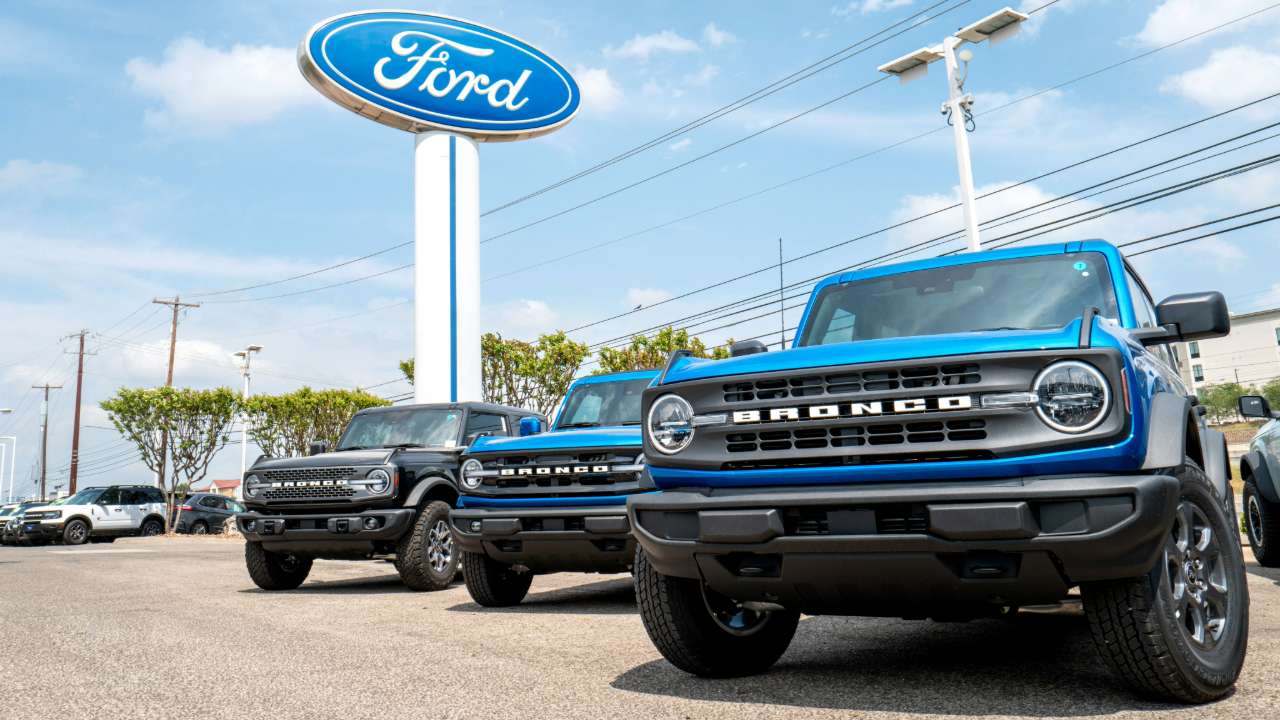

Ford’s aggressive employee pricing campaign was supposed to reignite consumer demand, but the numbers suggest otherwise. Despite extending employee discounts to all customers beginning May 1, the automaker reported a significant sales decline in May, raising questions about whether incentives alone can reverse slowing momentum.
The company sold 190,828 vehicles in May, down 13.6 percent compared to the same month last year. That represents more than 30,000 fewer vehicles delivered despite promotional pricing that offered customers savings of roughly $2,000 on several popular models.
Discontinued Models Continue To Drag Down Results
A large portion of Ford’s decline can be traced to its changing product lineup. The outgoing Escape crossover saw sales collapse by 80.3 percent, falling from 17,395 units last year to just 3,427 in May.
What makes the decline more concerning is that buyers are not necessarily migrating to other Ford crossovers. The Bronco Sport, often viewed as a natural alternative, also experienced an 8.3 percent sales drop during the month.
Ford’s decision to phase out some of its traditional crossover offerings appears to be creating gaps in its portfolio at a time when demand for compact SUVs remains strong across the industry.
Electric Vehicles Lose Momentum
Ford’s electric vehicle lineup had an especially difficult month.
The Mustang Mach-E suffered one of the steepest declines in the company’s portfolio, with sales dropping 44 percent to 2,647 units. The result is particularly notable because it comes at a time when gasoline prices remain elevated.
The F-150 Lightning also struggled, posting a 45 percent decline in May. Year-to-date, Lightning sales have fallen more than 63 percent compared to the same period in 2025.
These results stand in sharp contrast to competitors such as Hyundai, whose Ioniq 5 recently recorded its strongest May sales performance on record.
Trucks And SUVs Deliver Mixed Results
Ford’s bread-and-butter truck business also faced pressure.
F-Series sales dropped 13.3 percent, with 69,175 units sold during May. The Ranger midsize pickup fell 23.3 percent, while the Expedition SUV declined 24.4 percent.
Not everything was headed in the wrong direction, however.
The Explorer delivered one of the strongest performances in Ford’s lineup, rising 8.8 percent to 22,316 units. The Bronco continued its steady growth trajectory with a 5.2 percent increase, while the Maverick compact pickup gained 10 percent and remained one of Ford’s brightest spots.
Transit van sales also climbed 4.2 percent, reflecting healthy demand from commercial customers.
Lincoln Faces A Tougher Challenge
Ford’s luxury division endured an even steeper decline.
Lincoln sales dropped 20.5 percent to 9,201 vehicles in May. The biggest contributor was the Corsair, whose sales plunged 65.7 percent as inventories dwindled following its planned exit from the lineup.
The rest of Lincoln’s portfolio also moved lower. Navigator sales fell 10.8 percent, while the Nautilus and Aviator recorded declines of 7.6 percent and 6.1 percent respectively.
A Growing Gap In Ford’s Lineup?
While discontinuations have undoubtedly affected results, Ford’s broader product strategy may also be coming under scrutiny. The company currently lacks a mainstream hybrid crossover offering, a segment that continues to gain traction as consumers seek better fuel economy without fully committing to electric vehicles.
With rivals expanding their hybrid portfolios and consumer demand shifting toward electrified SUVs, Ford may need more than employee pricing discounts to regain lost ground.
For now, May’s numbers suggest that incentives can attract attention, but they cannot fully compensate for lineup changes, shrinking inventories, and evolving buyer preferences.

Comments are closed.