
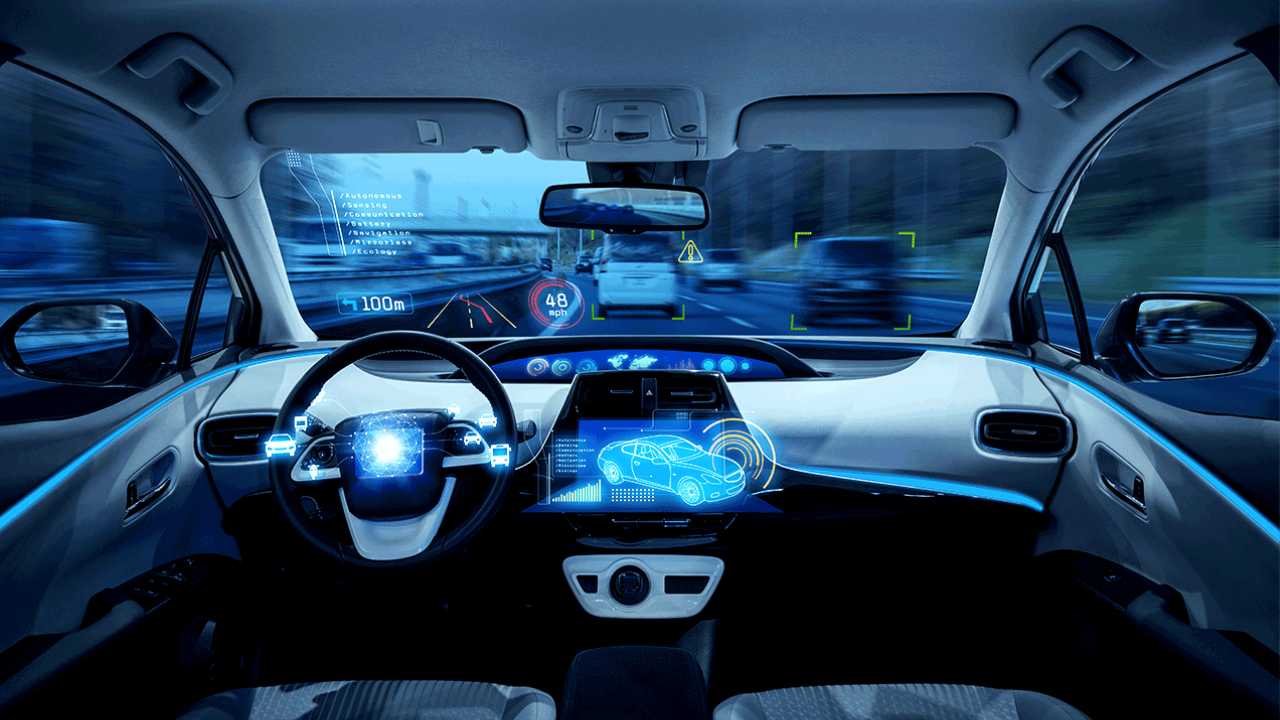
Here are five levels of automatic cars! How do these automated cars run without a driver? find out

Automatic vehicles That means vehicles that can operate without human intervention using sensor systems, radar and artificial intelligence. Such vehicles act as a driver like a robot. These automated vehicles are divided into five levels by the Society of Automotive Engineers (SAE). Here today we will understand what these five levels are and how vehicles work accordingly.
Level 0 – In this level 0 the complete control of the vehicle rests with the driver i.e. the driver. This level is fully manual.
Level 1 and 2 – In this level the vehicle has many features of the vehicle working under human supervision. In this Cruise control which adjusts the speed of the vehicle by the distance to the vehicle in front, automatic braking system which has the ability to apply the brakes in time. And the lane keeping feature, all these things require human control in the vehicle.
What is the future for automated vehicles in India? Is India ready…
Level 3 – In this level, the vehicle can control many things by itself, but the driver needs to be on the spot to take control of the vehicle at the right time. This level falls into conditional automaticity.
Level 4 – In this level, the vehicle can do all the driving tasks by itself, but that too in certain environments. For example, vehicles can operate in a world where there is no traffic and the roads are completely open. This level comes in highly automatic.
Level 5 – In this level the vehicle can operate completely under its own control. Here in this level no human control is required. This level comes in full automation.
of ‘this’ company in India Self Driving Car Launch, will have to spend ‘so many’ lakhs…
An automation system relies on a complex integration of hardware and its capabilities to see and react.
1. Lidar and Radar
By collapsing light and sound waves hitting the vehicle, these lidars and radars measure distance to create 3D maps and identify obstacles in different environments.
2.Camera and computing unit
The camera in these vehicles sees oncoming traffic lights, road signs, pedestrians and other vehicles and signals accordingly. These computing units take all these inputs in real-time, understand the following conditions and control the vehicle’s speed, brakes and steering accordingly.

Comments are closed.