
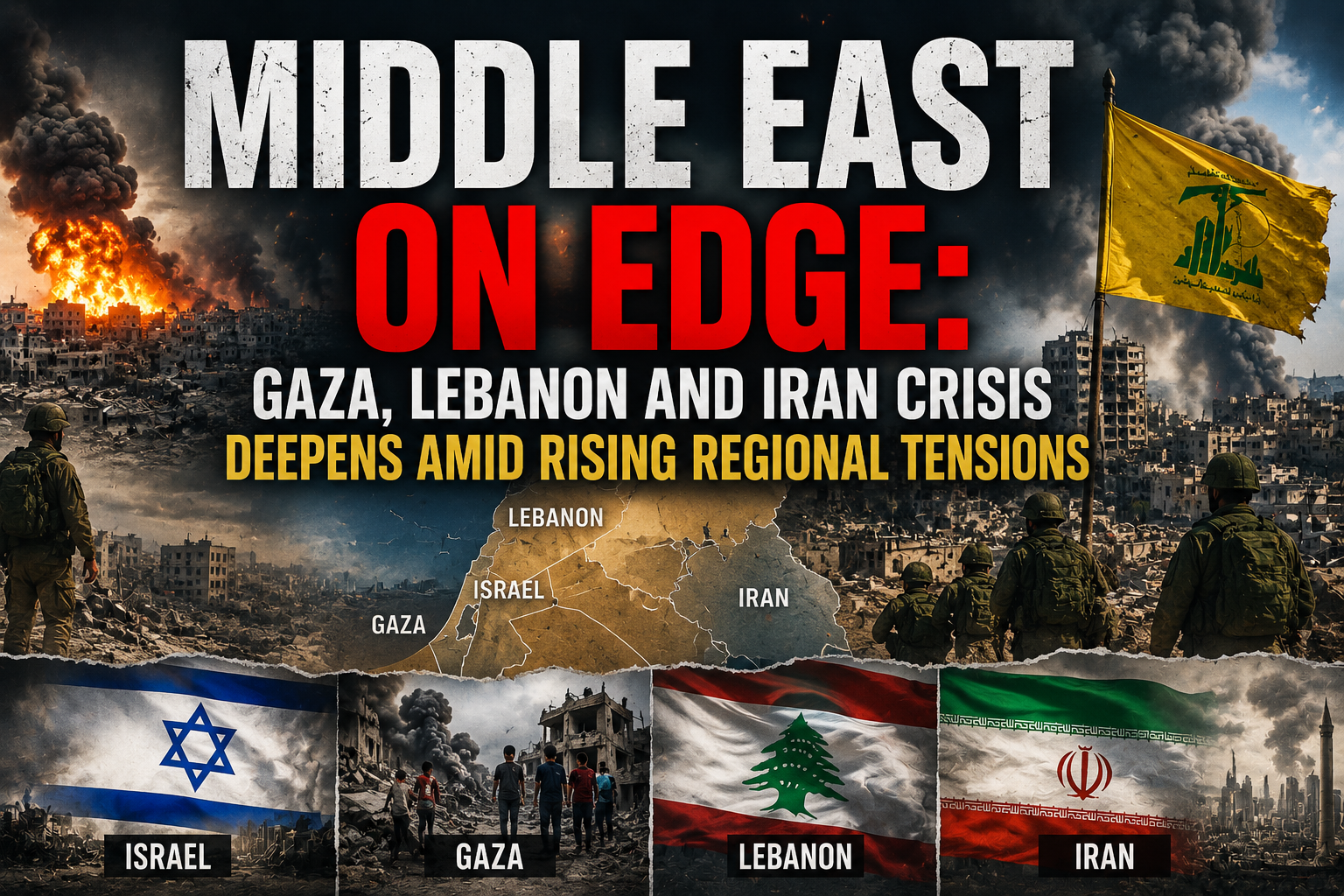
Middle East Tensions Remain High as Conflict in Gaza, Lebanon and Iran Continues to Escalate

Ceasefire attempts are running into big problems even as violence keeps going, along with the humanitarian emergency and worries about regional security. On June 6, 2026, the Middle East is still the main focus for a lot of the world, because tensions touching Israel, Gaza, Lebanon, and Iran keep heating up, even though talks are happening to try and lock in a wider ceasefire. This conflict has sort of morphed into one of the most tangled crises the region has seen in recent years, and that’s worrying people about stability nearby, basic humanitarian conditions, and also wider global economic repercussions .
Conflict Continues Despite Ceasefire Discussions
In recent days, international mediators have intensified efforts to reduce hostilities between the parties involved. While reports indicate that Israel and Lebanon have discussed a conditional ceasefire framework, disagreements over implementation and the role of Hezbollah continue to complicate negotiations. Fighting and military operations have persisted in several areas despite diplomatic progress.
Iran’s Role Remains a Key Factor
Iran keeps saying, it still supports Hezbollah and now it is insisting that any wider truce deal needs a ceasefire in Lebanon, plus some adjustments to the whole security picture along the Israel-Lebanon boundary. At the same time, Iranian officials say they are uneasy about the ongoing military pushes in Lebanon, and also in Gaza, so the road to a complete agreement is getting harder, even more so these days.
Humanitarian Crisis Deepens in Lebanon and Gaza
So yeah, the humanitarian situation across the region just keeps deteriorating, kind of steadily and then all at once. The United Nations recently doubled its aid appeal for Lebanon, since more and more civilians are facing displacement, food insecurity, and that limited ability to get healthcare. There are also reports saying that hospitals , infrastructure and even agricultural areas have taken significant damage during months of fighting.
Meanwhile in Gaza , humanitarian organizations are still warning people about hard living conditions, not enough essential supplies, and all the extra challenges civilians have to deal with because of the ongoing violence. International agencies have repeatedly asked for greater humanitarian access , and for protection for civilians, more protection than before in practice.
Security Concerns Spread Across the Region
The conflict’s impact seems to be felt well past the actual war zones. A number of countries in the Middle East are still on heightened alert, while their governments keep watch for potential security threats and regional instability, which is kind of a big thing right now. Travel advisories have also come out for several countries. That said, it’s all tied to concerns about how the situation is evolving, day by day ,and what that might mean next.
Economic Impact Felt Worldwide
The crisis is also affecting global markets ,and especially the energy part. Traders as well as analysts are still keeping an eye on what’s happening, because people worry about oil supply routes, plus the regional shipping lanes, sort of a practical bottleneck. The swings you see in crude oil prices have, in turn, shown the wider economic fallout of the conflict, not just for one place but for countries around the world too.
International Efforts to Prevent Further Escalation
Diplomatic efforts led by the United States and other international stakeholders remain ongoing. Negotiators continue to seek a framework that could reduce hostilities and prevent the conflict from expanding further. However, major disagreements over security arrangements, military operations and political demands continue to hinder progress toward a lasting settlement.
Outlook Remains Uncertain
As violence, diplomatic negotiations, and humanitarian concerns sort of happen at the same time, the future of the region stays not fully clear, like, at all. Governments and international organizations are calling for restraint and a renewed dialogue, so that the situation does n’t tip into more escalation. For now, millions of people across the Middle East are still living with the effects of a crisis that keeps shaping global headlines and even international policy debates, over and over.
Saniya Siddique is a skilled Content Writer with a background in Journalism. Specializes in creating engaging, accurate, and audience-focused content, with expertise in news writing, digital media, and writing trendy articles on buzz and entertainment.
The post Middle East Tensions Remain High as Conflict in Gaza, Lebanon and Iran Continues to Escalate appeared first on NewsX.

Comments are closed.