
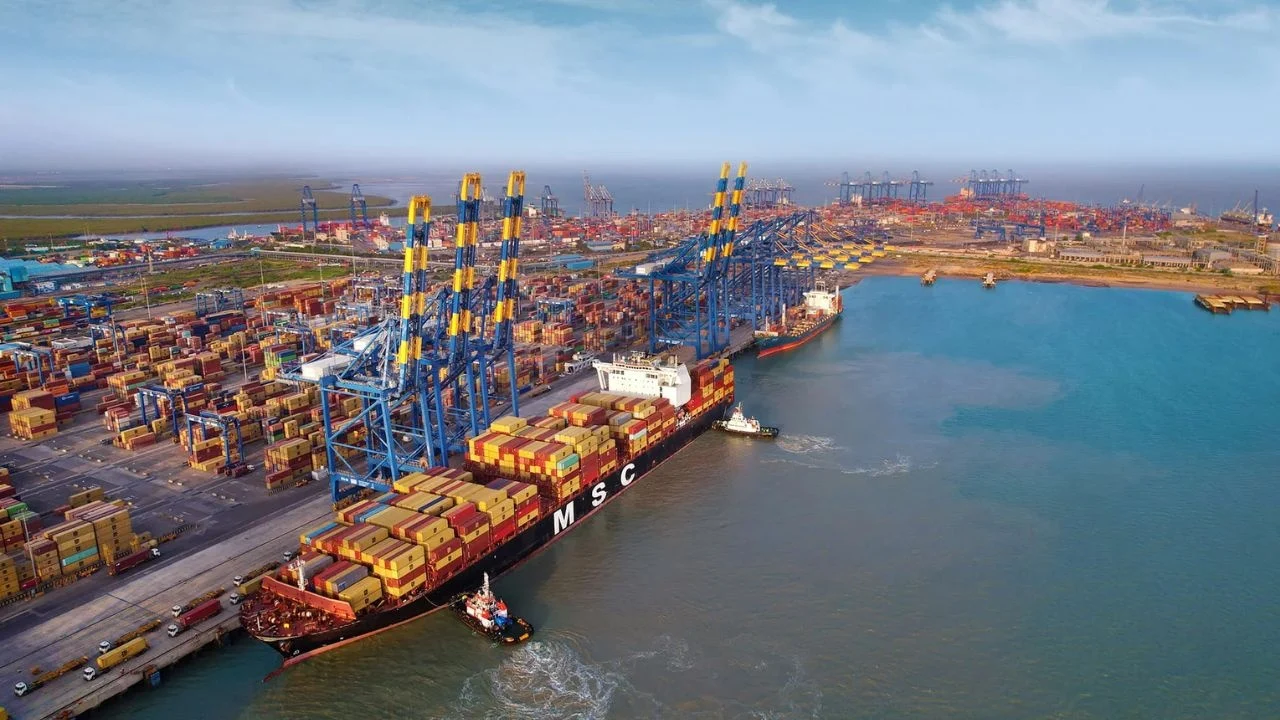
Adani Ports: From Mundra Port to the world How did APSEZ build India’s largest logistics empire?

Adani Ports: As India is rapidly moving towards becoming a global manufacturing and trading superpower, logistics infrastructure is emerging as one of the most important foundations of economic growth. At the center of this transformation is Adani Ports and Special Economic Zone Limited (APSEZ), India’s largest integrated transport utility and the country’s leading commercial port operator.
APSEZ handles more than 451 million metric tonnes (MMT) of cargo every year through a network of 15 ports and terminals spread across India and abroad. The company today handles more than one-fourth of the country’s total cargo transportation.
What started as a simple port business, APSEZ has now transformed into a comprehensive integrated transportation and logistics platform, connecting ports, rail networks, warehousing, trucking, industrial clusters and global trade corridors.
The entire logistics ecosystem beyond ports
The company aims to create world-class infrastructure that promotes trade, creates economic opportunities and contributes to nation building through sustainable value creation.
Over the years, APSEZ has not limited its activities to ports, but has created a comprehensive logistics ecosystem catering to the needs of energy, manufacturing, mining, agriculture, automobile and consumer goods sectors.
Integrated infrastructure network is the biggest strength
The biggest feature of APSEZ is its strong and integrated infrastructure network. The company’s ports are designed for deep draft and all-weather operation, allowing them to handle even the world’s largest ships with high efficiency and productivity.
With state-of-the-art cargo handling systems, extensive mechanization and strong rail and road connectivity, these ports have become major gateways connecting Indian industries to global markets.
Mundra Port: Major hub of the network
At the heart of this network is Mundra Port, which began commercial operations in 1998 and has today become India’s largest commercial port.
Located in the Gulf of Kutch, the port handles a variety of cargo including containers, dry bulk, liquid cargo, automobiles and crude oil through specialized terminals. With an annual capacity of 264 million metric tonnes (MMT) and dedicated rail and highway connectivity, Mundra Port remains an important trade gateway to the northern and western regions of India.
Strong presence on both coasts of India
Apart from Mundra, APSEZ’s network extends to both the eastern and western coasts of the country. Ports like Dahej and Hazira (Gujarat), Dhamra (Orissa), Gangavaram and Krishnapatnam (Andhra Pradesh), Kattupalli and Ennore (Tamil Nadu), Karaikal (Puducherry) and Dighi (Maharashtra) are providing a strong base to the energy, industrial and container supply chains.
Increasing expansion internationally
The company’s global presence is also continuously strengthening. APSEZ is expanding its access to global shipping routes through other strategic investments, including Israel’s Haifa Port, due to be acquired in 2023. This expansion propels the company towards its goal of becoming a world-class integrated transportation and logistics company.
Uninterrupted connectivity from port to market
APSEZ is not limited to port operations only. The company provides seamless connectivity from factories and farms to domestic and international markets through rail, warehouse, logistics parks, trucking and multimodal transportation solutions. This reduces logistics costs, increases supply chain reliability and provides a competitive advantage to various industries.
Strong hold in agro-logistics also
The company has also established a significant presence in the agro-logistics sector. APSEZ has developed one of the country’s most advanced bulk handling and storage systems for food grains. By integrating procurement, storage, transportation and distribution the company is contributing to strengthening food safety and supply chain efficiency.
Mundra Economic Hub becomes center of investment
Spread over an area of over 8,000 hectares, the Mundra Economic Hub integrates special economic zones (SEZs), industrial clusters and free trade infrastructure.
It provides a strong platform for manufacturing, export and investment and gives new impetus to industrial development.
Also a leader in maritime services
In addition to port and logistics operations, APSEZ also provides specialized maritime services. The company operates India’s largest capital dredging fleet and provides harbor operations, towage and other marine support services. This strengthens the development of future-ready maritime infrastructure.
Sustainable development is an important part of APSEZ’s business strategy. The company is continuously investing in environmental protection, renewable energy and resource conservation and adheres to global standards of quality, safety and environmental management. Through Adani Foundation, the company is running various initiatives related to education, health, livelihood and community infrastructure, the benefits of which are reaching thousands of villages.
Important role in India’s economic transformation
As India moves towards boosting manufacturing, increasing exports and reducing logistics costs, APSEZ is playing an important role in creating the infrastructure for the country’s economic development. By bringing together ports, logistics, industrial ecosystem and technology, the company is building fast, efficient and globally competitive supply chains.
Target of 1 billion tonnes of cargo by 2030
More than being India’s largest port operator, APSEZ is building a strong foundation for the country’s trade ambitions.
The company’s target to handle 1 billion tonnes of cargo per annum by 2030 not only reflects its growth aspirations, but also the sheer scale of India’s economic transformation.
Also read- New bet to handle falling rupee, government removed capital gains tax; There will be a flood of dollars in the country!
In many ways APSEZ represents the future infrastructure model of India, a future where ports, logistics, technology and industrial growth come together to create long-term value not only for businesses but for the entire nation.

Comments are closed.