
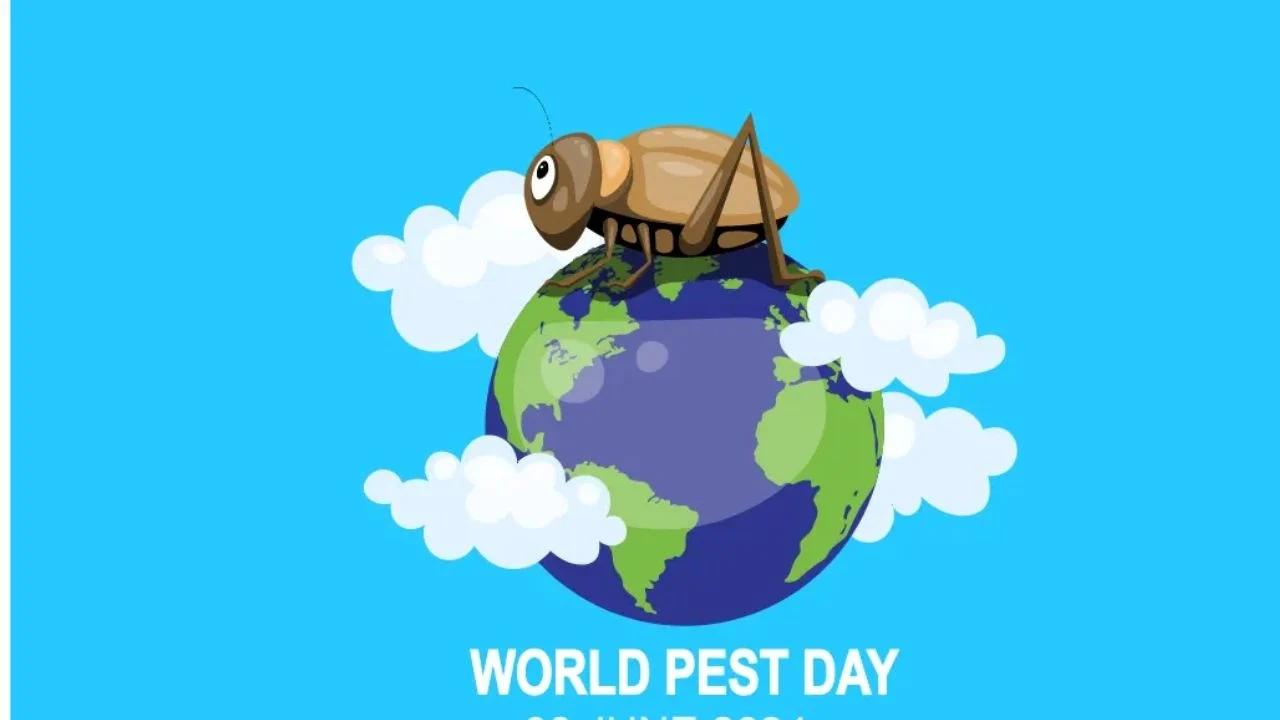
World Pest Day: More than 10 lakh insect species, some beneficial and some becoming a big challenge

World Pest Day 2026: It is also known as World Insect Day or World Insect Awareness Day. This day has been dedicated to spreading awareness about pest management and its benefits not only for people but also for maintaining the quality of life of trees and plants.
In the programs organized on this day, experts from all over the world share their views related to it.
How did World Insect Day start?
World Pest Day was initiated by the Chinese Pest Control Association and co-sponsored by the Asian and Oceania Pest Managers Association (FAOPMA), the National Pest Management Association (NPMA) and the Confederation of European Pest Management Associations (CEPA).
The first World Insect Day celebration was held on 6 June 2017 at a Beijing hotel.
World insect day Of Objective
- Promoting the professional image of the pest management industry
- To promote the use of professional pest management in a scientific and socially responsible manner.
- Focusing on threats from pests.
India In World insect day
As a part of World Pest Day 2021, the Indian Pest Control Association (IPCA), a member of the Global Pest Management Coalition (GPMC), organized events in India.
Danger caused by increase of pests
Today, due to global warming and changing climate, the number of insects and their lifespan is increasing. Insects that previously perished in cold winters now survive longer in warmer environments. Due to rising temperatures, insects are reproducing rapidly and spreading to new areas.
If global temperatures rise by about 2 degrees Celsius, insect losses in wheat could increase by about 46 percent, maize by 31 percent and rice by 19 percent.
There are more than 10 lakh species of insects
The number of known insect species in the world is approximately 1 million (1 million), although the actual number may be much higher. Bees, butterflies and many other insects play an important role in pollination, bio-diversity and maintaining ecological balance.
Pest control is directly related to food security, as pests damage both crops standing in the fields and grains stored in warehouses. Not only this, after floods, earthquakes, cyclones and other natural disasters, the number of insects and disease-causing organisms increases, due to which the risk of epidemics also increases.
insect borne diseases
- mosquito borne diseases
Mosquito control is essential to ensure the health and safety of people. Mosquitoes spread diseases in many ways.
- Cockroach threat
Cockroaches make household life very difficult. There is a risk of many diseases due to the presence of cockroaches in the house.
Also read- Today’s weather: Thunderstorm and rain in these states including Delhi-UP, winds will blow at ‘stormy’ speed; IMD alert
- danger from termites
Termites are one of the major reasons behind the damage to any property. Termites usually live in the soil and eat away at the wood from the inside, hollowing it out.
- Danger of rat-borne diseases
Rats are stubborn pests. It is difficult to deal with them. Rats not only spread disease and contaminate food, they also cause damage to your home.

Comments are closed.