
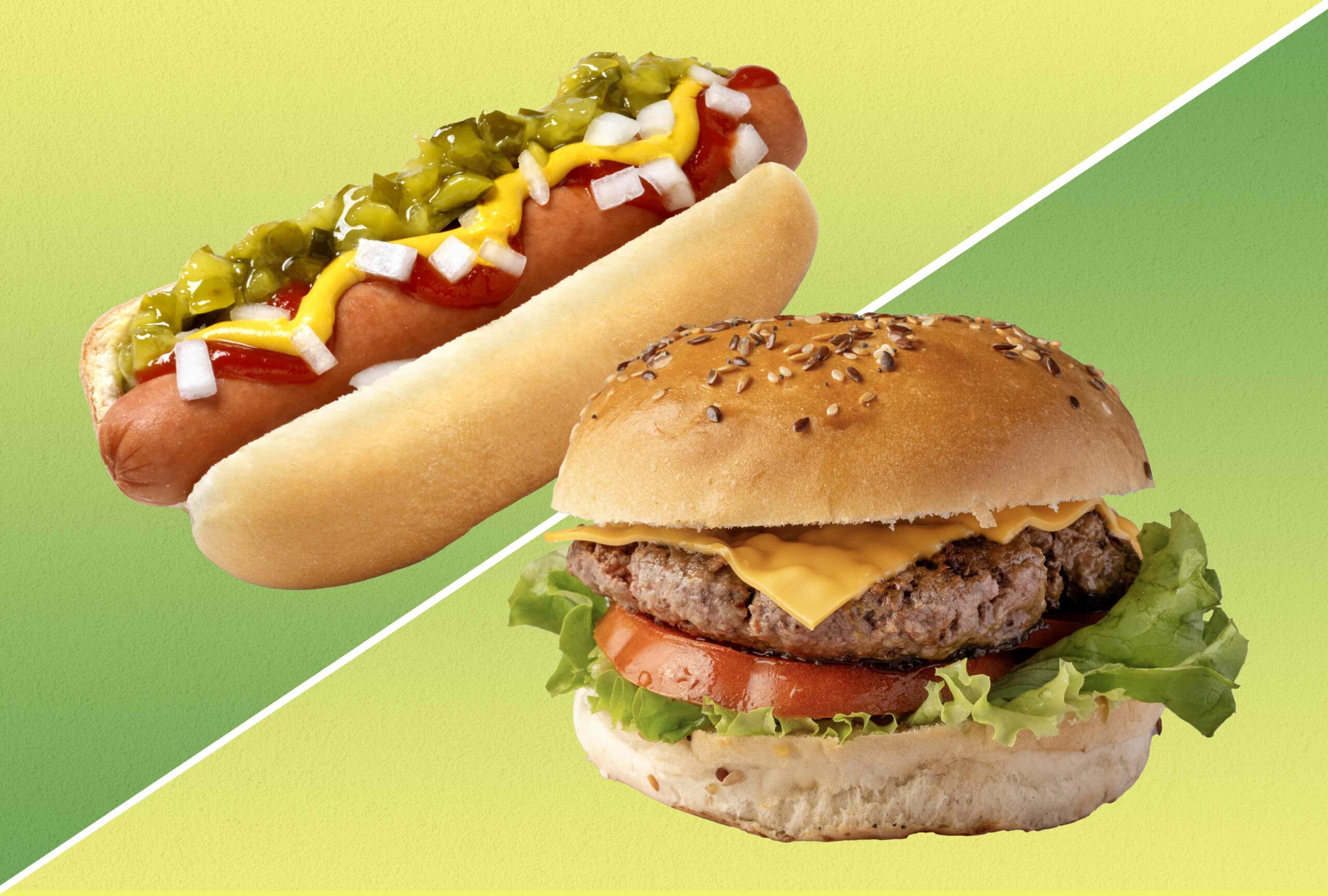

Your traditional cookout meal may not be the best for your heart
Reviewed by Dietitian Mandy Enright, M.S., RDN, RYT
Key Points
- Ultra-processed hot dogs contain high sources of saturated fat, sodium and additives.
- Hamburgers made from lean ground beef provide protein, iron, zinc and vitamin B12.
- Heart-healthy cookouts include more plants, no-sugar-added drinks and mindful portions.
Summer cookout menus typically include staples like hot dogs and hamburgers. Yet these popular choices don’t often rank among the most heart-healthy options. With highly processed hot dogs and loaded cheeseburgers, it’s easy to see why a summer cookout can conflict with a diet that supports cardiovascular health. This doesn’t mean you have to skip the cookout completely if you’re trying to eat a heart-healthy diet. Instead we recommend making smart swaps and offering a variety of foods to make your cookout menu both enjoyable and nutrient dense.
“My general cookout formula includes a few protein options like burgers and grilled chicken, lots of colorful produce like a big green salad, watermelon and corn, plus satisfying carbs like potatoes and bread,” says Laura Burak, M.S., RDN. When choosing between serving hot dogs or hamburgers, you may be wondering which is the heart-healthier choice. We asked registered dietitians to share the differences between the two, as well as tips for a heart-smart cookout. For help planning your next heart-healthy outdoor meal, keep reading.
How Hot Dogs Affect Heart Health
Hot dogs are traditionally made from a combination of animal sources like beef, pork and turkey. They’re considered an ultra-processed food and most commonly include ingredients like spices and curing agents to give them their distinctive pink color, flavor and texture. One beef hot dog has approximately 150 calories, 6 grams of protein, 5.5 grams saturated fat and around 425 milligrams sodium.
“Hot dogs are high in sodium and saturated fat, both of which can negatively impact blood pressure and cholesterol when eaten regularly,” says Katharine Rosenthal, RDNleading to increased cardiovascular disease risk. In recent years, the variety of hot dogs available has expanded to include vegetarian options as well as those made from a single source of meat such as beef. This wide variety influences nutritional content, including sodium and saturated fat. “The type of hot dog matters mostly when it comes to sodium,” says Rosenthal. “Levels can vary significantly between brands and varieties, so looking at the labels and choosing one under 400 mg per link (or less than 20% of the Daily Value) is one of the simplest ways to choose the better option.”
Hot dogs also contain nitrates and nitrites, compounds that exist naturally in certain vegetables and are added to some foods in a synthetic form. “Synthetic nitrates and nitrites are considered preservatives that can be added to hot dogs for coloring and to extend the shelf life,” says Catherine Nay, M.Ed, RD, CSOWM, CHES. Some hot dogs do not have synthetic nitrates or nitrites added but may include vegetable powder such as celery powder, which contains nitrates and converts to nitrites in the body.
How Hamburgers Affect Heart Health
A hamburger’s place in a heart-healthy diet is not without controversy. “Red meat has gotten a mixed reputation in the nutrition world for decades, but the truth is that red meat and burgers can absolutely fit into a balanced diet and, like most foods, context, portion size and your diet as a whole matters more than one ingredient,” says Burak. While the diet pattern matters for long-term health, research indicates that eating high amounts of red meat is associated with an increased risk of cardiovascular disease.
If you choose to eat red meat, it can provide an excellent source of high-quality protein. “Higher-protein foods help to maintain muscle mass, which includes the heart muscle,” says Burak. “Protein helps balance blood sugar and satiety, which are essential for metabolic health [and] can positively influence cardiovascular health.”
Beef can actually support heart health, thanks to providing key nutrients including iron, zinc and vitamin B12. “Iron carries oxygen through the blood, B12 regulates homocysteine levels, and zinc reduces oxidative stress and inflammation, all of which can play a role in maintaining heart health,” says Burak.
While almost half the fat content in beef comes from heart-healthy monounsaturated fats, the remainder is coming from saturated fats—the type of fat we should be consuming less of. Excess intake of saturated fat can contribute to high LDL cholesterol, which increases cardiovascular disease risk. Total saturated fat in your burger can be reduced by choosing a leaner blend of ground beef. “I recommend choosing [ground beef] with at least 85-90% [beef] or higher so that you still get the flavor and nutrients, but the calories and saturated fat level are helpful for weight management and heart health,” says Burak. “Leaner beef—like 93%—may tend to be drier and less flavorful, but it can be a great option as well for an excellent source of lean protein.”
Which Is Better for Heart Health?
“Sorry to break it to you, but hamburgers are a better choice from an overall nutrition and heart health standpoint than hot dogs,” says Burak. “They’re less processed and provide better-quality protein with more nutrients like iron, B12 and zinc.” The other dietitians we asked agree, sharing a similar message about hamburgers versus hot dogs for heart health.
Hot dogs are not considered a heart-healthy food because of their processing and poor nutrition profile. “Hot dogs tend to be a heavily processed food made with various meat products and fillers, unlike hamburgers, which use just ground beef, and they are also higher in additives and sodium,” says Burak.
The American Heart Association recommends choosing unsaturated fats in place of saturated fat, choosing minimally processed food instead of ultra-processed food and reducing sodium intake. Both hot dogs and hamburgers can be significant sources of saturated fat, but between the two, hot dogs are considered ultra-processed and higher in sodium. “However, just like all foods, quality and frequency matters, so if you love a hot dog once in a while as part of a healthy diet, enjoy it!” says Burak.
Heart-Healthy Cookout Tips
- Make Heart-Smart Swaps: Switching from animal to plant protein can introduce more nutrient density to your summer cookout. “There are plentiful options for non-red meat burgers, including chicken, turkey, shrimp, salmon, as well as plant-based versions made of legumes or soy,” says Nay. You can also try blending beans or mushrooms into a mix of beef to make your own blended burger at home. If choosing a vegetarian hot dog, be sure to check the label to compare sodium levels. Alternatively try a carrot dog for a plant-based twist!
- Better-for-You Toppings: Burgers and hot dogs don’t have to be loaded with cheese and creamy sauce to be flavorful. Veggie toppings are a best bet, as they provide colorful, crunchy sources of fiber and nutrients. Rosenthal recommends loading up your hot dog with toppings like mustard, raw onion and tomatoes instead of cheese sauce or chili. For burgers, Jackie Bridson, M.A., RDNencourages you to “add plant-focused toppings like lettuce, tomato, onion and mashed avocado to keep it heart-healthy but still delicious.”
- Consider Condiments: Condiments can often be overlooked sources of sodium, saturated fat and added sugars that can contribute to high blood pressure and cholesterol. If you choose a spread or sauce, limit the portion to a small amount so that you get the flavor without excess sodium, sugars or saturated fat. Look for low-sodium, no-salt-added or no-added-sugar versions of condiments like ketchup, barbecue sauce and hot sauces. When in doubt, mustard is your best bet for being low in calories while containing minimal sodium and added sugars.
- Add Plants When Possible: “Fruits and vegetables provide more fiber, vitamins and minerals, supporting heart-healthy eating patterns,” says Patricia Kolesa, MS, RDN. “Get creative with grilling vegetables, vegetable skewers or a flavorful grain salad. Keep it simple with the classic fruit salad or, if you’re feeling adventurous, consider other fruit ideas like grilled watermelon, grilled pineapple or fruit skewers.” Try wrapping your burger in lettuce or using portobello mushrooms as buns!
- Hydrate Without Added Sugars: “Hydrate with low-sugar beverage options like water, unsweetened iced tea or infused water,” says Kolesa. The American Heart Association recommends limiting added sugar intake in all forms, including beverages, because higher intakes (over 25% of total calories) increase the risk for cardiovascular disease mortality.
- Be Aware of Portions: “Remember that portion size matters for everything on the plate,” says Bridson. “Make a little room for the healthy options as well as the fun foods, and you’ll still have a good time!” Serving up sliders in place of full-size burgers still gives the same satisfaction in a smaller portion, plus leaves more room on the plate for plant-forward sides.
Our Expert Take
You don’t need to give up on grilling this summer if you want to eat a heart-healthy diet. However, we do recommend skipping hot dogs and opting for a lean beef hamburger or vegetarian burger to reduce total saturated fat and sodium in your cookout. “A healthy diet focuses on the big picture and overall food balance, so when you choose a hamburger as your protein source, make sure to include fiber-rich ingredients like veggies on and around the burger,” says Burak. “A balanced nutritious plate that also satisfies you should include protein, healthy fats, fiber-rich carbs and usually something that resembles a fruit or veggie.” We also recommend opting for no-added-sugar beverages while balancing portions to make room for nutrient-dense choices. And remember, one afternoon cookout isn’t going to make or break your diet. It’s what you eat most of the time that will have the greatest impact on your health.

Comments are closed.