
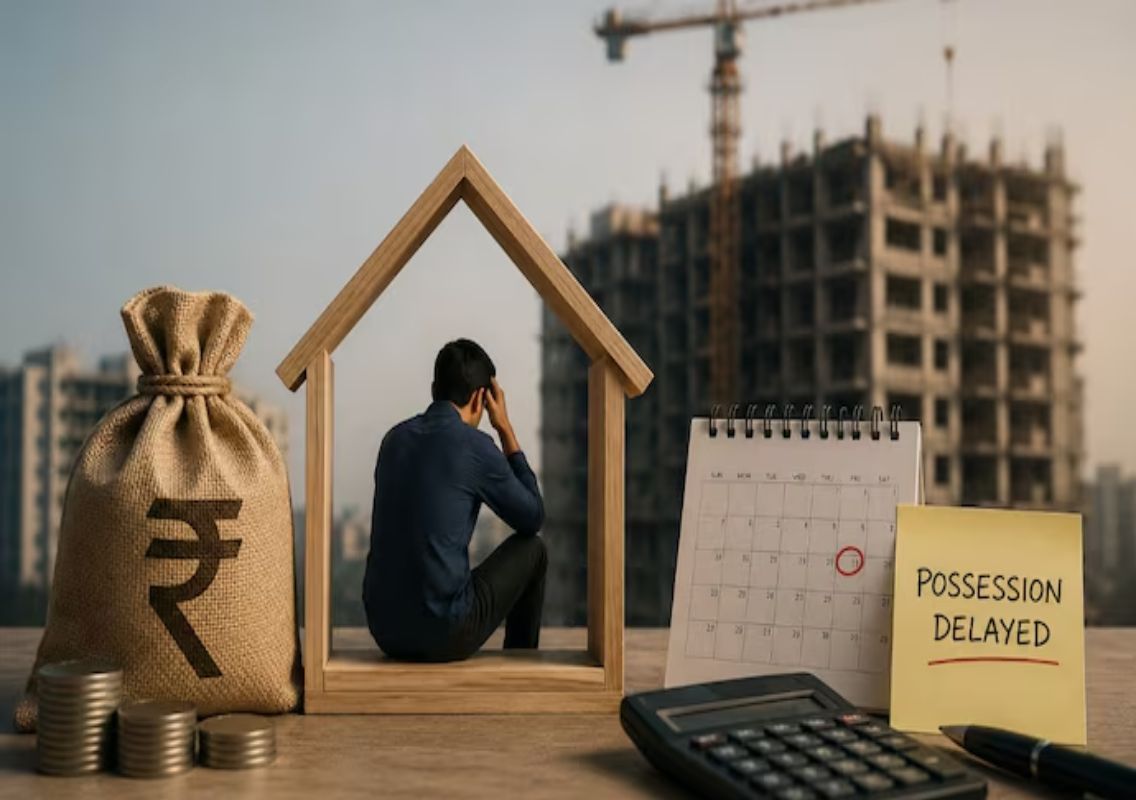

New Delhi: You booked your dream home, planned your finances, and started paying EMIs. The builder promised possession within a fixed timeline. But the deadline passed, construction slowed or stalled, and you now find yourself paying both rent and loan instalments. For over 5 lakh homebuyers across India, this is not an exception but a widespread crisis.
While India’s housing market continues to grow with strong sales and new project launches, delayed possession remains one of the sector’s most persistent problems. For buyers, the financial and emotional toll can be severe—ranging from cash flow stress to legal battles and disrupted long-term plans.
A widespread issue across Indian cities
Data from real estate analytics firms shows that lakhs of housing units remain delayed or stalled across major cities. NCR remains the worst affected, with cities like Noida, Gurugram and Greater Noida accounting for a significant share of stuck projects.
Importantly, delays are not limited to stalled developments. Even projects that are eventually delivered often overshoot deadlines by three to four years. This means buyers end up paying EMIs far longer than expected without gaining possession.
The scale of the problem highlights a structural issue in India’s real estate sector—delays are not rare events but a systemic risk buyers must prepare for.
Your legal rights under RERA
The introduction of the Real Estate (Regulation and Development) Act, 2016 (RERA) significantly strengthened homebuyer rights.
If a builder fails to deliver possession on time, buyers have two primary options under the law:
- Withdraw from the project and claim a full refund with interest
- Stay invested and claim monthly interest for the delay period
Courts, including the Supreme Court of India, have repeatedly ruled that buyers cannot be forced to wait indefinitely. This has tilted the balance of power in favour of consumers.
When should you file a complaint?
Experts say buyers often make the mistake of waiting through repeated deadline extensions.
The right time to act is when:
- The possession date in the agreement has lapsed
- The builder fails to provide a credible revised timeline
Filing a complaint with the state RERA authority is usually the first step. In many cases, authorities direct builders to either:
- Pay delay interest, or
- Refund the investment with interest
While straightforward cases may see resolution within 6–12 months, complex disputes can take longer.
Can you claim compensation?
Yes. Buyers can claim compensation beyond just delay interest.
If you are:
- Paying rent due to non-possession
- Paying EMIs simultaneously
- Facing financial or emotional stress
You may seek damages for:
- Financial losses
- Mental harassment
- Opportunity cost
To support your claim, maintain proper documentation such as rent receipts, EMI statements, and communication with the builder.
Can you stop paying EMI?
The short answer is no.
Your home loan agreement with the bank is separate from the builder agreement. Even if construction is delayed, your obligation to repay the loan continues.
Missing EMIs can lead to:
- Penalties
- Credit score damage
- Legal recovery action
Instead of stopping payments, experts advise pursuing legal remedies against the developer.
The hidden cost of pre-EMI loans
Buyers who opted for pre-EMI plans are often hit harder.
Pre-EMIs cover only interest, not principal. So, delays mean:
- No reduction in loan amount
- Increased overall cost
A delay of 6–12 months can add ₹2–4 lakh in extra interest for many borrowers.
Financial ripple effects on families
Delayed possession impacts more than just housing.
It can:
- Strain monthly budgets due to rent + EMI
- Reduce disposable income
- Disrupt investment plans like SIPs
- Affect tax benefits under Section 24B
Over time, families may:
- Dip into emergency funds
- Delay retirement planning
- Cut back on children’s education savings
Alternatives beyond RERA
RERA is not the only legal route available.
Buyers can also approach:
- Consumer courts under the Consumer Protection Act 2019
- Civil courts for contractual disputes
- Insolvency proceedings in extreme cases
Consumer forums are particularly helpful when builder agreements contain unfair clauses.
Documents you must keep ready
Strong documentation is key to winning any case. Buyers should maintain:
- Agreement for sale and allotment letter
- Payment receipts and bank statements
- Loan disbursement records
- RERA registration details
- Builder communications (emails, messages)
- Project brochures and advertisements
Well-organised records significantly improve the chances of a favourable outcome.
Common mistakes to avoid
Experts highlight several errors buyers frequently make:
- Waiting indefinitely for builder promises
- Stopping EMI payments
- Accepting possession without Occupancy Certificate
- Signing settlement agreements without legal review
- Relying on verbal assurances instead of written proof
Avoiding these mistakes can protect your legal and financial position.
Conclusion
Buying a home is often the biggest financial decision for Indian families. When possession is delayed, the consequences go far beyond inconvenience—they affect savings, investments and long-term financial stability.
The good news is that today’s homebuyers are better protected than ever before. Laws like RERA and consumer protection frameworks provide clear remedies. Courts have also consistently upheld buyer rights.
However, awareness and timely action are critical. Recognising when a delay becomes a legal breach—and acting on it—can prevent long-term financial damage.
Because while builders may delay projects, your EMI schedule rarely changes.
(Disclaimer: The views, opinions, recommendations, and suggestions expressed by experts/brokerages in this article are their own and do not reflect the views of the Read Group. It is advisable to consult a qualified broker or financial advisor before making any actual investment or trading choices.)

Comments are closed.