
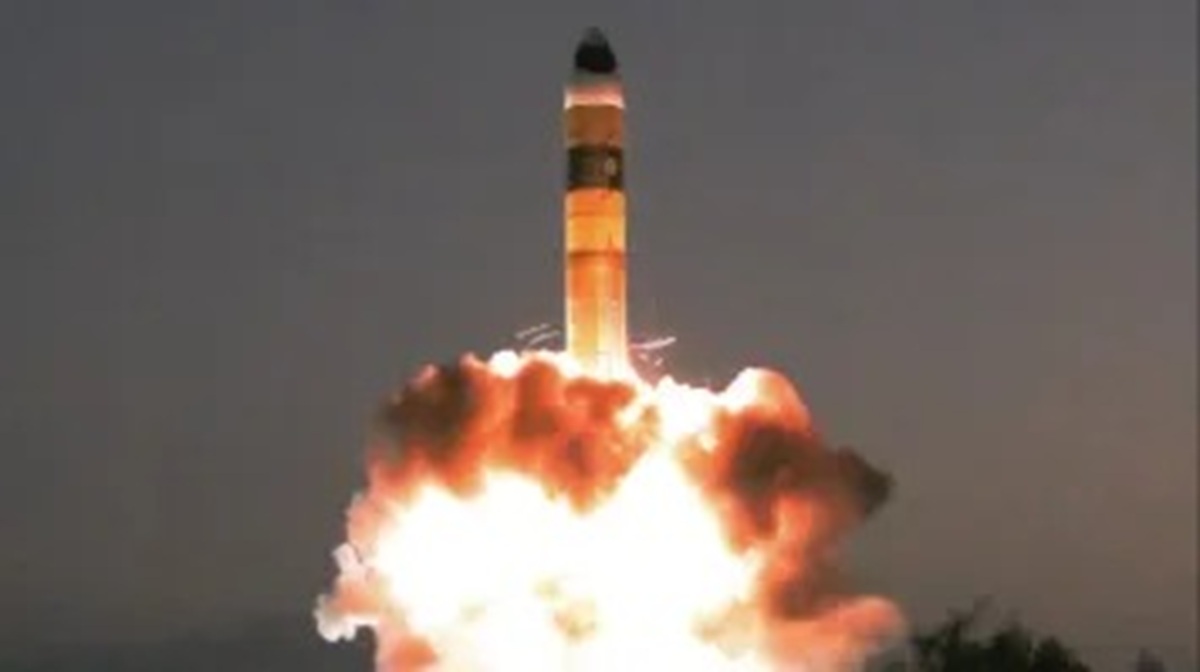

According to the latest Yearbook 2026 of the Stockholm International Peace Research Institute (SIPRI), India has further expanded its nuclear arsenal during the year 2025 and continues to work on the development of new generation missile systems capable of carrying nuclear warheads. According to the report, India is estimated to have around 190 nuclear warheads by the beginning of 2026.
The SIPRI yearbook released on June 8 said India’s nuclear modernization program is now increasingly focused on the development of long-range weapons systems capable of reaching remote targets inside China. However, the report also says that the long-standing rivalry with Pakistan also remains important in India’s security strategy.
The report specifically highlights the military tensions between India and Pakistan during May 2025. SIPRI described the developments surrounding Operation Sindoor as an unusually serious military crisis between the two nuclear-armed neighbours. According to the institute, during this period India had targeted those air and missile bases of Pakistan whose possible role could have been related to the nuclear infrastructure. However, the report also said that both countries took steps to prevent tension from escalating to a larger level.
SIPRI also mentioned in its report that during the May 2025 crisis, India and Pakistan used cyber operations for the first time amid active military conflict. According to the institute, this development reflects the changing nature of war and deterrence between the two countries.
According to the report, India remains the fifth largest defense spending country in the world. India’s military expenditure will reach US $ 92.1 billion in the year 2025, which is 8.9 percent more than the previous year. In terms of defense spending, India is behind only America, China, Russia and Germany.
Along with this, India was also the world’s second largest arms importer in the period 2021-25. According to SIPRI, India’s share in global arms imports was 8.2 percent. During this period, Ukraine, India, Saudi Arabia, Qatar and Pakistan were among the five largest arms importing countries in the world.
The report also expresses concern over the global nuclear situation. According to SIPRI, at the beginning of the year 2026, the world’s nine nuclear weapons possessing countries, America, Russia, Britain, France, China, India, Pakistan, North Korea and Israel, had a total of about 12,187 nuclear weapons. Of these, approximately 9,745 were held in military reserves and considered available for potential use.
SIPRI says the decline in the total number of nuclear weapons is primarily due to the US and Russia destroying old warheads. However, with the increasing pace of development of new nuclear weapons and modernization programs, nuclear competition appears to be intensifying again at the global level.
According to the report, Pakistan is also developing new weapon delivery systems and increasing the stockpile of fissile material, which is likely to expand its nuclear arsenal in the coming decade. At the same time, China’s nuclear stockpile is also estimated to increase to about 620 warheads.
SIPRI Director Karim Haggag said in his introduction to the report that the past decade has completely changed the global strategic environment. According to him, the return of large-scale international wars between technologically advanced countries and changes in America’s traditional alliance structure have emerged as key features of current global competition.
The report also said that the security landscape is becoming increasingly complex due to the increasing strategic competition between China and the US in the Asia-Pacific region. In such an environment, India is paying special attention to strengthening its military capabilities, defense modernization and strategic deterrence.
This report of SIPRI has come at a time when global security challenges, regional conflicts and nuclear competition are taking new dimensions. The report’s findings indicate that Asia and the Indo-Pacific region may remain a key focus of the global strategic balance in the coming years.
Also read:
India beats Afghanistan, wins by an innings and 300 runs in the only Test!
Khan sir arrested, anticipatory bail plea decision reserved!
Kangana Ranaut praised young cricketer Vaibhav Suryavanshi!
Delhi High Court issues notice to Center on CBSE evaluation irregularities!

Comments are closed.