
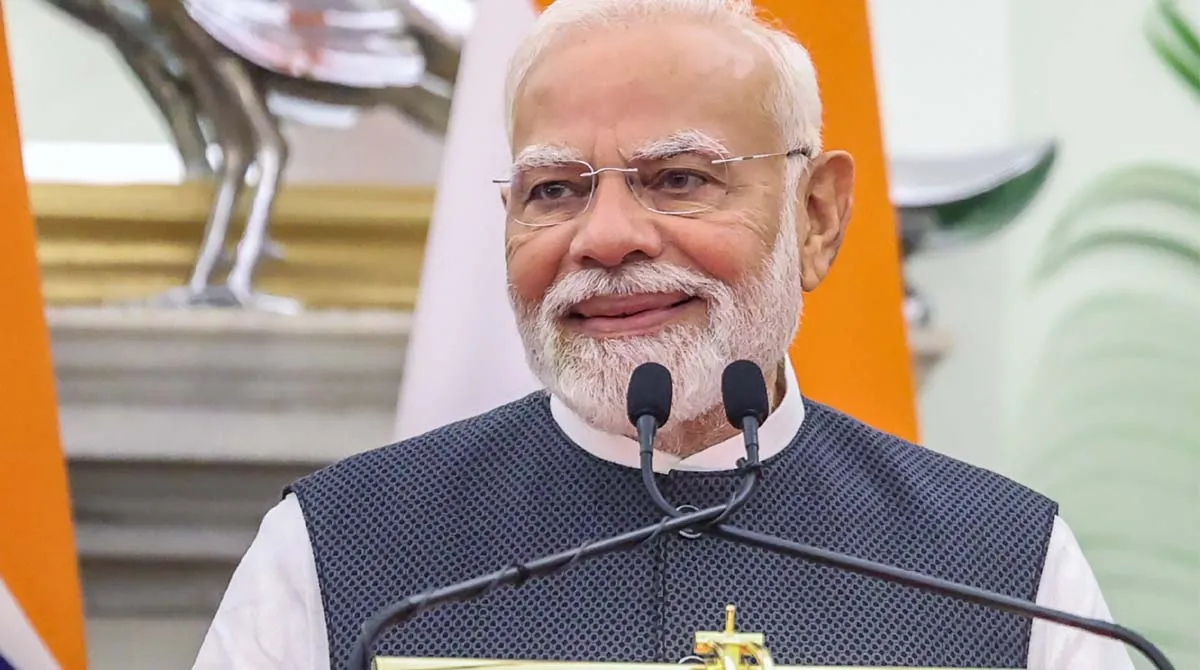
PM Modi Record: PM Modi came very close to this historical record of Nehru, this is how the picture of the country changed in 7 decades

New Delhi: Prime Minister Narendra Modi has come very close to the record of the country’s first Prime Minister Jawaharlal Nehru as the longest serving democratically elected head of government in the history of India. Amidst this historic journey, there has been a change in the social and economic landscape of India, which perhaps no one could have imagined a few decades ago. This journey from the early to mid-20th century to the modern digital ecosystem of the 21st century tells the story of a revolutionary change in the everyday life of the country. The most interesting thing is that during the Nehru era, the things which were considered ‘ultra-luxury’ (i.e. very expensive luxury) only for the rich, wealthy and influential people, have today become a basic need and a very common part of life for crores of common citizens of the country during the Modi government.
When air travel and expressways became common man’s ride
For several decades after independence, India was struggling with a severe shortage of infrastructure to travel from one state to another. During the tenure of the country’s first Prime Minister Jawaharlal Nehru, commercial air travel was not within the reach of a common man. This facility was limited only to senior government officials and noble families. The railway network of that era was also very primitive, relying on slow-moving steam engines and early diesel technology.
But in today’s modern India, that difference between rich and poor has completely ended. Budget airlines and modern regional airports built in every corner of the country have made flying possible even for the common man wearing slippers. Air travel has become a very common option for today’s new middle class. At the ground level, the dilapidated and potholed roads have now been replaced by a network of gleaming high-speed expressways. Along with this, the arrival of fast and semi-high-speed trains like Vande Bharat Express has brought about an unprecedented change in the speed and comfort of domestic travel.
Years of wait is over, journey from Telegram era to smartphone revolution
The change that has taken place in the methods of communication between Nehru’s era and the present day is no less than a miracle. In the middle of the 20th century, to get a landline telephone connection, people had to visit government offices and wait for years for their turn in the list. If an important message had to be sent to remote areas, people had to rely on the wordy and outdated telegram.
After decades, today the situation has completely changed. Now there is no shortage of things in the market, but there is abundant availability. Today, there is a buzz of smartphones in every corner of India, which has been given more momentum by the world’s cheapest mobile data plan. Mobile devices that have computing power far greater than that used in the early space programs are now available in the pockets of common people, from the country’s luxurious cities to those living in remote villages. It has buried forever all the old distances and barriers to conversation.
From cash shortage to cashless economy: India’s stunner in the world
The biggest and revolutionary change between the old economic system and today’s new India is seen in the way we conduct financial transactions. For many decades, banking in India meant physically going to the bank, standing in long lines, relying on heavy hand-written ledgers and tedious government paperwork. Due to this complicated system, a large part of the country’s population was completely cut off from the banking system.
In stark contrast, today’s India is leading the world in the global financial technology (Fintech) revolution. Online payments through the country’s indigenously developed Unified Payments Interface (UPI) have changed the entire picture of the country in the blink of an eye. Today, from big luxurious retail malls to small shopkeepers selling vegetables on roadside vendors, cashless transactions have become a common practice everywhere. This technology has thrown away the old luxury and created such an easy and accessible digital infrastructure that the whole world is amazed at.
Facilities became common from special: Big change in national aspiration
This unprecedented transformation of India on the scale of development clearly reflects a comprehensive change in the thinking of the people and the government of the country. In the initial period after independence, there was a huge shortage of things in the country, hence at that time more emphasis was given on handling the shortage and setting up big industries with huge capital. Because of this, even if unknowingly, consumer technology remained far away from the reach of common people.
However, today’s governance model has completely changed. By using digital public infrastructure on a large scale and physical construction at a very fast pace, the present government is serving to the general public all those luxuries which were once the preserve of only the privileged and influential people. As India moves forward to this historic milestone of leadership, the transformation of high-end technology and modern transport into the infrastructure of common life has become a concrete and living measure of the country’s new and higher standard of living.

Comments are closed.