
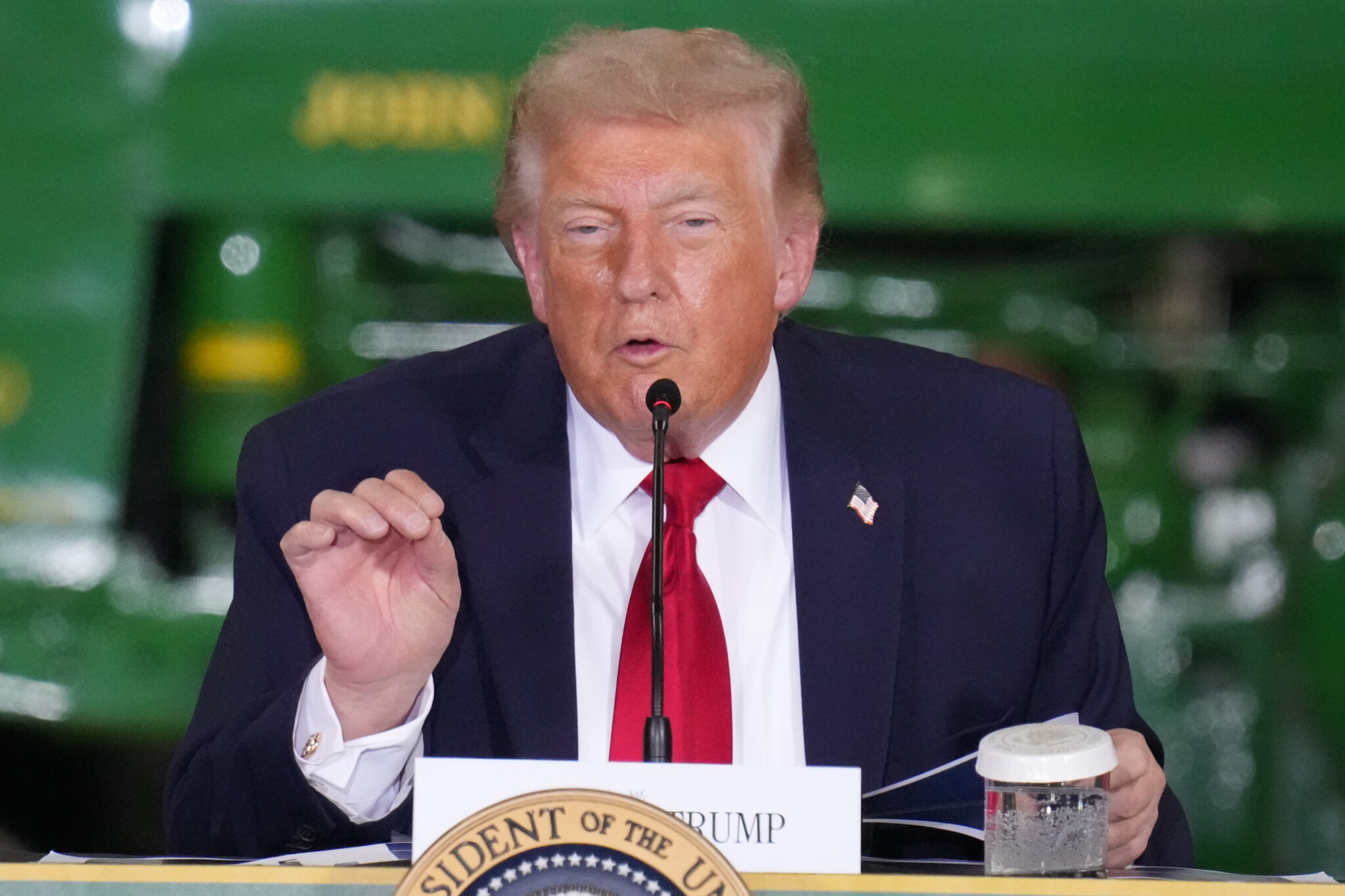

Trump’s $100,000 Fee for H-1B Visa Ruled Unlawful Nationwide/ TezzBuzz/ WASHINGTON/ J. Mansour/ Morning Edition/ A federal judge has ruled that President Donald Trump’s $100,000 fee for new H-1B visas is unlawful and must be invalidated. The decision came in response to a lawsuit filed by 20 Democratic state attorneys general challenging the dramatic increase. The ruling represents another legal setback for the administration’s broader immigration and visa reform efforts.
Trump H-1B Visa Fee Ruling Quick Looks
- Federal judge invalidated Trump’s $100,000 H-1B fee.
- Decision issued by Judge Leo Sorokin in Boston.
- Twenty Democratic attorneys general filed the lawsuit.
- Fee was announced by Trump in September 2025.
- Cost increase dramatically raised H-1B visa expenses.
- H-1B visas are widely used by skilled foreign workers.
- Court ruled the fee was imposed unlawfully.
- Technology companies heavily rely on the visa program.
- Decision may affect thousands of future applicants.
- Administration could appeal the ruling.
- H-1B program remains central to immigration debate.
- Employers welcomed clarity on visa costs.

Deep Look
Federal Judge Blocks Trump’s H-1B Visa Fee Increase
A federal judge in Boston has struck down President Donald Trump’s controversial $100,000 fee on new H-1B visas, ruling that the administration lacked the legal authority to impose such a dramatic increase on one of America’s most important employment-based visa programs.
U.S. District Judge Leo Sorokin issued the ruling Monday in a lawsuit brought by a coalition of 20 Democratic state attorneys general. The decision immediately casts doubt on one of the administration’s most aggressive immigration-related economic policies aimed at foreign workers and the companies that employ them.
The court concluded that the fee must be invalidated, delivering a significant setback to the administration’s efforts to reshape the high-skilled immigration system.
What Is the H-1B Visa Program?
The H-1B visa program allows U.S. employers to hire foreign professionals in specialty occupations requiring advanced education or specialized skills.
The program is heavily utilized by industries including:
- Technology
- Engineering
- Healthcare
- Finance
- Scientific research
- Higher education
Major companies often rely on H-1B workers to fill positions involving software development, artificial intelligence, cybersecurity, medical research and other highly specialized fields.
Because demand routinely exceeds the annual cap, the program has long been at the center of political debates surrounding immigration, labor markets and economic competitiveness.
Trump Administration Announced Historic Fee Increase
The administration unveiled the $100,000 fee in September 2025 as part of a broader effort to overhaul employment-based immigration.
The proposed fee represented an unprecedented increase in the cost of obtaining a new H-1B visa and immediately sparked concern among businesses, universities and state governments.
Supporters argued that the fee would discourage overreliance on foreign labor and encourage employers to hire American workers.
Critics countered that the policy would effectively price many employers out of the program and undermine U.S. competitiveness in industries dependent on global talent.
States Challenge the Policy in Court
Twenty Democratic attorneys general filed suit, arguing that the administration exceeded its legal authority by imposing such a substantial fee increase without congressional approval.
The states contended that the fee would create significant economic harm by limiting employers’ ability to recruit highly skilled workers.
They also argued that businesses, universities, hospitals and research institutions would face higher operating costs and increased workforce shortages if the fee remained in effect.
The lawsuit maintained that immigration fees must be tied to statutory authority and administrative procedures established under federal law.
Judge Sorokin Finds Fee Unlawful
In his ruling, Judge Sorokin agreed with the states’ arguments and concluded that the administration had acted unlawfully.
While the Reuters report did not detail the full legal reasoning contained in the opinion, the judge determined that the fee could not stand and ordered that it be invalidated.
The decision effectively blocks enforcement of the $100,000 charge unless a higher court reverses the ruling on appeal.
Legal analysts expect the administration to closely review the decision before determining its next steps.
Impact on Employers and Skilled Workers
The ruling is likely to be welcomed by many employers who depend on foreign talent to fill critical positions.
Technology firms, healthcare providers and research organizations have repeatedly warned that excessive visa costs could make it more difficult to recruit qualified professionals from abroad.
For prospective H-1B applicants, the decision removes uncertainty surrounding what would have been one of the most expensive employment visa fees in U.S. history.
Immigration attorneys also noted that the ruling preserves access to a program many companies view as essential to maintaining global competitiveness.
Latest Legal Setback for Trump Immigration Policies
The H-1B ruling arrives amid a series of legal challenges confronting the administration’s immigration agenda.
In recent days, federal courts have also reviewed disputes involving:
Opponents argue that many of the administration’s immigration actions exceed executive authority and conflict with existing federal law.
Administration officials continue to defend the policies as necessary to strengthen national security, protect American workers and reform immigration systems they consider outdated.
What Happens Next?
The administration now faces a choice between accepting the ruling or pursuing an appeal.
If appealed, the case could move to a federal appellate court and potentially become another significant legal battle over executive authority in immigration policy.
For now, however, the decision prevents implementation of the $100,000 fee and preserves existing cost structures for employers seeking new H-1B workers.
The outcome is expected to have lasting implications for future debates over skilled immigration, workforce development and America’s ability to attract global talent.
More on US News
Comments are closed.