

Massive Gas Reserves Remain Untapped
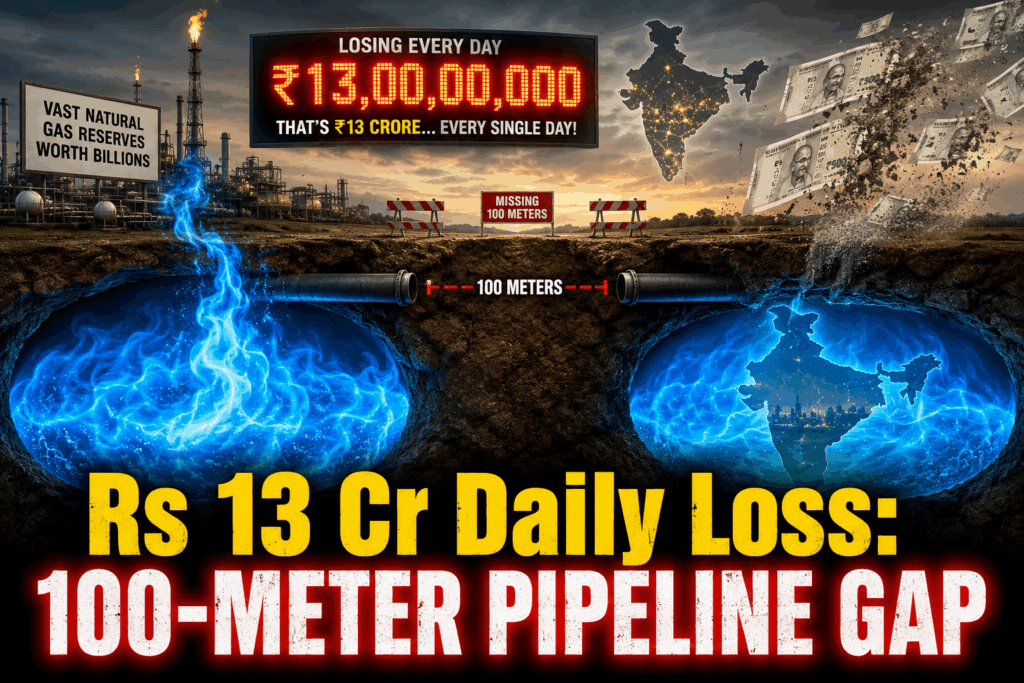
A mere 100-metre gap is reportedly preventing India from accessing a significant natural gas reserveresulting in estimated losses of nearly ₹13 crore every day. The issue revolves around a crucial pipeline connection that has remained incomplete due to regulatory and logistical challenges, despite the gas field being ready for production.
The situation has drawn attention to the broader challenges facing India’s energy infrastructure and the delays that can arise even when valuable resources are available.
The ONGC Gas Discovery at the Centre
The stranded reserves are linked to an offshore natural gas field operated by the state-owned Oil and Natural Gas Corporation (ONGC). While the gas has been successfully discovered and infrastructure has largely been developed, a short pipeline connection required to transport the fuel for commercial use remains pending.
As a result, large quantities of natural gas that could support India’s energy needs are currently lying unused beneath the sea.
Why 100 Metres Matters
According to reports, the missing pipeline section is only around 100 metres long. However, despite its short length, the gap has become a critical bottleneck preventing the transportation and commercialization of the gas.
Industry experts note that infrastructure delays, approvals, environmental clearances, and coordination among multiple stakeholders often contribute to such situations. In this case, a relatively small technical hurdle has translated into substantial economic losses.
Impact on India’s Energy Security
India imports a significant portion of its crude oil and natural gas requirements. Unlocking domestic gas production is considered essential for reducing import dependence, improving energy security, and lowering foreign exchange outflows.
The stranded gas reserves could help meet growing industrial, power generation, and household energy demand. Delays in bringing such projects online can therefore have wider economic implications beyond the direct financial losses.
Economic Costs Continue to Mount
The reported loss of approximately ₹13 crore per day highlights the high economic value of the gas that remains inaccessible. Over months and years, such delays can result in substantial revenue losses for both the operator and the government while slowing the country’s efforts to expand domestic energy production.
Experts argue that faster project execution and streamlined approvals are crucial if India wants to fully capitalize on its energy resources.
A Reminder of Infrastructure Challenges
The case illustrates how infrastructure bottlenecks can significantly affect major national projects. While India has made substantial progress in expanding energy infrastructure, industry observers say coordination between agencies, regulators, and project developers remains critical for ensuring timely completion.
Resolving the pipeline issue could unlock valuable gas supplies and provide a boost to India’s long-term energy goals.
Summary: India is reportedly losing around ₹13 crore every day because a 100-metre pipeline gap is preventing the commercial use of a major ONGC natural gas reserve. The delay highlights how small infrastructure bottlenecks can create significant economic and energy-security consequences. Industry experts believe resolving the issue could help reduce import dependence and strengthen domestic gas production.
Comments are closed.