

21
Coordinated approach could transform Yamuna if implemented with sustained commitment
For decades, the Yamuna has been at the centre of one of India’s most ambitious environmental restoration efforts. Yet despite thousands of crores spent on clean-up programmes, court interventions and repeated political promises, the river remains heavily polluted, particularly in its 22-km stretch through Delhi. Now, Union Home Minister Amit Shah has proposed a fresh approach: a coordinated action plan involving Delhi, Haryana and Uttar Pradesh to tackle the problem together.
The significance of Shah’s proposal lies not in the promise of cleaning the river, a goal that successive governments have pursued for years, but in the recognition that the Yamuna’s pollution crisis cannot be solved by Delhi alone.
The river originates in Uttarakhand, passes through Haryana, enters Delhi and then flows into Uttar Pradesh. Pollution enters the river at multiple points across state boundaries. Yet historically, efforts to clean the Yamuna have often been fragmented, with different states and agencies working in isolation. Shah’s call for a joint mechanism seeks to address this fundamental challenge.
The proposed strategy focuses on coordinated sewage treatment, stricter monitoring of industrial discharge, improved management of drains carrying untreated wastewater into the river and regular inter-state coordination. Officials have also emphasised maintaining adequate environmental flow in the river, a long-standing concern among environmental experts who argue that a river without sufficient water cannot cleanse itself naturally.
The impact of such a plan, if implemented effectively, could be transformative.
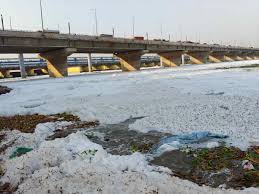
For Delhi, a cleaner Yamuna would mean reduced pollution levels, improved public health outcomes and a healthier urban ecosystem. Large stretches of the river currently suffer from toxic foam, foul odour and severely degraded water quality. Improving sewage treatment and reducing untreated discharge could gradually restore aquatic life and improve the ecological condition of the river.
The benefits would extend beyond environmental concerns. Cleaner water could reduce contamination risks, improve groundwater recharge in adjoining areas and potentially enhance the quality of life for millions living near the river. Revitalised riverfronts could also create new public spaces and recreational opportunities in the future.
However, the success of the initiative will depend on whether it can overcome challenges that have undermined previous efforts.
The Yamuna Action Plan, launched in the 1990s with assistance from Japan, was followed by multiple phases of investment in sewage treatment infrastructure. Yet pollution levels remained stubbornly high. Experts often point to three reasons: inadequate sewage treatment capacity, poor maintenance of infrastructure and weak coordination among agencies responsible for different parts of the river system.
Another challenge is the sheer scale of untreated wastewater entering the river. While sewage treatment capacity has expanded over the years, many drains continue to discharge polluted water into the Yamuna. Illegal industrial effluents, encroachments and gaps in monitoring have further complicated restoration efforts.

Comments are closed.